Industry Knowledge
Alloy and temper choices change more than strength numbers
For automotive extrusion buyers, the practical question is rarely “which alloy is strongest,” but rather which alloy-temper combination still performs after forming, joining, coating, and crash loading. In vehicle programs, 6xxx series automotive aluminum extrusions are often selected because they offer a usable balance of strength, extrudability, corrosion resistance, and post-processing compatibility.
Temper selection should be tied to the downstream route. T4-type supply conditions are often preferred where shaping, bending, or calibration must happen later, while T5 or T6 conditions are more suitable where the part needs higher delivered strength and limited post-form deformation. Buyers who compare only tensile values can miss a more important issue: an extrusion that meets the drawing but resists bending or cracks near pierced zones can still raise total part cost.
What to align before quotation
- Whether the automobile aluminum extrusion profiles will be stretch bent, roll formed, hydroformed, or used in straight cut lengths
- Whether final strength is required before assembly or after paint-bake exposure
- How much machinability is needed around slots, holes, and fastening areas
- Whether crash energy absorption or stiffness is the dominant target for the section
We usually advise buyers to evaluate temper together with the forming route, not after the die is already frozen, because that is where many avoidable revisions begin.
Profile geometry decides whether lightweight design remains manufacturable
Lightweight sections perform best when the geometry is designed for stable metal flow. Balanced wall thickness, reasonable corner radii, and controlled cavity complexity usually matter as much as nominal section area. A automobile aluminum profile can look efficient in CAD yet create die correction delays, twist, seam sensitivity, or dimensional drift during mass production.
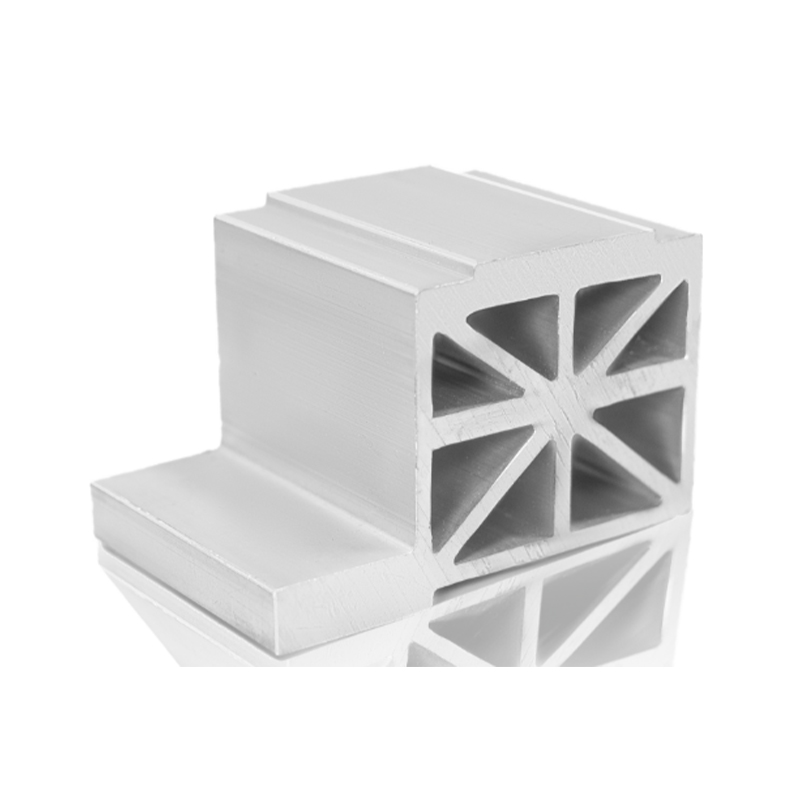
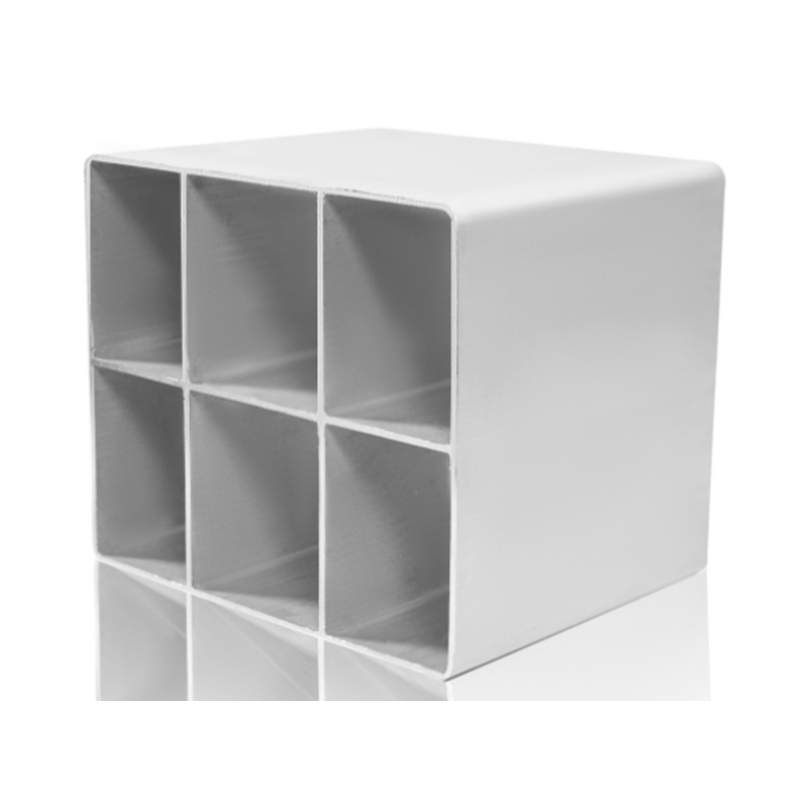
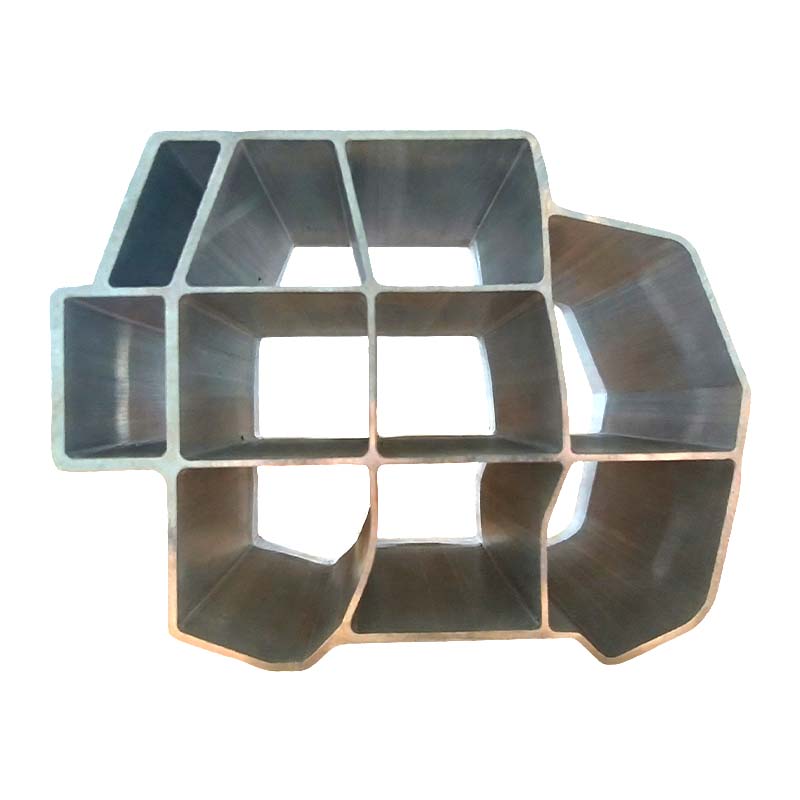
Hollow and multi-void sections can deliver excellent stiffness-to-mass efficiency, but they demand closer control of weld seams, tongue ratios, and local thickness balance. Very thin ribs, abrupt step changes, and oversized open channels can all increase distortion risk after quenching or cutting. In body and battery-related structures, buyers often gain more by refining section layout than by simply asking for thinner walls.
Design details that usually improve production stability
- Use gradual thickness transitions instead of sudden mass concentration
- Reserve enough land width near fastening or machining zones
- Avoid placing critical pierced features too close to sharp internal corners
- Consider seam-line position for hollow profiles used in high-load areas
We see the best outcomes when weight reduction is translated into die-friendly geometry early, because good lightweight design is not just less material, but better material placement.
Tolerance strategy should match the assembly method, not just the drawing
Extrusion tolerances become meaningful only when connected to the actual joining process. For example, a section used in adhesive bonding and fixtured assembly may tolerate different flatness behavior than a section feeding automatic piercing or robotic fastening. Straightness, twist, bow, cut-length consistency, and end-squareness often have a more direct impact on yield than one or two local dimensions shown on a section drawing.
Buyers should also separate as-extruded dimensions from post-machined dimensions. Many assembly complaints come from mixing these two control levels in the same specification. If slots, holes, or interfaces are machined after extrusion, the sourcing document should identify which features are extrusion-critical and which are machining-critical.
Tolerance checkpoints worth locking in procurement documents
- Straightness over full delivered length and over short inspection spans
- Twist limits for open sections used in bracket or rail assemblies
- Flatness of bonding flanges or battery tray interfaces
- Cut-length tolerance relative to joining fixture capability
- Inspection method and gauge agreement before SOP
A realistic tolerance stack saves more cost than an unrealistically tight section drawing, especially in programs where assembly automation is sensitive to automobile lightweight aluminum profile stability.




 +86-19156366875
 No. 1016, Baocheng Road, Economic and Technological Development Zone, Xuancheng City, Anhui Province, China