Content
For parts that require tight tolerances, repeatable dimensions, and clean surface quality, CNC aluminum machining combined with deep processing aluminum profiles is one of the most practical manufacturing solutions. It supports everything from simple slotting and face milling to complex aluminum drilling milling service operations and accurate aluminum extrusion cutting service work. In many projects, dimensional tolerance can be controlled to ±0.05 mm to ±0.10 mm for standard features, while well-managed finishing and fixture design help maintain consistency across larger batches.
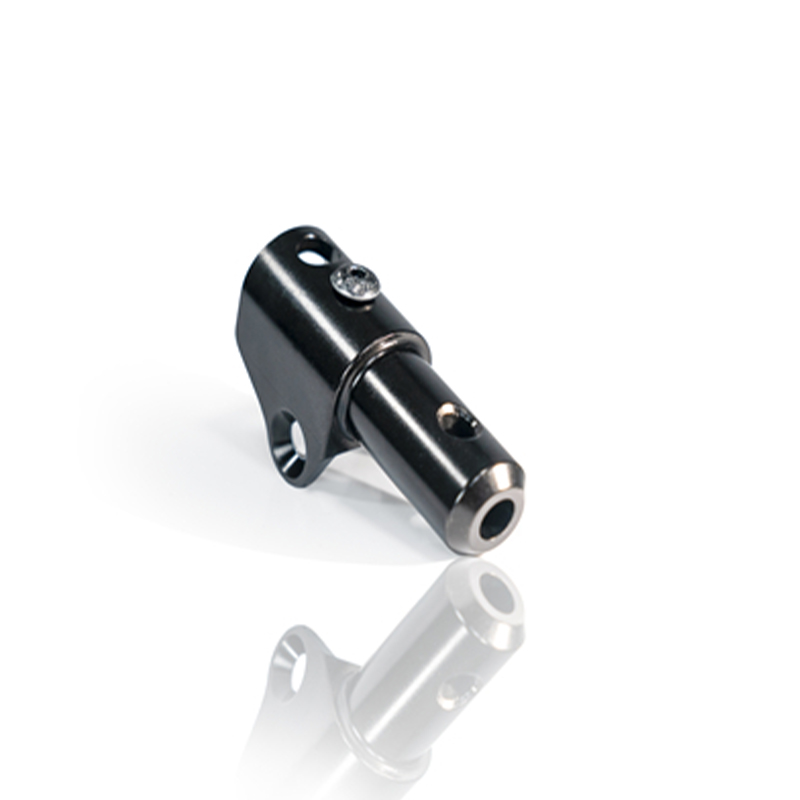
This process is especially effective when aluminum profiles or extruded sections need additional holes, pockets, threads, end cuts, chamfers, or assembly features after the initial profile is formed. Rather than using separate manual operations with higher variation, CNC machining makes it possible to integrate cutting, drilling, and milling into a controlled workflow that improves precision, shortens lead time, and reduces rework.
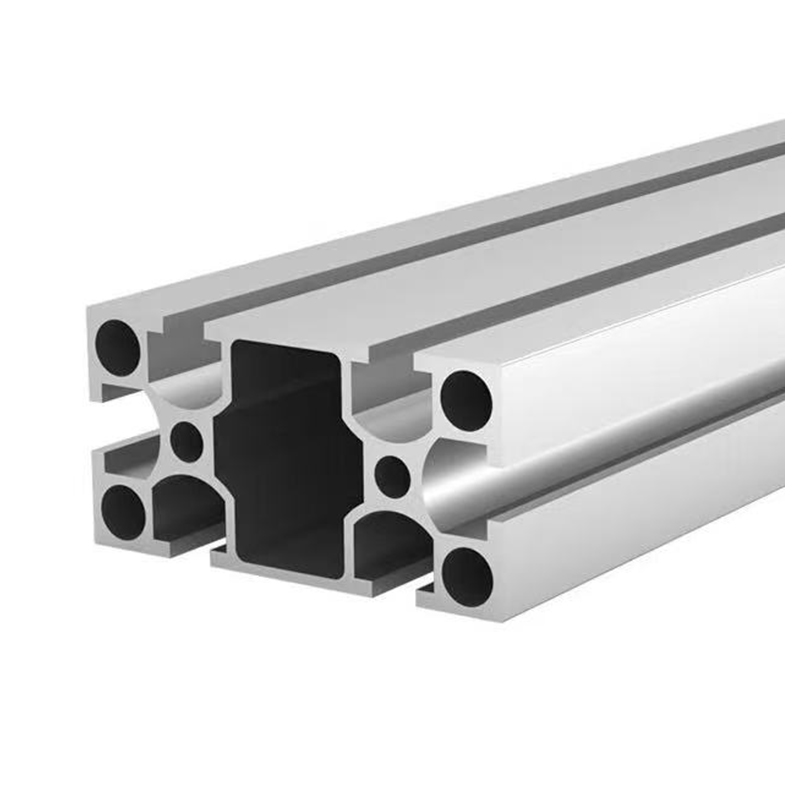
Extrusion creates the basic cross-sectional shape, but many aluminum components still need further work before they are ready for installation or assembly. Deep processing aluminum profiles refers to those secondary operations that convert a raw profile into a finished functional part. Common examples include end-face machining, pocket milling, tapping, through-hole drilling, counterboring, beveling, notching, and precision length cutting.
This step matters because profile geometry alone rarely solves all assembly requirements. A frame member may need mounting holes spaced at exact intervals. A heat sink may require milled flatness on a contact face. A housing profile may need cutouts for connectors or fasteners. By adding these features with CNC machining, manufacturers can keep the strength-to-weight benefits of aluminum while meeting the dimensional needs of real products.
An aluminum drilling milling service is most valuable when the part requires more than a simple cut. Drilling creates accurate hole positions for hardware and alignment, while milling produces flat surfaces, slots, steps, channels, and pockets. Together, these operations allow a profile or plate to be converted into a part that fits cleanly within assemblies such as frames, enclosures, automation modules, brackets, and transport systems.
In practical terms, feature location often matters as much as feature size. A mounting hole that is only 0.20 mm out of position can create assembly difficulty when multiple components stack together. Likewise, a milled slot with inconsistent width can affect sliding performance or clamping pressure. CNC-controlled drilling and milling reduce these risks by maintaining stable feed rates, spindle speed, cutter path, and fixture positioning.
An aluminum extrusion cutting service is not only about trimming a profile to size. The quality of the cut affects downstream machining, assembly fit, and visual finish. A poor cut can introduce end deformation, excessive burrs, angular deviation, or visible tool marks. These problems become more serious when the part later needs hole drilling, end tapping, or tight frame assembly.
For many structural or enclosure applications, typical cut-length tolerance may fall around ±0.2 mm to ±0.5 mm, depending on profile shape, wall thickness, and length. High-precision work may demand tighter control. End-face squareness is equally important because even a small angular error can multiply into larger alignment issues across long assemblies. This is why profile cutting is often integrated with clamping control, optimized saw parameters, or secondary end milling where necessary.
| Control Item | Typical Focus | Why It Matters |
|---|---|---|
| Length tolerance | ±0.2 mm to ±0.5 mm | Supports accurate assembly dimensions |
| End-face squareness | Low angular deviation | Improves frame alignment and joint fit |
| Burr control | Minimal sharp edges | Reduces rework and handling risk |
| Surface marks | Controlled clamping and tooling | Maintains cosmetic quality |
Aluminum is widely chosen because it combines low density, corrosion resistance, and good machinability. Its density is about 2.7 g/cm³, roughly one-third that of steel, which makes it useful for lightweight frames, panels, housings, and transport components. At the same time, its relatively soft cutting behavior can support faster machining cycles and lower tool wear than many harder metals.
However, aluminum is not automatically easy in every condition. Some alloys produce built-up edge if chip evacuation is poor, while thin-wall profiles can deform under excessive clamping force. Long extrusions can also shift during machining if fixture support is not sufficient. That is why successful CNC aluminum machining depends not only on machine capability, but also on tool geometry, coolant or air-blast strategy, workholding design, and sensible parameter selection.
The most effective projects follow a clear sequence from raw material to finished part. A profile is first checked for straightness and dimension, then cut to length, fixtured, machined, deburred, inspected, and prepared for finishing or packing. This kind of control matters because errors introduced early in the process usually become more expensive later. A profile cut incorrectly by 0.5 mm may no longer meet final hole-position requirements even if the drilling program itself is accurate.
When machining multiple features on one part, sequence planning is also important. For example, rough cutting and major pocketing may be completed before final finish passes. Holes that depend on finished edges should be machined after reference surfaces are established. This reduces stack-up error and keeps part-to-part variation under control.
Not every dimension needs the same precision. One common mistake in CNC aluminum machining projects is assigning very tight tolerances to non-critical features, which increases machining time and cost without improving product performance. A better approach is to identify which dimensions actually affect fit, sealing, alignment, motion, or load transfer. Those are the dimensions that deserve the most process attention.
For example, a clearance hole pattern used for bracket assembly may need position tolerance closer to ±0.10 mm, while overall profile length for a cover trim piece may tolerate ±0.30 mm. By aligning machining strategy with function, it becomes easier to balance quality and cost. This is especially useful in batch production where even a small increase in cycle time can affect total output significantly.
| Feature Type | Typical Requirement | Tolerance Priority |
|---|---|---|
| Mounting hole position | Assembly alignment | High |
| Slot width | Motion or clamp fit | High |
| Overall decorative length | Visual coverage | Medium |
| Non-contact pocket depth | Weight or clearance | Medium to low |
A finished aluminum component is judged not only by size, but also by edge condition and surface appearance. Visible chatter, rough cutter marks, burrs around holes, or scratched profile walls can reduce product value even if the dimensions are technically acceptable. Surface quality is often improved by combining sharp tooling, stable feed rates, proper spindle speed, controlled chip evacuation, and dedicated deburring steps.
In many applications, surface roughness targets may range around Ra 1.6 to 3.2 μm for standard machined faces, while more demanding contact surfaces may require finer finishing. End users also pay attention to edge feel. Clean chamfers and burr-free drilling points make assembly safer and create a better impression of manufacturing quality.
The advantage of combining aluminum extrusion cutting service with CNC drilling and milling is easiest to see in real applications. Structural frame parts may need accurate end lengths, connector holes, and internal access windows. Electronic housings may require profile cutting, connector slots, cover screw holes, and contact-surface milling. Solar or mounting rails often need repeated hole patterns over long lengths, where consistent spacing is critical to installation speed.
In these cases, process integration helps in three ways: fewer manual handling steps, more stable dimensional control, and better repeatability between batches. For medium-volume production, even saving 20 to 40 seconds per part on handling or repositioning can create a meaningful productivity gain across hundreds or thousands of units.
A cost-effective service plan usually starts with matching the process to the part design. Simple straight cuts should not be treated like multi-face precision milling jobs, while critical assembly parts should not rely on loose manual positioning. The most efficient approach is to group parts by complexity, define the critical tolerances clearly, and use deep processing only where it adds direct functional value.
It also helps to standardize feature dimensions when possible. Reusing common hole sizes, slot widths, thread types, and profile lengths can reduce tool changes and simplify inspection. For repeated orders, this often improves throughput and lowers the chance of programming or setup error. In short, better manufacturability decisions upstream usually lead to more stable CNC aluminum machining downstream.
CNC aluminum machining, deep processing aluminum profiles, aluminum drilling milling service, and aluminum extrusion cutting service work best as one coordinated manufacturing solution. When cutting accuracy, hole position, milled features, burr control, and tolerance planning are managed together, the result is a part that is easier to assemble, more consistent across batches, and more cost-effective to produce.
For practical projects, the key is straightforward: control the cut, fixture the profile correctly, machine only the features that matter, and inspect the dimensions that affect real performance. That approach delivers the strongest balance of quality, speed, and manufacturing value.
 +86-19156366875
 No. 1016, Baocheng Road, Economic and Technological Development Zone, Xuancheng City, Anhui Province, China
Copyright © Anhui Huilong Group Huilv New Material Technology Co., Ltd. All Rights Reserved
Aluminum Profiles Manufacturers