Content
An EV aluminum structure is valuable because it can reduce vehicle mass, improve driving range, support battery protection, and simplify the integration of large structural parts. For many electric vehicles, weight saved in the body and chassis can be used to offset the mass added by the battery pack, which makes aluminum parts for vehicles a practical engineering choice rather than a cosmetic one.
This matters most in areas where mass directly affects performance: body-in-white components, battery enclosures, crash structures, suspension members, and closures such as doors or hoods. In these applications, the goal is not simply to replace steel everywhere, but to place aluminum where it provides the best balance of specific strength, corrosion resistance, manufacturability, and energy efficiency.
In practice, a well-designed aluminum-intensive EV can save tens of kilograms to well over 100 kilograms depending on architecture, segment, and the number of cast, extruded, or stamped parts converted from heavier alternatives. Even modest mass reduction can improve range, braking response, tire wear, and payload flexibility.
Aluminum is most effective when used in parts that deliver a high weight-saving return without creating unnecessary joining or repair complexity. The strongest results usually come from combining castings, extrusions, and sheet parts in areas with clear structural roles.
The battery enclosure is one of the clearest use cases. Aluminum offers a strong combination of stiffness, corrosion resistance, and thermal conductivity. It can be formed into trays, covers, cross-members, and cooling interfaces, while also helping with impact resistance around the battery perimeter.
Front rails, rear rails, shock towers, rocker reinforcements, and cross-car beams can benefit from aluminum when the geometry is optimized for stiffness and energy absorption. Extrusions are particularly useful here because wall thickness, section shape, and local reinforcements can be tuned for crash management.
Doors, hoods, liftgates, and fenders are common weight-reduction targets. These parts sit high on the vehicle, so lowering their mass can also help the center of gravity and improve opening and closing effort.
Control arms, subframes, steering knuckles, and wheel carriers are often made from cast or forged aluminum. The advantage is not only lower mass, but also lower unsprung weight, which can improve ride and handling response.
Reducing mass is one of the most direct ways to improve EV efficiency. A lighter structure lowers the energy required for acceleration, hill climbing, and repeated stop-and-go driving. It can also allow engineers to maintain performance targets with a smaller battery, or keep the same battery and gain more range.
The exact benefit depends on vehicle type, drivetrain calibration, tire selection, and aerodynamics, but the design logic is consistent: lighter structural parts help electric vehicles use energy more efficiently. This is especially useful in city vehicles, delivery vans, and sport utility vehicles where repeated acceleration cycles amplify the value of mass reduction.
| Area | Effect of aluminum use | Practical result |
|---|---|---|
| Body mass | Reduced curb weight | Lower energy use per kilometer |
| Battery housing | Strong, corrosion-resistant enclosure | Better pack protection and packaging |
| Suspension parts | Reduced unsprung mass | Sharper handling and ride response |
| Large cast nodes | Part consolidation | Fewer joints and simpler assembly |
For example, if a vehicle program removes 80 to 150 kg from the structure through smarter material placement, the gain can support longer range, improved payload, or additional safety content without pushing total mass too high. The exact number changes by platform, but the engineering trade-off remains persuasive.
The best aluminum solution depends on part shape, production volume, crash role, surface requirements, and cost target. Electric vehicles often use a mix of manufacturing routes because no single process fits every structural need.
Stamped aluminum sheet is suited to closures, floor panels, and some reinforcements. It works well in higher-volume production when panel quality and dimensional repeatability are critical.
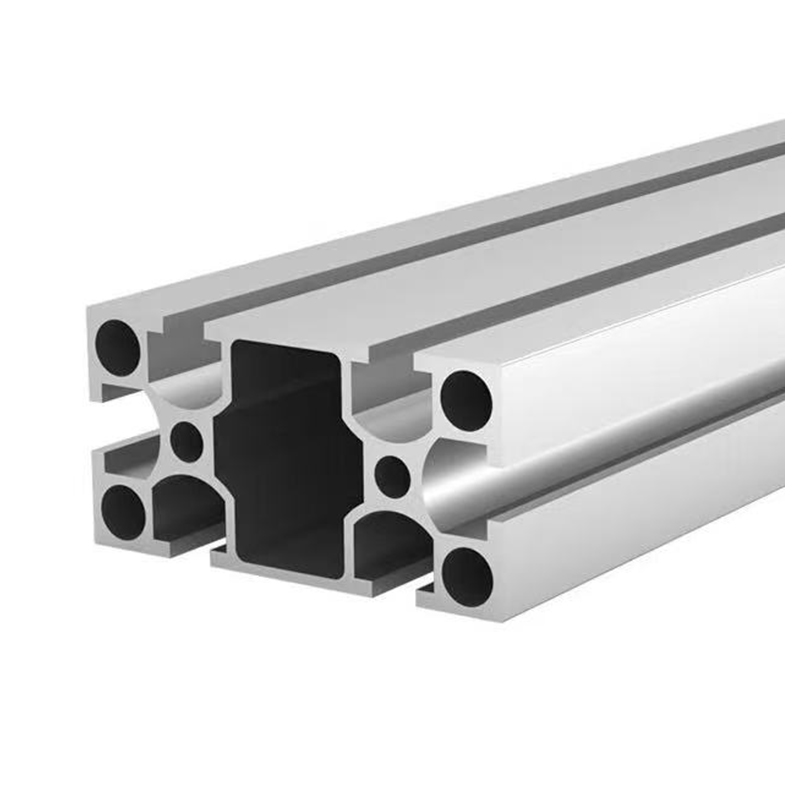
Extrusions are ideal for rails, side sills, cross-members, and battery frame elements. Designers can tailor the cross-section for stiffness, crash energy absorption, cable routing, and joining flanges.
High-pressure die casting and other casting methods are useful for complex nodes, suspension parts, and large integrated body sections. Casting can reduce part count, but it requires careful control of porosity, dimensional tolerances, and repair strategy.
Forged aluminum is often chosen for highly loaded components such as control arms, steering knuckles, or brackets where toughness and fatigue resistance matter.
A strong EV aluminum structure depends less on material substitution alone and more on geometry, load paths, and joining strategy. Aluminum has different elastic behavior and forming limits than steel, so parts should be engineered around its strengths rather than simply copied from another material system.
Because aluminum has a lower modulus than steel, equivalent stiffness often requires optimized section geometry. Closed sections, deeper profiles, ribs, and local reinforcements are common design responses.
Crashworthy aluminum parts rely on controlled deformation, bead patterns, crush initiators, and tailored wall thickness. In EVs, these features are especially important near the battery perimeter, where structural collapse must be managed without compromising pack safety.
Modern vehicle bodies may combine aluminum with steel, composites, and engineered polymers. This requires robust joining methods such as self-piercing rivets, flow-drill screws, structural adhesives, laser welding in selected areas, and mechanical fastening with isolation strategies to reduce galvanic corrosion risks.
The most successful systems treat structure, battery integration, sealing, thermal management, and manufacturability as one package. That integrated approach usually delivers more value than chasing the lightest single part in isolation.
Aluminum parts for vehicles offer clear technical benefits, but they must still meet cost and service targets. Tooling, scrap handling, joining equipment, and repair procedures can influence whether a design is competitive at scale.
Material cost per kilogram is usually higher than conventional steel, but system-level cost can improve when aluminum enables part consolidation, fewer welds, fewer brackets, or lower downstream energy use. A large integrated casting, for example, may replace many smaller stampings and joining steps.
Aluminum naturally forms a protective oxide layer, which supports corrosion resistance. However, mixed-material joints still need careful isolation, sealing, and coating design, especially in wet and salted-road environments.
Repair planning should begin in the design phase. Large structural castings can lower assembly complexity, but damaged sections may be harder to replace if cut lines, service fasteners, or modular repair zones are not defined early. For fleets and high-mileage vehicles, repair strategy can be as important as initial weight savings.
The right choice depends on the vehicle category, production volume, and performance target. A city EV, a premium sedan, and a commercial delivery vehicle may all use aluminum, but not in the same places or in the same forms.
| Vehicle need | Recommended aluminum focus | Reason |
|---|---|---|
| Maximum range gain | Body structure, closures, battery frame | Largest mass-saving opportunities |
| Improved crash management | Extruded rails and cast nodes | Tunable deformation and load paths |
| Better ride and handling | Knuckles, control arms, subframes | Reduced unsprung mass |
| Assembly simplification | Large cast structural modules | Part consolidation |
A practical selection method is to rank candidate parts by four factors: kilograms saved, crash or stiffness importance, manufacturing feasibility, and repair impact. That approach quickly identifies where aluminum creates real value and where another material may remain the better choice.
The strongest case for EV aluminum structure is straightforward: it helps electric vehicles reduce weight, protect the battery system, improve efficiency, and support advanced structural integration. The best results come from targeted use in battery enclosures, crash structures, chassis components, and large consolidated modules.
Aluminum parts for vehicles are most effective when material choice, geometry, joining, corrosion control, and repair planning are handled together. That is why successful aluminum-intensive EV design is not about replacing every part with a lighter metal. It is about using the right aluminum form in the right location to create measurable gains in range, safety, and manufacturing performance.
 +86-19156366875
 No. 1016, Baocheng Road, Economic and Technological Development Zone, Xuancheng City, Anhui Province, China
Copyright © Anhui Huilong Group Huilv New Material Technology Co., Ltd. All Rights Reserved
Aluminum Profiles Manufacturers