Content
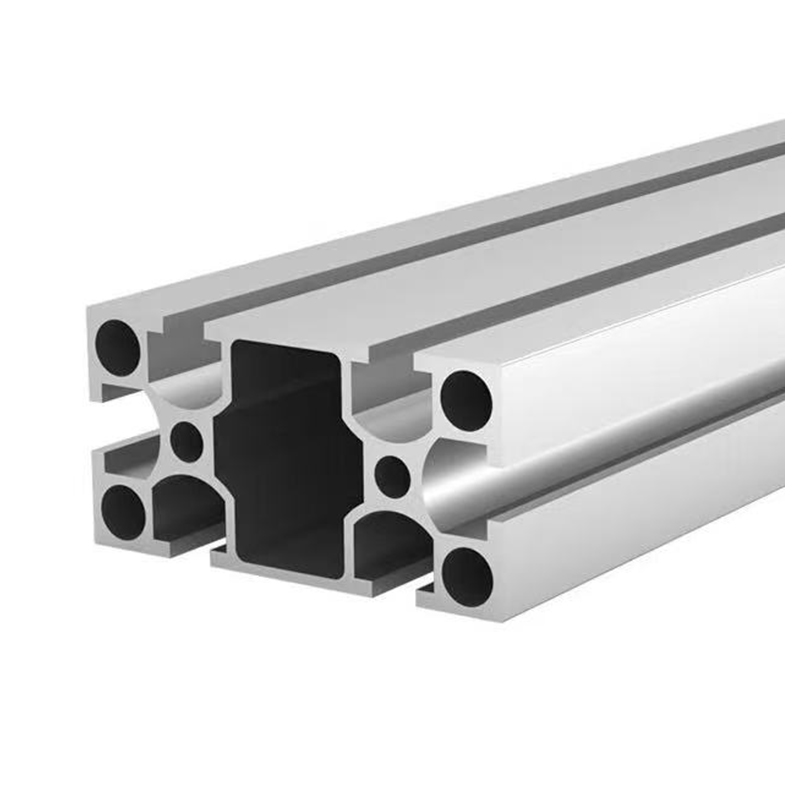
An aluminum profile for machinery is usually the best option when a project needs modular assembly, clean appearance, corrosion resistance, and easier future modification. An aluminum frame for equipment is especially useful for machine guards, workstations, test rigs, enclosures, conveyors, and support structures that may need to be expanded or reconfigured later.
The main limit is stiffness. If the structure will carry very high dynamic loads, long unsupported spans, or heavy vibration, the frame design needs larger sections, more bracing, or a different structural solution. In most light- to medium-duty industrial applications, however, aluminum framing provides a strong balance of speed, precision, and maintainability.
Compared with welded construction, modular aluminum framing reduces fabrication steps. Profiles can be cut, joined, squared, and adjusted without grinding, repainting, or heat distortion. This matters when a machine base must accept sensors, panels, cable routing, guarding, and accessories at the same time.
A practical example is a test bench that begins as a simple stand and later adds a control cabinet, vision system, and safety door. With an aluminum frame for equipment, new brackets and crossmembers can be added to existing slots instead of remaking the whole frame. That saves both downtime and redesign effort.
Profile selection should be based on load, span, mounting method, vibration, and future expansion. Many framing problems come from choosing by appearance alone. The more important question is not whether the profile looks heavy enough, but whether the frame will stay aligned under real operating conditions.
Smaller profiles such as 20 x 20 mm or 30 x 30 mm are often suitable for light covers, sensor posts, and display mounts. Mid-size options such as 40 x 40 mm or 45 x 45 mm are common for guarding, frames, carts, and operator stations. Larger sections like 45 x 90 mm, 50 x 100 mm, or 90 x 90 mm are better for machine bases, long spans, and higher-load equipment supports.
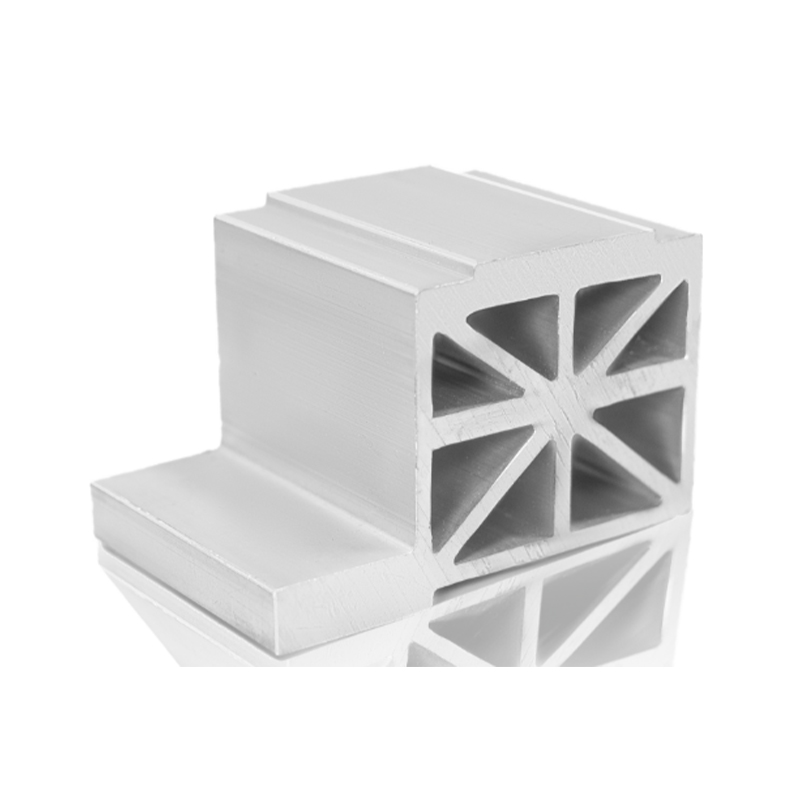
Two profiles with similar outer dimensions can behave differently if their internal geometry is different. A profile with higher bending resistance will deflect less across the same span. This is critical for linear guides, inspection stations, and fixtures that require repeatable positioning.
A frame is only as rigid as its joints. End fasteners, gusset brackets, corner plates, joining plates, and anchor feet all change how the structure behaves. For example, a 1200 mm equipment stand with only basic corner connections may feel acceptable when empty but can rack noticeably after a motor, gearbox, and guarding are installed. Adding diagonal bracing or larger joint plates often improves performance more than simply increasing profile size.
| Profile range | Typical use | Practical note |
|---|---|---|
| 20 x 20 mm to 30 x 30 mm | Sensor mounts, light covers, display supports | Best for low-load structures and short spans |
| 40 x 40 mm to 45 x 45 mm | Guards, carts, machine enclosures, benches | A common balance of strength and flexibility |
| 45 x 90 mm to 50 x 100 mm | Equipment bases, conveyor supports, stations | Useful where load and span start to increase |
| 90 x 90 mm and above | Heavy frames, large cells, rigid machine structures | Usually paired with stronger joints and floor anchoring |
These ranges are useful starting points, not absolute rules. A short 40 x 40 mm frame can outperform a poorly braced larger frame, while a long-span application may require a bigger section than expected even under moderate load.
Stability depends on geometry as much as material. A machine frame should resist sagging, twisting, and side-to-side racking. In practice, the best-performing designs use short unsupported spans, strong corner connections, base leveling, and at least some triangulation or panel reinforcement.
Tall and narrow frames often sway laterally. Wide tables may sag at mid-span. Door openings can weaken an enclosure. A useful rule is to add bracing or shear support where the structure has empty rectangles, long horizontal members, or concentrated mass such as motors and actuators.
Even a well-designed aluminum profile for machinery will underperform if the base rocks on an uneven floor. Leveling feet, anchor plates, and proper load distribution are not small details. They determine how well the frame holds alignment over time.
Consider a compact inspection station with a footprint of 1200 x 800 mm and a height of 1800 mm. The structure must hold a camera mast, lighting, control panel, and a work surface, while keeping the image system stable during operation.
This example shows why frame design is not only about profile dimensions. A mixed approach often works better: larger members where the load path is critical, smaller members where flexibility and access matter more.
Many equipment issues come from avoidable design shortcuts rather than from the aluminum itself. The most common mistake is underestimating movement at the joints and overestimating what a long unsupported span can carry without deflection.
Correcting these points early usually costs less than strengthening the frame after the machine is already assembled and aligned.
Aluminum framing is a strong choice when the equipment needs modularity, clean routing of components, reduced fabrication time, and easier future upgrades. It is also suitable when corrosion resistance and appearance matter.
It becomes less suitable when the machine must absorb high-impact loading, severe vibration, or extreme thermal and structural demands without additional engineering measures. In those cases, a heavier structural concept may be justified.
| Application type | Suitability | Reason |
|---|---|---|
| Machine guarding and enclosures | High | Easy panel mounting and flexible layout changes |
| Inspection and test stations | High | Clean assembly and modular accessory mounting |
| Conveyor support frames | Medium to high | Works well when span and dynamic load are controlled |
| Heavy impact machinery bases | Low to medium | Needs careful engineering or a heavier structural approach |
Choose aluminum profile for machinery when the project values modularity, cleaner installation, and easier maintenance, but size the frame by load path, span, joint stiffness, and vibration rather than by appearance alone.
A reliable aluminum frame for equipment usually comes from three decisions: using the right section size, strengthening the joints, and controlling deflection with better geometry. If those three points are handled well, aluminum framing can deliver a durable and adaptable industrial structure instead of only a convenient one.
 +86-19156366875
 No. 1016, Baocheng Road, Economic and Technological Development Zone, Xuancheng City, Anhui Province, China
Copyright © Anhui Huilong Group Huilv New Material Technology Co., Ltd. All Rights Reserved
Aluminum Profiles Manufacturers