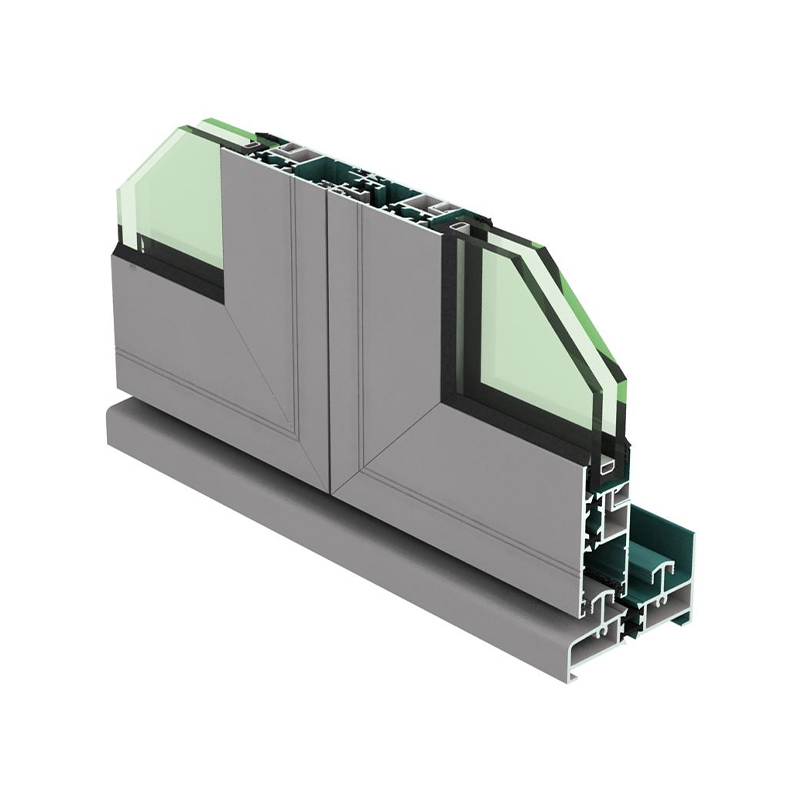
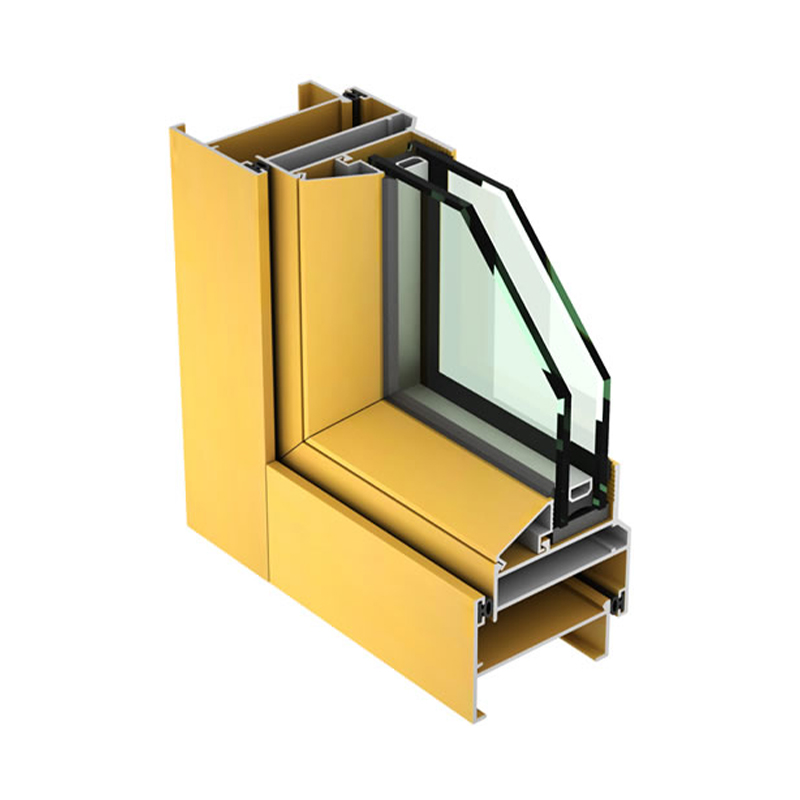
Aluminium curtain wall profiles have become a defining element of contemporary architecture, wrapping skyscrapers, commercial towers, airports, and cultural institutions in sleek, continuous facades. Their ability to carry enormous glass panels while maintaining razor-thin sightlines, resist hurricane-force winds without deflecting, and still accept virtually any colour or texture is not accidental. It is the result of precision engineering applied to one of the most versatile metals available. Understanding exactly how these profiles achieve both architectural aesthetics and structural integrity helps architects, specifiers, and builders make better decisions at every stage of a project.
Content
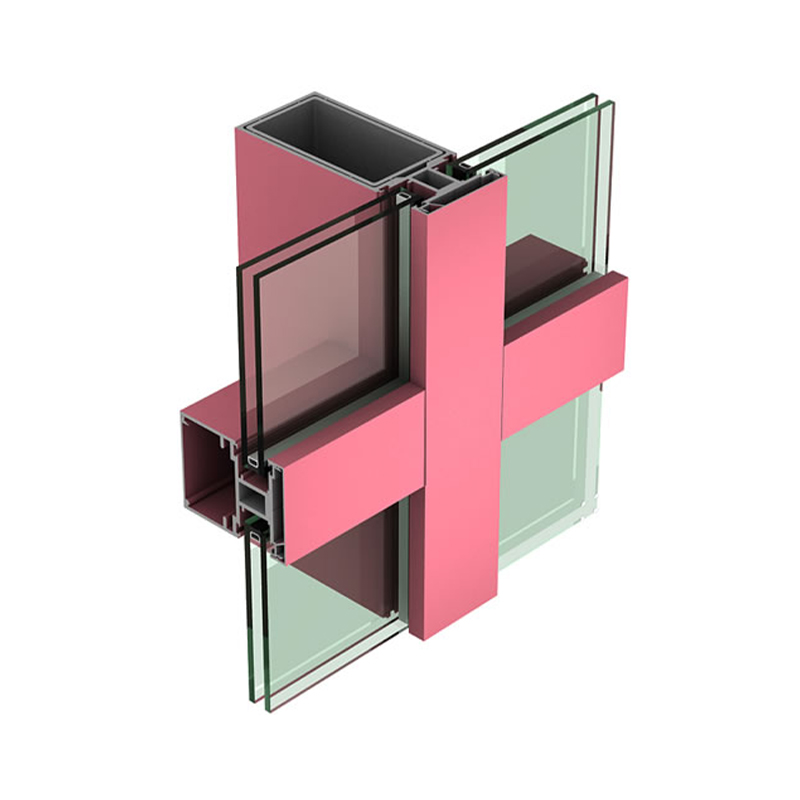
The cross-sectional shape of an aluminium curtain wall profile determines more than its load path — it directly governs what the finished facade looks like from the street. Narrow-face profiles with sightline widths as small as 50 mm create the near-seamless glass planes favoured in high-end office towers, while wider, more elaborate profiles introduce horizontal or vertical shadow lines that give a building rhythm and depth.
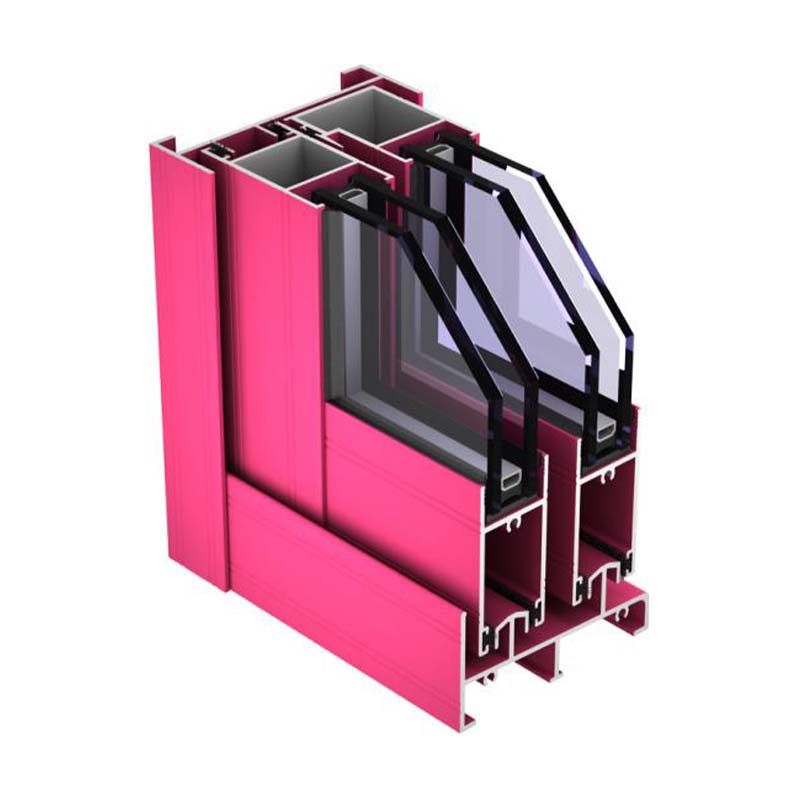
Manufacturers achieve these geometries through hot extrusion: a heated aluminium billet is forced through a hardened steel die, producing a continuous length with tolerances typically held within ±0.1 mm. This precision is critical because misaligned profiles cause glass bite inconsistencies that both weaken the seal and create visible distortions along the facade. The extrusion process also enables hollow chambers within the profile wall, which reduce overall weight without sacrificing the second moment of area needed to resist bending under wind loads.
Architects increasingly specify stick, unitised, or semi-unitised systems not just for erection speed but for the different aesthetic languages each system expresses. Unitised panels, for example, feature factory-controlled joints that produce consistent shadow reveals around every module — a detail that reads as deliberate geometry on large facades rather than a construction tolerance.
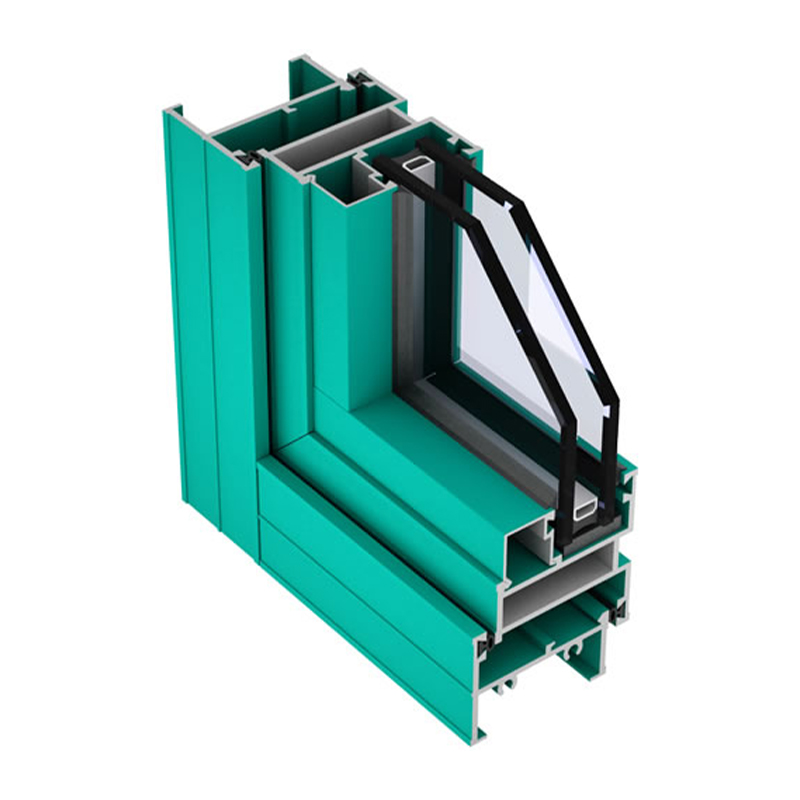
Raw aluminium conducts heat approximately 1,000 times faster than glass, meaning an unbroken metal profile running from exterior to interior would create a thermal highway that raises energy costs and causes condensation on interior surfaces. Thermal break technology solves this by inserting a low-conductivity polyamide or polyurethane strip — typically 24 mm to 34 mm wide — into a precise slot milled along the profile's mid-section.
The thermal break is not simply glued in place. It is mechanically deformed, or "rolled," so that the aluminium grips the polyamide on both sides under compressive stress. This connection must transmit shear forces generated by wind and gravity loads across the break, which means the polyamide's compressive and tensile strength is as important as its thermal resistance. High-performance profiles achieve U-values for the whole system — profile plus glass — below 1.0 W/m²K, meeting the envelope requirements of stringent standards such as Passivhaus or ASHRAE 90.1.
From an aesthetic perspective, thermal break profiles do not look different from non-broken ones. The polyamide is fully concealed within the aluminium section and does not appear on the finished facade. This allows architects to specify high-performance envelopes without making any visual compromise.
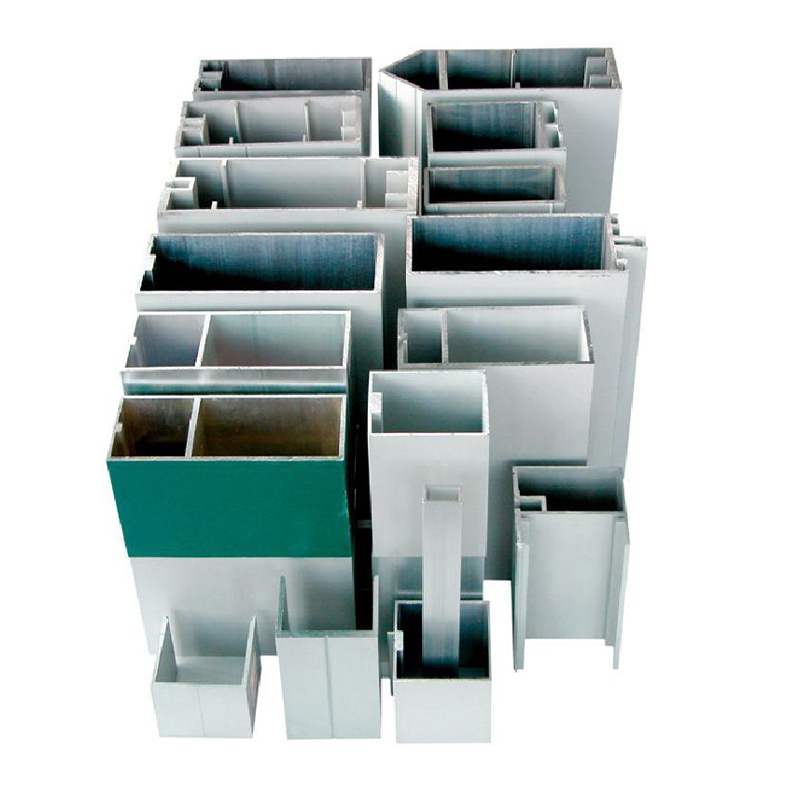
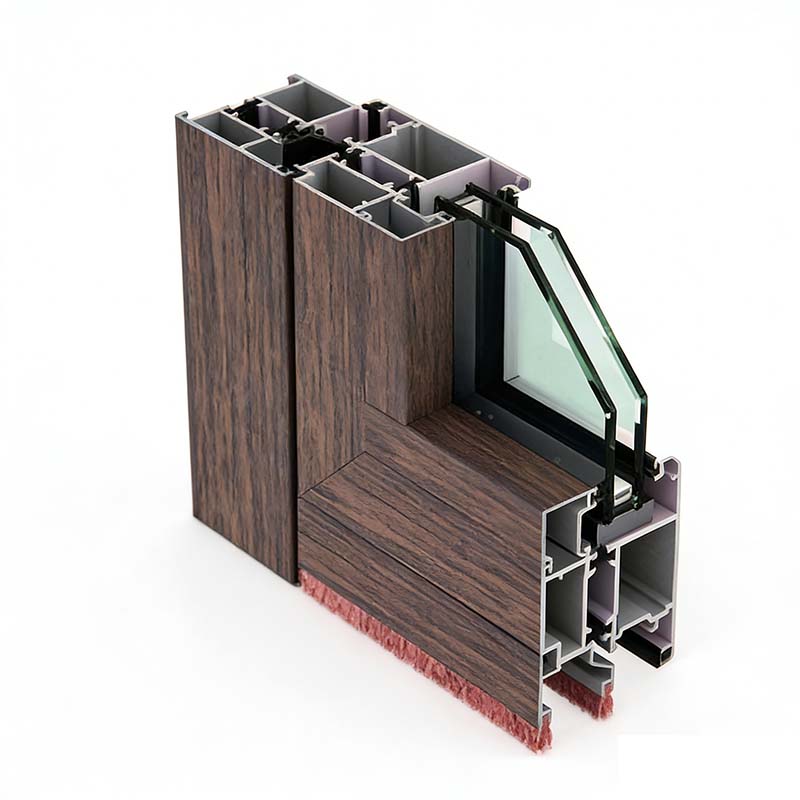
Aluminium's surface is inherently reactive, forming a thin natural oxide layer that protects against corrosion. For architectural applications, this surface is enhanced through one of several controlled finishing processes, each producing a distinct aesthetic and performance profile.
Anodising grows an aluminium oxide layer electrochemically to a controlled depth, typically 20 µm for exterior applications. The resulting surface is hard, scratch-resistant, and retains the subtle metallic sheen of the base metal. Colour anodising introduces pigment into the pores before sealing, producing stable tones from champagne and bronze to dark anthracite. Anodised coatings tested under QUALANOD certification maintain their appearance for 25 years or more in moderate-climate exposures.
Polyester powder coating offers the widest colour palette, including RAL and NCS matches, textured finishes, and metallic effects that anodising cannot replicate. Profiles are cleaned, pretreated with a chrome-free conversion coating, then electrostatically sprayed with dry powder and cured at around 200 °C. QUALICOAT Class 2 or Class 3 powders provide enhanced UV resistance, with Class 3 recommended for coastal or industrial environments where salt or sulfur dioxide accelerates degradation.
Polyvinylidene fluoride (PVDF) coatings — sold under trade names such as Kynar 500 — are factory-applied in two or three coats and offer the highest resistance to chalking, fading, and chemical attack. They are the preferred finish for landmark buildings and high-rise facades where repainting over the building's lifetime would be impractical or prohibitively expensive.
A curtain wall is a non-load-bearing facade — it carries only its own weight plus wind and seismic loads, transferring all forces back to the building's primary structure through anchors at each floor slab. This distinction is crucial: because the curtain wall does not carry floor loads, its profiles can be optimised purely for facade performance rather than acting as columns or beams.
Wind pressure is the dominant design load on most facades. Positive wind pressure pushes the glazing inward; negative pressure (suction) pulls it outward. Both must be resisted by the mullion — the vertical profile — which behaves as a simply supported or continuous beam spanning between anchors. Alloy selection matters significantly here. Aluminium alloy 6063-T6, the most common curtain wall grade, has a yield strength of approximately 215 MPa and allows the mullion's depth to be calculated precisely using standard structural engineering methods.
Beyond wind, profiles must accommodate differential movement between the facade and the structure. Buildings sway under wind, creep under sustained loads, and experience thermal expansion cycles daily. Curtain wall systems address this through slotted connections, splice joints with designed slip, and sealant joints sized to absorb calculated movements — typically ±25% of joint width. Without these provisions, profiles would buckle or pull free of their anchors over time.
A structurally sound curtain wall that leaks is a failure. Modern aluminium curtain wall profiles incorporate pressure-equalised rainscreen principles to prevent water ingress without relying solely on outer seals. The outer face of the profile system is designed to drain any water that penetrates the first line of defence — the gasket or structural silicone — into a cavity that is vented to the exterior and drained at sill levels through weep holes machined into the aluminium.
EPDM gaskets, pressed into precisely profiled grooves on the aluminium, maintain their elasticity across a temperature range of -40 °C to +120 °C and resist ozone degradation that would cause premature cracking. Structural silicone glazing — used in frameless or flush-glass appearances — bonds the glass directly to the aluminium bite, creating a sealant joint that carries the glass weight and wind load simultaneously while remaining permanently flexible.
Air permeability is tested to standards such as EN 12153 or ASTM E283, with Class 4 or equivalent performance required for most commercial applications. Achieving this rating depends on the precision of the aluminium extrusion tolerances: even a 0.3 mm gap in a gasket seat can allow measurable air leakage that compromises both energy performance and acoustic attenuation.
Different curtain wall systems distribute the balance between aesthetics and structural performance in distinct ways. The table below summarises the main types and their characteristics.
| System Type | Typical Sightline Width | Installation Method | Best Suited For | Key Aesthetic Feature |
|---|---|---|---|---|
| Stick System | 50–65 mm | Site-assembled piece by piece | Low-to-mid-rise buildings | Cost-effective, flexible grid |
| Unitised System | 50–60 mm | Factory-glazed panels hoisted floor by floor | High-rise towers, fast programmes | Consistent shadow reveals, premium finish |
| Structural Glazing | 0 mm (hidden frame) | Silicone-bonded glass to aluminium carrier | Iconic facades, maximum transparency | Flush, uninterrupted glass plane |
| Semi-Unitised | 50–70 mm | Pre-assembled frames, site-glazed | Medium-rise, complex geometry | Design flexibility, moderate cost |
Aluminium curtain wall profiles offer a sustainability advantage that few materials can match. Aluminium is infinitely recyclable without loss of mechanical properties, and recycling requires only about 5% of the energy needed to produce primary metal. A significant proportion of extruded profiles already contain recycled content — typically 50–75% post-consumer scrap — reducing embodied carbon compared to primary aluminium. This performance is increasingly relevant as building codes in Europe, North America, and East Asia impose whole-life carbon limits on new construction.
Durability data from existing buildings confirms aluminium's long-term reliability. Facade systems installed in the 1970s and 1980s have been inspected and found to retain their structural integrity and surface finish after 40–50 years of service, provided they were correctly detailed and maintained. Key factors that determine longevity include:
When these conditions are met, aluminium curtain wall profiles routinely outlast the other building materials they are integrated with. Glass units may need replacement after 25–30 years due to seal failure, while the aluminium carrier frames can often remain in service and accept new glazing — a lifecycle advantage that supports both economic and environmental sustainability goals on major projects.
 +86-19156366875
 No. 1016, Baocheng Road, Economic and Technological Development Zone, Xuancheng City, Anhui Province, China
Copyright © Anhui Huilong Group Huilv New Material Technology Co., Ltd. All Rights Reserved
Aluminum Profiles Manufacturers