You are reviewing finish options for an extruded aluminum profile that will be installed on a coastal curtain wall. Six months later, the supplier's sample still looks fine, but you know from experience that salt spray, UV, and condensation will eventually reveal any weak finish. The answer is not to pick the most expensive coating. The answer is to match the finish to the environment, the mechanical load, and the part's expected service life.
This guide covers the most common aluminum surface finishes, how they perform in real applications, and what you need to communicate to your extrusion supplier to avoid costly surprises.
Content
Aluminum naturally forms a very thin oxide layer about 2 to 4 nanometers thick. This layer protects the metal from further oxidation, but it is too thin and too soft for most practical conditions. A scratch, a trace of caustic cleaner, or a long run of rain and sun will quickly break it down.
A surface finish is an engineered barrier that adds function beyond appearance. With anodic oxidation, the oxide layer can grow from 5 to 25 micrometers—or more than 50 micrometers in hard anodizing—creating a hard, corrosion-resistant surface that is also electrically insulating. With organic coatings such as powder coating or PVDF, the barrier is a protective film, typically 60 to 80 micrometers for powder coating, that can deliver color, texture, and UV resistance in a single step.
Different processes also control how the part behaves in heat, in contact with other metals, or when struck by a stone. This is why a finish is never simply a visual issue; it is a functional decision that affects cost, maintenance, and warranty.
Use the following comparison to narrow down your options before you get into mechanical design or costing.
| Finish | Typical Process | Key Properties | Typical Use |
|---|---|---|---|
| Mill finish | No treatment after extrusion | Natural oxide layer, low corrosion protection, lowest cost | Interior parts, non-critical applications |
| Anodizing (Type II) | Electrolytic oxidation, film from 5 to 25 μm | Good corrosion resistance, durable surface, excellent color reception | Architectural profiles, solar frames, consumer goods |
| Hard anodizing (Type III) | Thicker oxide, typically 25 to 50 μm | High hardness, excellent wear and abrasion resistance | Automotive parts, machinery, tooling |
| Powder coating | Electrostatic spray and oven cure, film often 60 to 80 μm | Flexible color, good impact and scratch resistance, cost-effective | Windows, doors, curtain walls, industrial equipment |
| PVDF coating | Fluoropolymer liquid coating, baked | Outstanding weathering and UV performance, very good color retention | Architectural facades, high-end exterior applications |
| Brushing / polishing | Mechanical abrasion or buffing | Decorative satin or mirror appearance | Trim, furniture, decorative rails |
| Chemical film (Alodine) | Chromate or chromate-free conversion coating | Very thin layer, electrical conductivity, good primer base | Aerospace, electronics, automotive parts |
| Wood grain | Sublimation or transfer printing | Realistic wood-like texture and color | Windows, fences, interior panels |
| E-coating | Electrophoretic deposition with a hard resin | Uniform coverage and reliable corrosion protection | Automotive hardware, fasteners, racking |
Start with the service environment, not with the sample rack. The finish that wins on a showroom wall can fail within one coastal winter. The following factors should be evaluated in order.
When you request a quote, be explicit about the finish, the minimum film thickness, the color tolerance, and the test standard. This is where procurement mistakes are born.
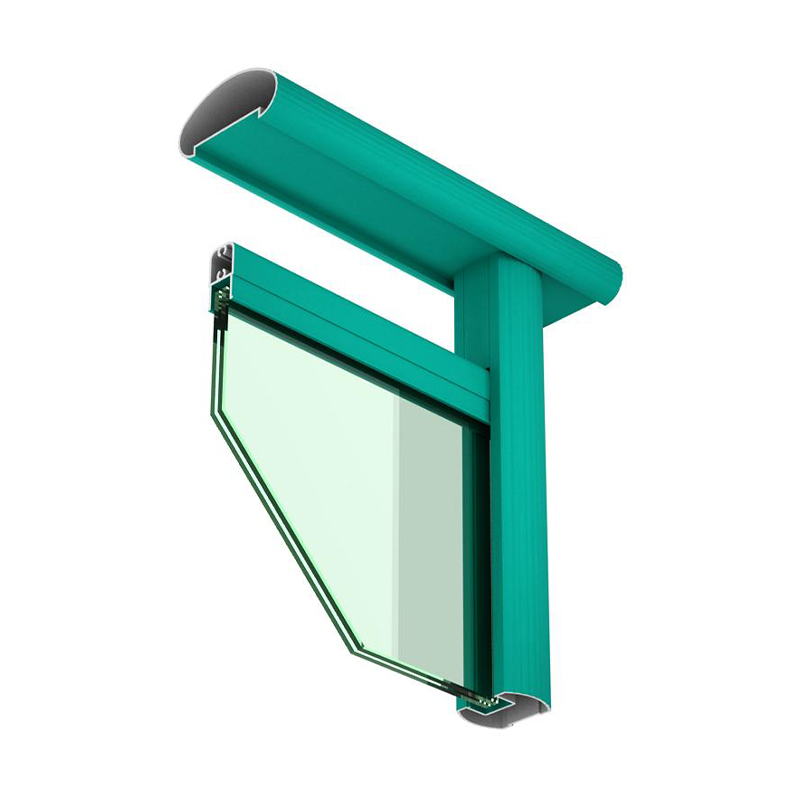
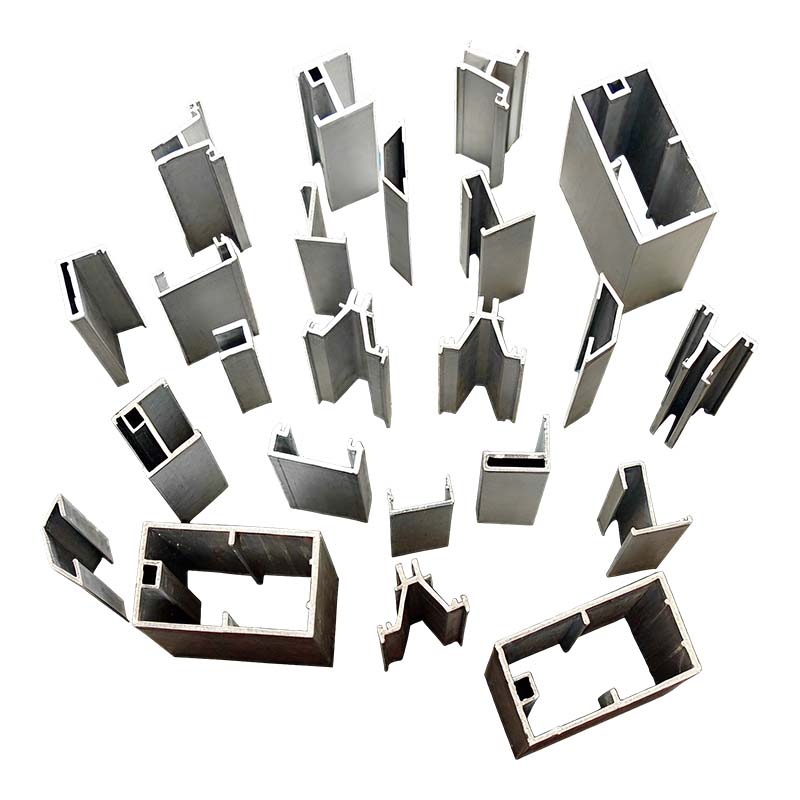 High-Precision Aluminium Curtain Wall Profiles for Unitized and Framed SystemsThese profiles offer high precision and compatibility with various curtain wall systems. With excellent wind pressure and deformation resistance, they meet safety requirements for high-rise buildings, making them a reliable choice for demanding architectural applications.View Product →
For windows, doors, curtain walls, and balcony railings, the finish has to survive decades of weather while keeping a consistent appearance. Powder coating is the workhorse: it offers a wide color range, reasonable UV resistance, and a smooth or textured finish. For high-end curtain wall systems and coastal projects, PVDF coatings are the standard choice because they retain gloss and color far better after 10 to 20 years of direct sunlight.
Anodizing is still a strong option for interior trims, column covers, and some exterior elements where a metallic look is desired. Keep in mind that anodizing is more sensitive to the extrusion surface quality, so ask the supplier how they control surface defects. If you are designing curtain wall profiles or structural frames, consider the connection details as well: the finish must survive cutting, milling, and drilling without peeling at the edges.
For a deeper look at how aluminum frame systems and structural extrusions fit into a building envelope, see our article on aluminum frame systems and structural aluminum extrusion.
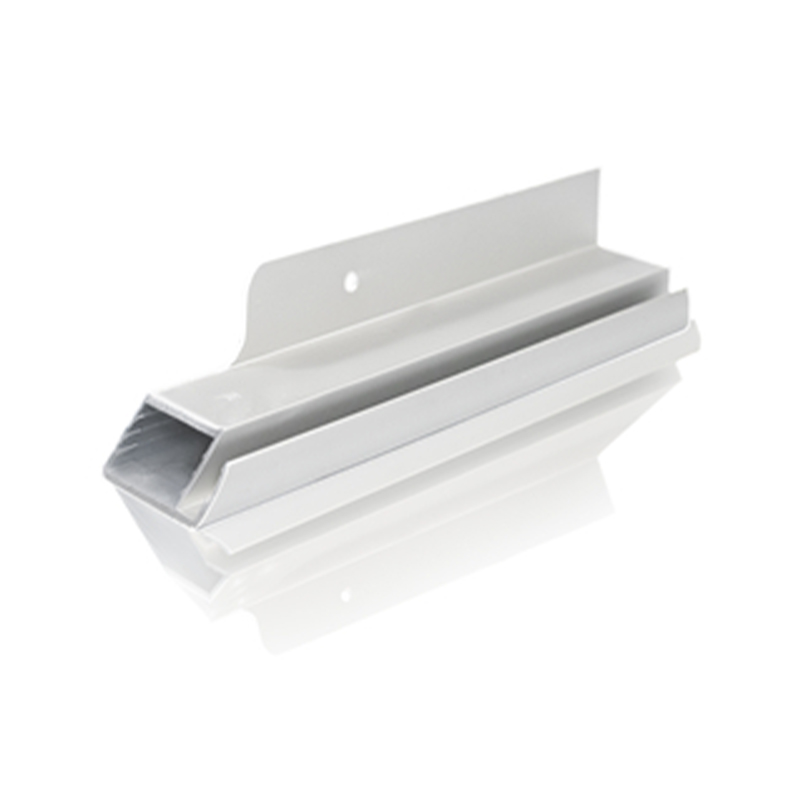
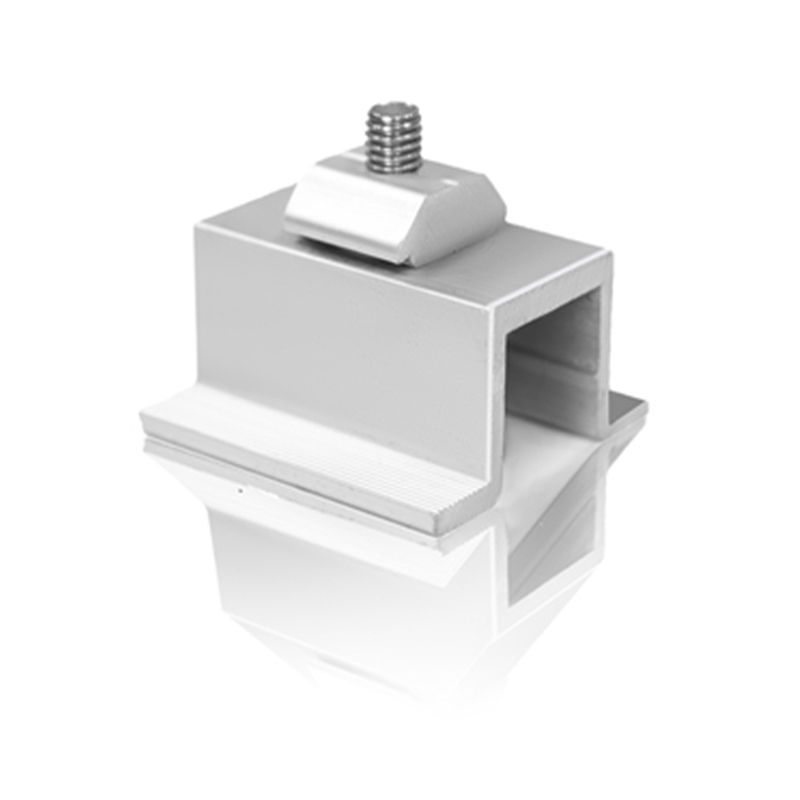
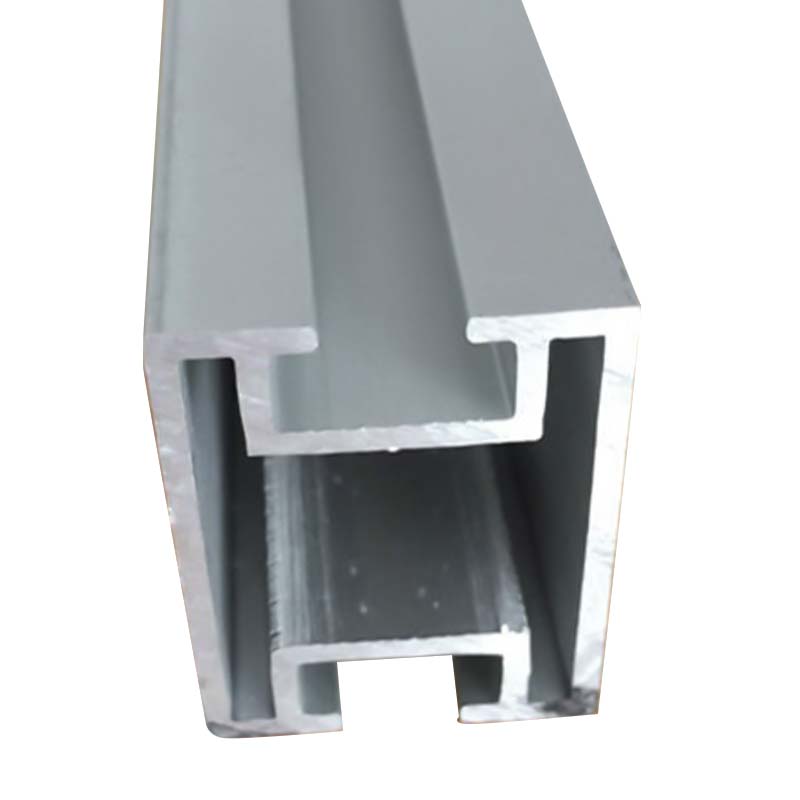 Lightweight Aluminum Solar Panel Frames with Corrosion Resistance for Long-Term Outdoor UseDesigned for long-term outdoor use, these frames combine lightweight construction with high strength and corrosion resistance. High dimensional accuracy facilitates quick assembly, improving installation efficiency for solar panel systems.View Product →
Solar frames and mounting brackets face a non-negotiable requirement: the finish must help the component last for the 20 to 25 year lifetime of the panel. In this application, anodizing is the preferred surface treatment. The oxide layer is electrically insulating, resists corrosion in humid and salty environments, and does not interfere with silicone sealants used in module assembly.
Film thickness is critical here. A thin 5 μm anodize will not provide the required durability; most solar frame suppliers work to 15 to 20 μm minimum under standard conditions. Check the supplier's capability to hold consistent thickness across long, narrow profiles. If you are buying complete framing systems, also confirm that the finish has a uniform color across different batches to avoid visible variation in a large installation.
Our article on why photovoltaic aluminum profiles are essential for modern solar energy explains how these components support long-term performance and installation efficiency.
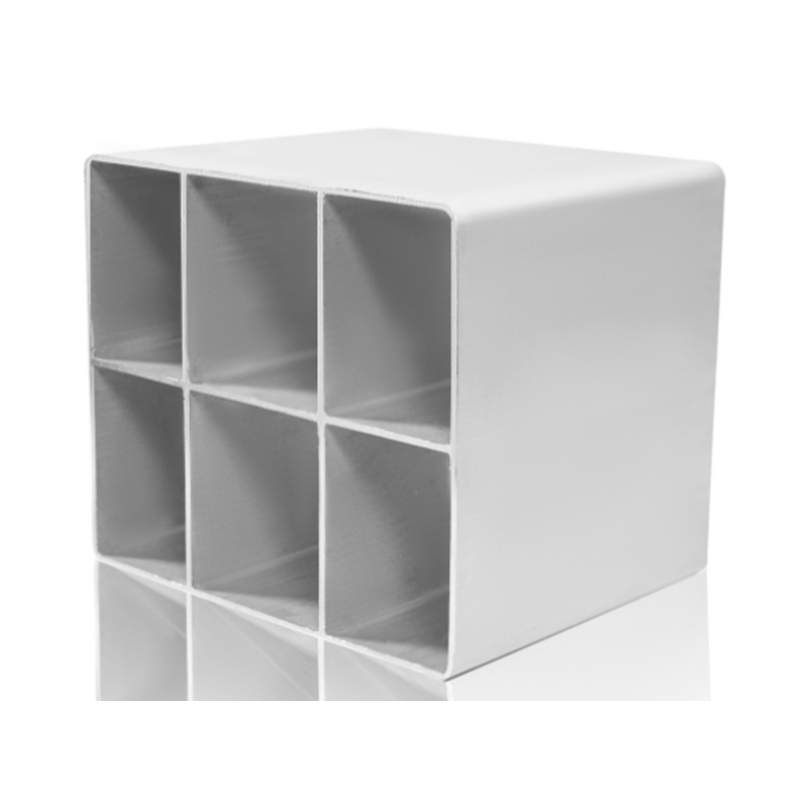 Automotive Crash Box Aluminum Profiles for Impact Energy Absorption and Lightweight SafetyThese crash box profiles absorb impact energy through structural deformation during a collision, enhancing vehicle safety. Their aluminum alloy construction provides lightweight properties and effective energy absorption, ideal for modern automotive applications.View Product →
Automotive parts, such as crash boxes, battery trays, end plates, and motor housings, require more than a pretty surface. These components are exposed to road salt, stone impact, heat, and in some cases, battery electrolyte. Hard anodizing gives the profile the wear resistance and chemical stability needed for sliding contacts or high-pressure assemblies. E-coating is also widely used because it reaches tight internal corners and produces a uniform film thickness of about 15 to 25 μm.
For battery tray assemblies, the finish can affect electrical grounding and corrosion between dissimilar metals. A conversion coating or an insulating anodic layer may be specified instead of a paint system. The vendor must also control film thickness within a reasonable tolerance; an under-thick film will fail in corrosion testing, while an over-thick anodic layer can crack during bending or forming.
Even experienced teams miss details that later show up as complaints or claims. A few of the most common are:
Once you have narrowed the finish, the next step is to validate that the supplier can control it consistently. Ask for the following before issuing a purchase order:
A responsible manufacturer will show you process samples, explain what happens when a finish is applied to a complex profile section, and work with you on masking and handling requirements. At Huilu Aluminum, our building, photovoltaic, and industrial aluminum profiles are made with full consideration of the finish that each application demands, from powder coating for architectural façades to hard anodizing for automotive structural components.
 +86-19156366875
 No. 1016, Baocheng Road, Economic and Technological Development Zone, Xuancheng City, Anhui Province, China
Copyright © Anhui Huilong Group Huilv New Material Technology Co., Ltd. All Rights Reserved
Aluminum Profiles Manufacturers