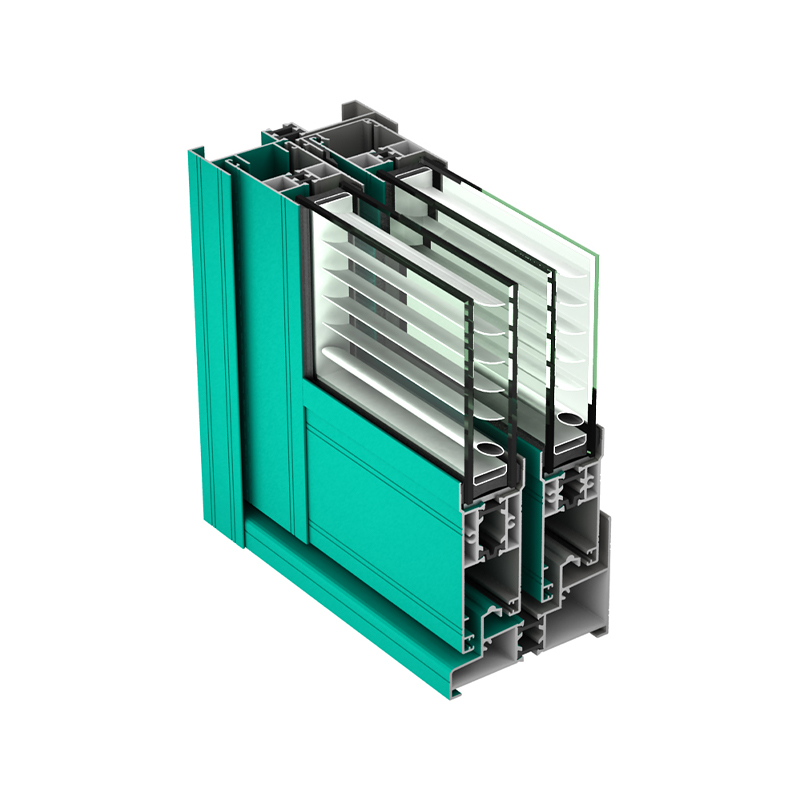
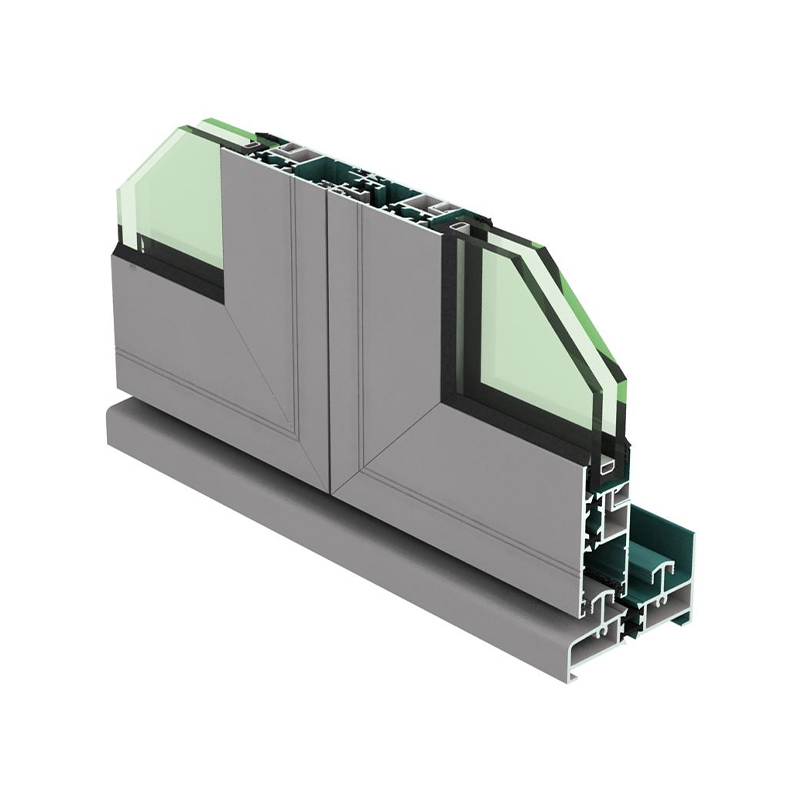
A quotation line that reads "6063-T6 extruded profiles, per ASTM B221" makes a specific, testable promise: the silicon content sits inside defined limits, the minimum yield strength is 170 MPa, and the whole claim can be checked against one published document. That document is ASTM B221, the Standard Specification for Aluminum and Aluminum-Alloy Extruded Bars, Rods, Wire, Profiles, and Tubes. It is the most widely referenced specification for extruded aluminum mill products in North America and across much of the international supply chain.
The direct answer most searchers want: the official ASTM B221 PDF is a paid, copyright-protected document, and free copies found online are typically unlicensed scans of older editions with limited contractual value. Knowing what the standard actually contains, how to read its two key tables, and how to cite it on a purchase order matters far more than the download itself. This article covers all three from a buyer's perspective.
Content
ASTM B221 covers extruded aluminum products in four forms: bars and rods, wire, profiles, and tubes. Profiles is the word most buyers should focus on, because it includes the hollow and solid shapes that window frames, curtain wall mullions, solar module frames, machine bases, and structural components are extruded from. The specification applies across the extrudable wrought-alloy families, although architectural and light-industrial work concentrates on the 6xxx series, especially 6063, 6061, and 6005A. ASTM committee B02 maintains the document, and recent editions are published in dual units as B221/B221M, with B221 carrying inch-pound values and B221M the SI tables.
The standard does not stand alone. Tension testing follows ASTM B557, and dimensional tolerances reference the ANSI H35.2 tables for aluminum mill products, so a claim like "extruded to B221 with commercial tolerances" actually points to H35.2 for the numbers. B221 itself supplies the chemistry floors, the strength floors, and the sampling and certification rules.
Three things the specification deliberately leaves to other documents:
Those boundaries cause a surprising share of disputes. Finish quality in particular is often assumed to be included, when it is actually defined by separate documents and the product drawing.
The document is organized the way buyers actually use it. After the scope and referenced documents, you get terminology and ordering information covering what a purchase order must state: alloy, temper, form, dimensions, tolerances, and any special requirements. Then come the chemical composition limits for every registered alloy, followed by mechanical property tables arranged by alloy, temper, product form, and size. The closing sections cover workmanship, sampling, test methods, and the certification clause, which obliges the supplier to furnish test reports when your order requests them.
On obtaining the PDF: ASTM sells it through its own platform, and the document is revised every few years, with editions such as B221-20 and B221-21 in recent circulation. Free downloads usually trace back to older scans, and the risk is not dramatic edits but small ones, including reworded requirements and adjusted limits. In a quality dispute, the edition cited on your purchase order governs, so write "per ASTM B221/B221M" with the edition year, or "latest edition" if that is company policy, and keep your reference copy matched to what you ordered.
Most practical B221 work comes down to two tables. The first sets chemical composition limits, determined per heat, meaning one molten batch from the casting operation. Here are the limits for the two extrusion alloys most frequently specified:
| Element | 6063 | 6061 |
|---|---|---|
| Silicon | 0.20-0.6 | 0.40-0.8 |
| Iron, max | 0.35 | 0.7 |
| Copper | 0.10 max | 0.15-0.40 |
| Manganese, max | 0.10 | 0.15 |
| Magnesium | 0.45-0.9 | 0.80-1.2 |
| Chromium | 0.10 max | 0.04-0.35 |
| Zinc, max | 0.10 | 0.25 |
| Titanium, max | 0.10 | 0.15 |
| Other elements, each, max | 0.05 | 0.05 |
| Other elements, total, max | 0.15 | 0.15 |
| Aluminum | Remainder | Remainder |
The second table sets minimum mechanical properties, tested per production lot after temper treatment. Note the word minimum: these are contractual floors, not typical values, and random samples from a well-run press usually land 10 to 20 percent higher.
| Alloy and temper | Ultimate tensile strength, min | Yield strength, min | Elongation, min |
|---|---|---|---|
| 6063-T5 | 145 MPa (21 ksi) | 110 MPa (16 ksi) | 8% |
| 6063-T6 | 205 MPa (30 ksi) | 170 MPa (25 ksi) | 8% |
| 6061-T6 | 260 MPa (38 ksi) | 240 MPa (35 ksi) | 8% |
Two details trip people up. First, mechanical values are listed by alloy, temper, and cross-section size, so a thin tube and a heavy profile of the same alloy can carry different minimums. Second, chemistry is certified per heat while mechanicals are certified per lot, which is why a mill certificate shows a heat number and a lot number side by side. Both identifiers matter if you ever need traceability back to the melt.
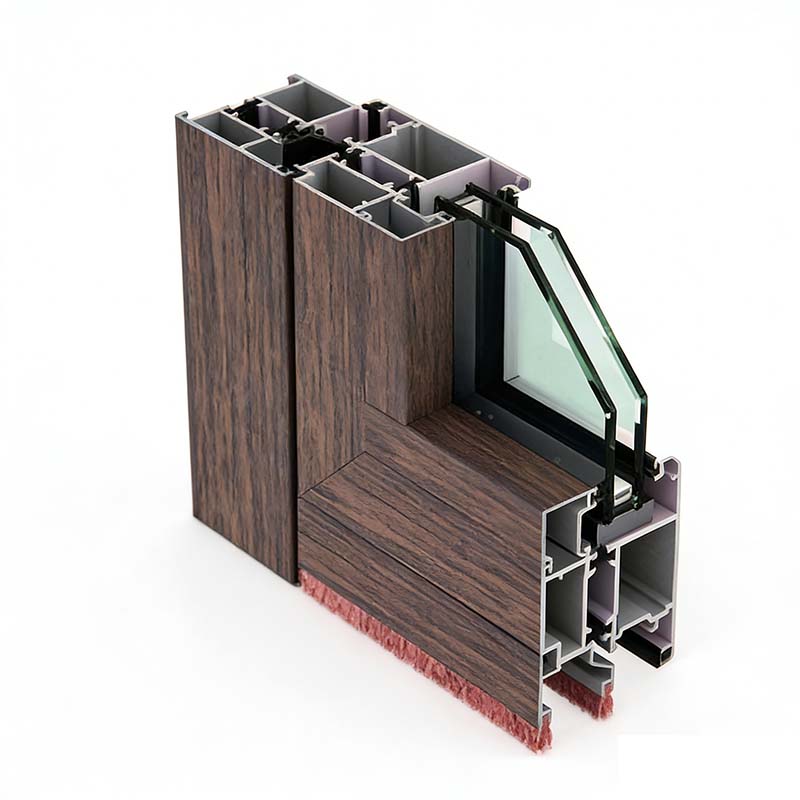
6063 is the workhorse of building products, including curtain wall mullions and transoms, window and door frames, louvers, and railing systems, because it extrudes into crisp complex shapes, anodizes to a clean uniform finish, and delivers enough strength for most facade loads. T5, artificially aged directly after extrusion, is the default for standard sections; T6, solution treated and aged, earns its extra cost when spans or connector loads rise. For a closer look at that trade-off, our guide to 6063-T5 extrusion properties and design tips breaks down the numbers section by section.
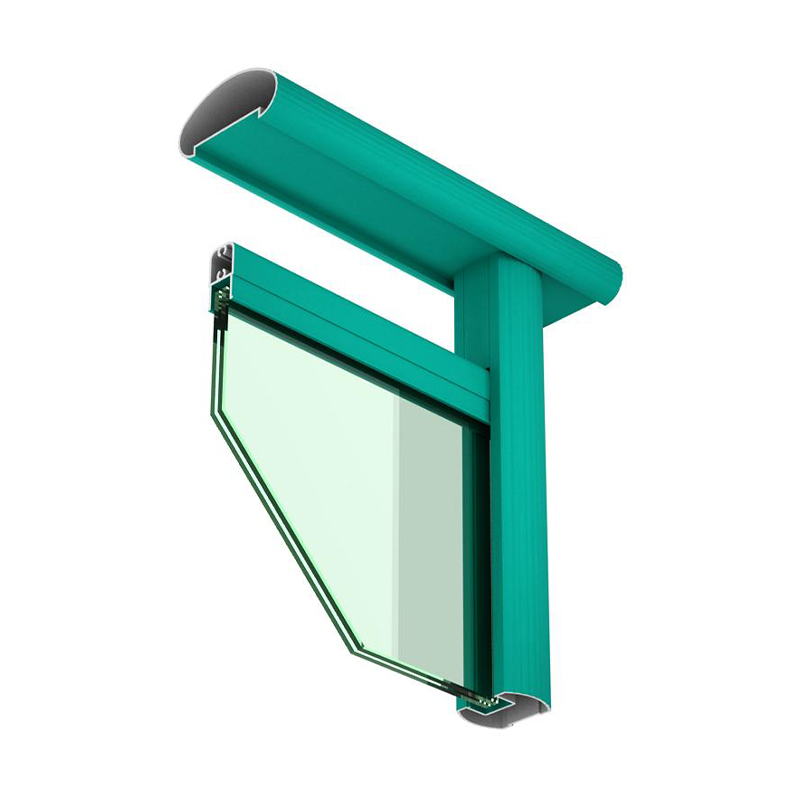
aluminium curtain wall profiles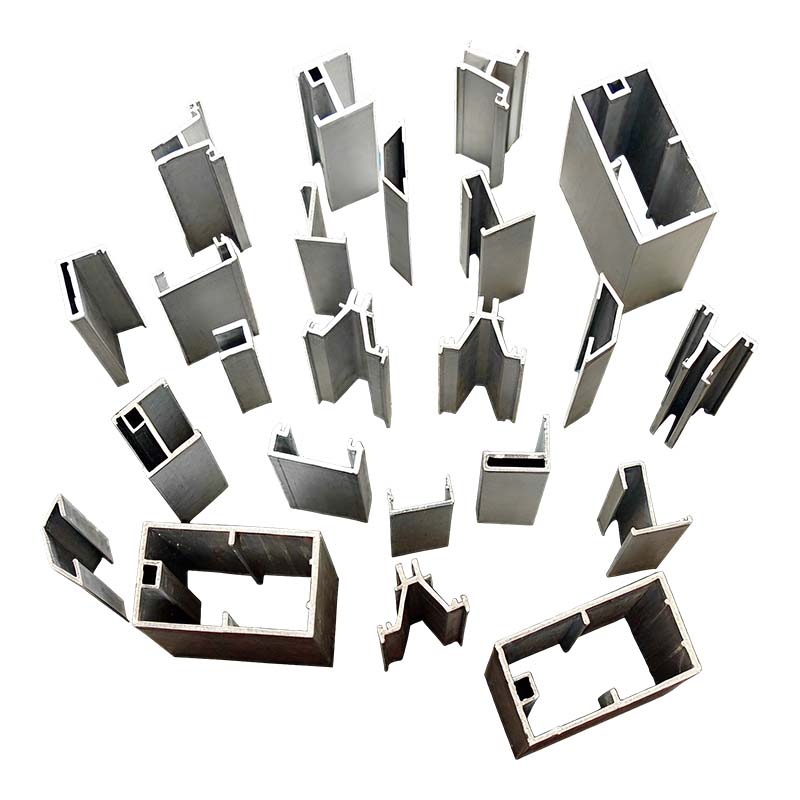 Aluminium Curtain Wall ProfilesMade for unitized and framed curtain wall systems, these profiles combine precision tolerances with strong wind-pressure resistance. They suit the article's discussion of 6063 facade sections like mullions and transoms, where finish consistency and dimensional control matter for high-rise buildings.View Product →
Solar module frames and mounting rails stay in the 6xxx family, commonly 6063-T6 or 6005A, where corrosion resistance, moderate strength, and consistent finishing matter more than raw load capacity. Frame sections also live inside the module laminate and face the weather for decades, so tolerance control and surface consistency weigh as heavily as the tensile table.
aluminum solar panel frames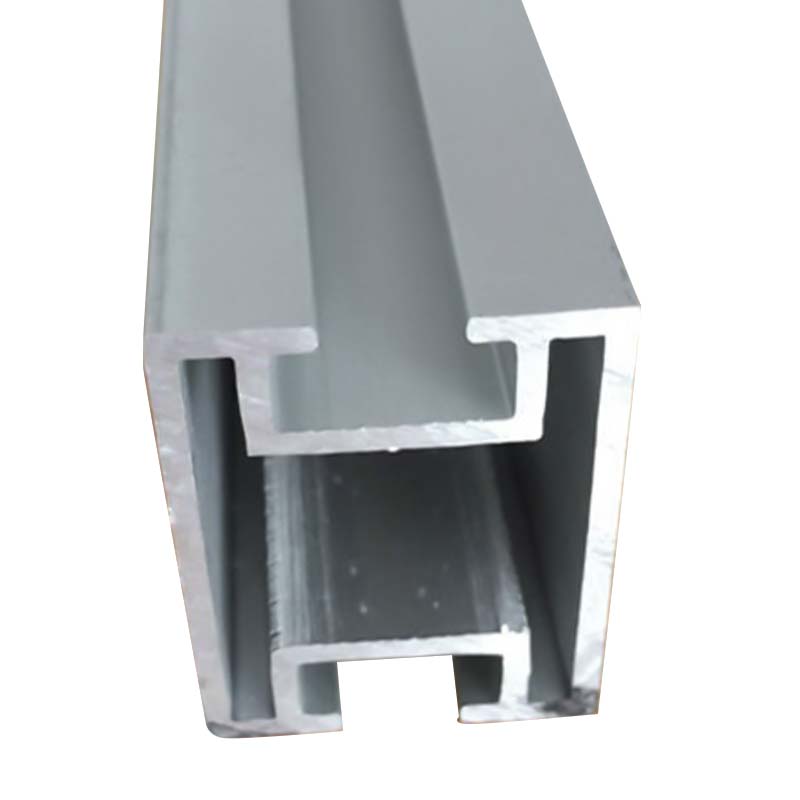 Aluminum Solar Panel FramesLightweight, strong, and corrosion resistant, these frames are designed for decades of outdoor exposure with accurate dimensions for fast module assembly. They fit the article's point that solar frames favor corrosion resistance and surface consistency over raw load capacity.View Product →
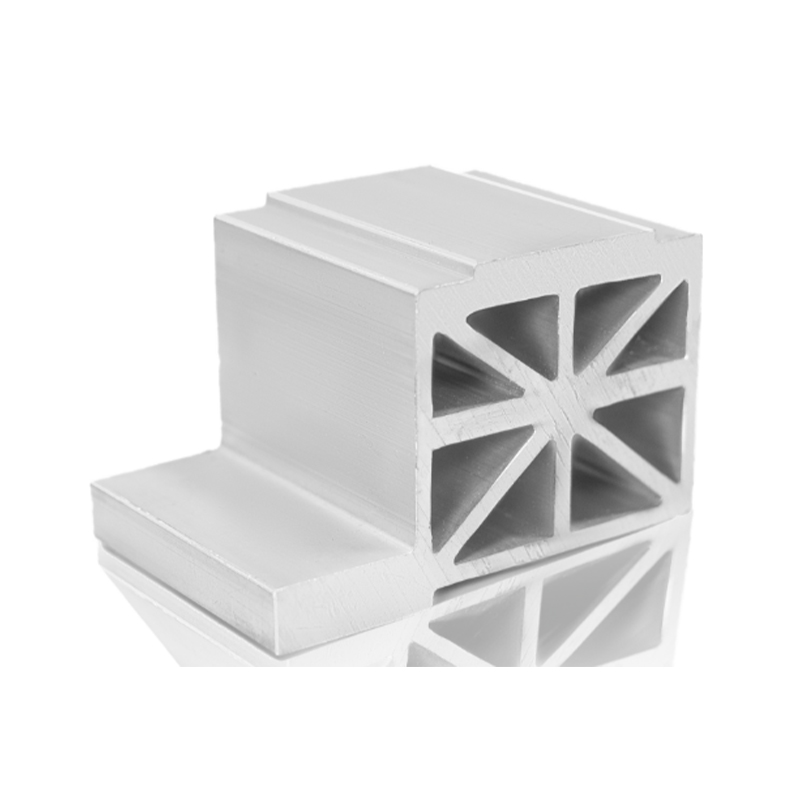
Step up to 6061-T6 or 6005A when the section carries genuine structural load: battery tray frames, bumper beams, crash boxes, motor housings, and heavy machinery frames. These alloys give up some extrudability and finish quality for roughly 25 percent higher yield strength than 6063-T6, and wall thickness grows too, with battery tray sections commonly running 2.5 to 4 mm. At that gauge, per-lot mechanical testing stops being paperwork and becomes real process control. Our industrial aluminum profile range covers these applications, and the battery tray sections below are a typical example.
battery tray aluminum profiles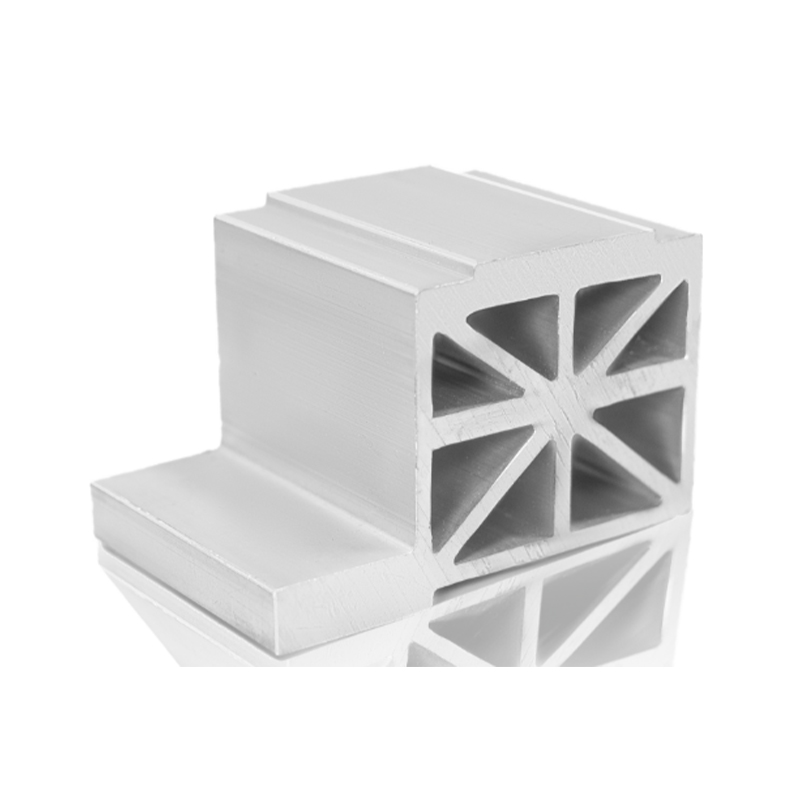 Battery Tray Aluminum ProfilesThese high-strength, lightweight sections support new energy vehicle battery packs while dissipating heat and carrying structural loads. They illustrate the article's shift to 6061-T6 and 6005A, where thicker walls and per-lot mechanical testing become essential process control.View Product →
Run through these points before issuing the purchase order. Each takes minutes to check now and costs real money to fix after extrusion:
The most common failure is not a poor extruder. It is a buyer who accepted "6063-T6 equivalent" with no certificate and later cannot prove what was delivered. Equivalency is not a specification. B221, cited by edition and backed by a certificate, is.
The ASTM B221 PDF costs little next to the risk it manages, and once you know where the chemical and mechanical tables sit, auditing a mill certificate takes minutes. As a manufacturer supplying architectural, photovoltaic, and automotive profile lines, we see these designations on purchase orders every week, and the checklist above is the same one we would hand to any buyer qualifying a new supplier. Ask for the certificate, match it to the tables, and the alloy designation on your drawing will mean exactly what you intend it to mean.
 +86-19156366875
 No. 1016, Baocheng Road, Economic and Technological Development Zone, Xuancheng City, Anhui Province, China
Copyright © Anhui Huilong Group Huilv New Material Technology Co., Ltd. All Rights Reserved
Aluminum Profiles Manufacturers