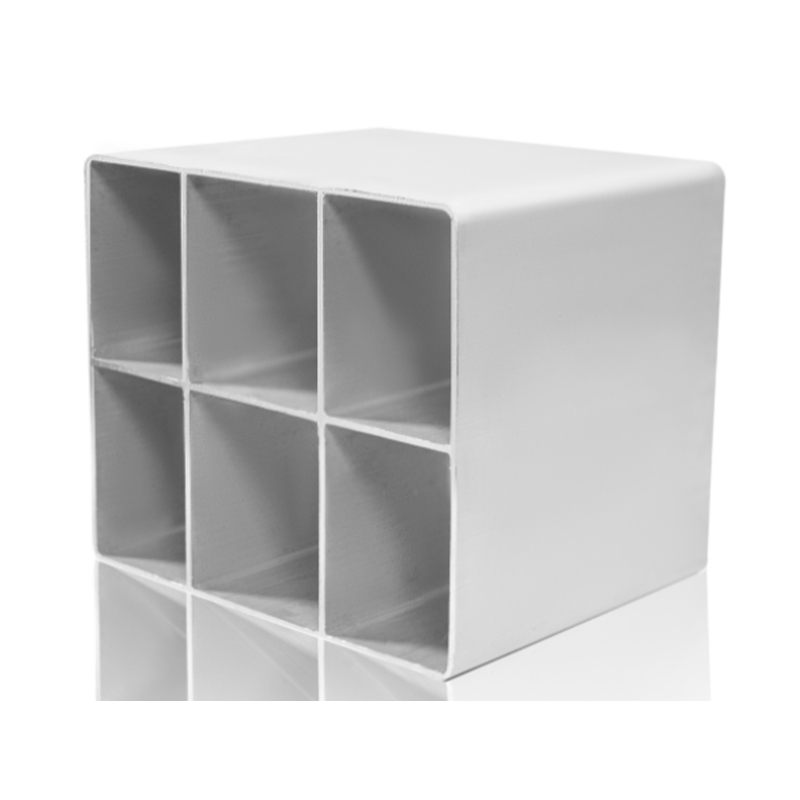
Extruded aluminum is one of those materials that quietly holds modern life together. It forms the window frames around our homes, the mounting rails behind solar panels, the lightweight parts inside electric vehicles, and the clean framework of automated production lines. At Huilv, we make architectural, photovoltaic, and industrial aluminum profiles every day, and the basic story of how extruded aluminum is made is both practical and fascinating.
In simple terms, extrusion is a shaping process. A heated aluminum billet is pushed through a steel die with a carefully cut opening. The die gives the metal its cross-sectional shape, much like squeezing dough through a shaped nozzle. The rest of the process is about controlling temperature, pressure, speed, cooling, and heat treatment so the final profile is straight, strong, and dimensionally accurate.
Content
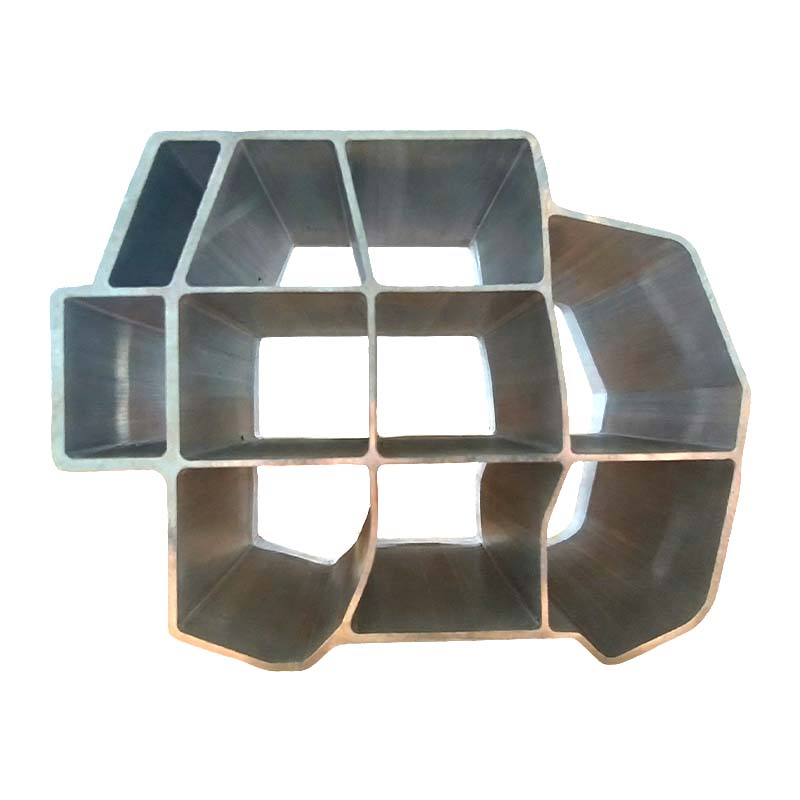
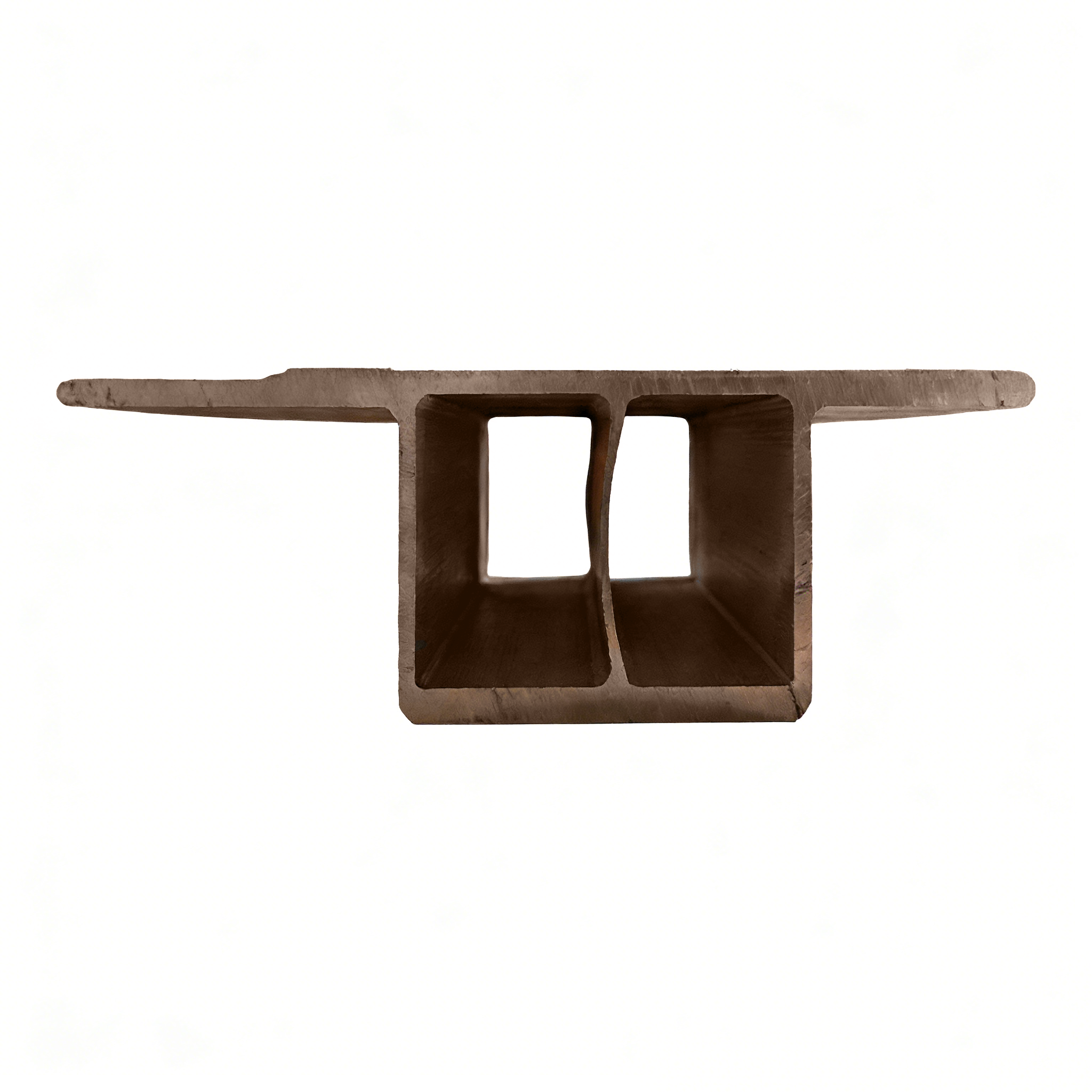
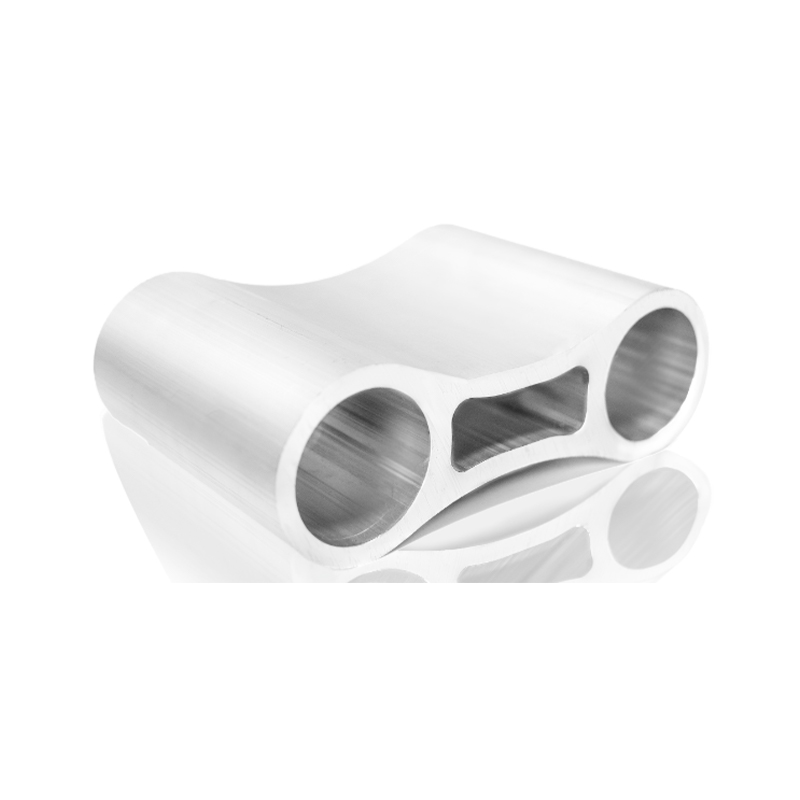
Extruded aluminum is a continuous length of aluminum that has been forced through a die opening to create a fixed cross-sectional profile. That profile can be a simple solid bar, a semi-hollow shape, or a complex hollow tube with internal ribs. Common extrusion alloys include 6063, 6061, and 6005A. Among them, 6063-T5 aluminum is widely used for architectural and general-purpose profiles because it offers a good balance of formability, corrosion resistance, and surface finish.
The die is the heart of the process. It is usually made from H13 tool steel and machined with the exact profile shape. For hollow profiles, the die may include a mandrel or a porthole design that allows metal to flow around the core and then weld back together under pressure. The quality of the die, its heat treatment, and its maintenance all affect the surface quality and dimensional consistency of the finished extrusion.
Every good extrusion starts before the press. The raw material is an aluminum billet, which is a cast log of a specific alloy. The alloy is chosen for the final application. A window profile may need excellent surface finish and weather resistance, while a battery tray or crash box may need higher strength and energy absorption. The billet is cut to the proper length, inspected for surface defects, and sometimes homogenized to improve internal structure and extrusion behavior.
Cleanliness matters. If the billet carries contamination, oxides, or moisture, those problems can appear later as blisters, streaks, or weak sections. Experienced extruders treat billet preparation as the first quality checkpoint, not as a routine step.
The billet is heated in an induction furnace or a gas-fired furnace to a temperature that makes the aluminum soft enough to flow but not so hot that it melts or becomes damaged. For many 6xxx alloys, the billet temperature is typically in the range of 450 to 500 degrees Celsius. The exact range depends on the alloy, the profile shape, and the press setup.
The die is also preheated. A cold die would chill the aluminum at the moment of contact, making metal flow uneven and increasing the risk of surface defects or die damage. Preheating helps the metal move smoothly through the bearing areas and supports a stable extrusion speed.
Once the billet reaches the correct temperature, it is loaded into the extrusion container. A hydraulic ram applies pressure through a dummy block, pushing the aluminum against the die. The metal is forced through the die opening and emerges as a continuous profile. Press capacity can range from a few hundred tons to several thousand tons, depending on the size and complexity of the profile.
Solid profiles are relatively straightforward, but hollow profiles require more advanced die designs. In a porthole die, the metal splits into several streams, flows around the mandrel, and then rejoins in a welding chamber before exiting the die. If temperature, pressure, and speed are not balanced, the weld seams may not be strong enough or may become visible after anodizing. This is why extrusion is often described as both a mechanical process and a metallurgical one.
As the profile leaves the die, it is still hot and soft. Cooling begins immediately. Some alloys are cooled in air, while others require a water mist or spray quench. For heat-treatable alloys, the cooling rate is critical because it influences the microstructure and, eventually, the mechanical properties. This stage is sometimes called press quenching when the cooling is done right at the press exit.
If cooling is too slow, the alloy may not reach its full strength potential. If it is too fast or uneven, the profile may distort, crack, or develop undesirable internal stresses. The goal is controlled cooling that preserves shape while preparing the metal for aging.
After cooling, the extrusion is pulled or stretched slightly. Stretching may sound simple, but it is an important correction step. It helps straighten the profile, relieve internal stress, and improve dimensional stability. The amount of stretch is usually small, often around one to three percent, but it must be adjusted for the alloy and profile shape.
The stretched profile is then cut to rough lengths. A saw may cut it into manageable sections for further processing, such as aging, finishing, machining, or assembly. At this point, the profile has its basic shape, but it has not yet reached its final temper or surface condition.
For many extruded aluminum products, the next stage is artificial aging. The profiles are placed in an aging oven and held at a controlled temperature for a specific time. A typical cycle for certain 6xxx alloys might be around 350 degrees Fahrenheit for 10 to 12 hours, although exact parameters depend on the alloy and desired temper.
During aging, metallurgical changes take place inside the aluminum. Alloying elements form fine precipitates that strengthen the metal without destroying its ductility. This is how the material reaches tempers such as T5 or T6. The difference between a soft profile and a strong, durable one often comes down to this carefully controlled oven cycle.
Once the profile has the right temper, it can be finished and fabricated. Common finishes include anodizing, powder coating, painting, and mechanical brushing. Anodizing creates a protective oxide layer and can add color or a metallic look. Powder coating provides a durable, weather-resistant surface for architectural and outdoor applications.
Fabrication may involve cutting to final length, CNC machining, drilling, bending, milling, tapping, and assembly. Some profiles become ready-to-install window and door systems. Others become solar panel frames, automotive components, or industrial machine frames. The extrusion process creates the shape, but finishing and fabrication turn it into a usable product.
Quality control does not happen only at the end. It runs through the entire workflow. The billet is checked for alloy and surface condition. Furnace temperatures and extrusion speeds are monitored. The profile is inspected for dimensions, straightness, twist, surface defects, and wall thickness. After aging, samples may be tested for hardness and mechanical properties. Finally, the finished profile is checked again before packing or assembly.
Traceability is also important. If a customer later asks about a batch, an experienced manufacturer should be able to connect the finished profile back to the billet lot, the extrusion run, and the heat treatment cycle. That discipline is what separates consistent production from occasional good results.
| Stage | Main Action | Why It Matters |
|---|---|---|
| Billet preparation | Select alloy, cut, inspect, and clean the billet | Prevents contamination and supports consistent metal flow |
| Heating | Heat billet and die to the proper temperature | Makes aluminum soft enough to extrude without melting |
| Extrusion | Push billet through the die under high pressure | Creates the cross-sectional profile shape |
| Cooling and quenching | Control cooling as the profile leaves the die | Affects microstructure, strength, and distortion |
| Stretching and cutting | Straighten, stress-relieve, and cut to length | Improves straightness and dimensional stability |
| Aging | Heat profiles in an aging oven | Develops T5, T6, or other required tempers |
| Finishing and fabrication | Anodize, coat, machine, bend, and assemble | Turns the profile into a finished, usable product |
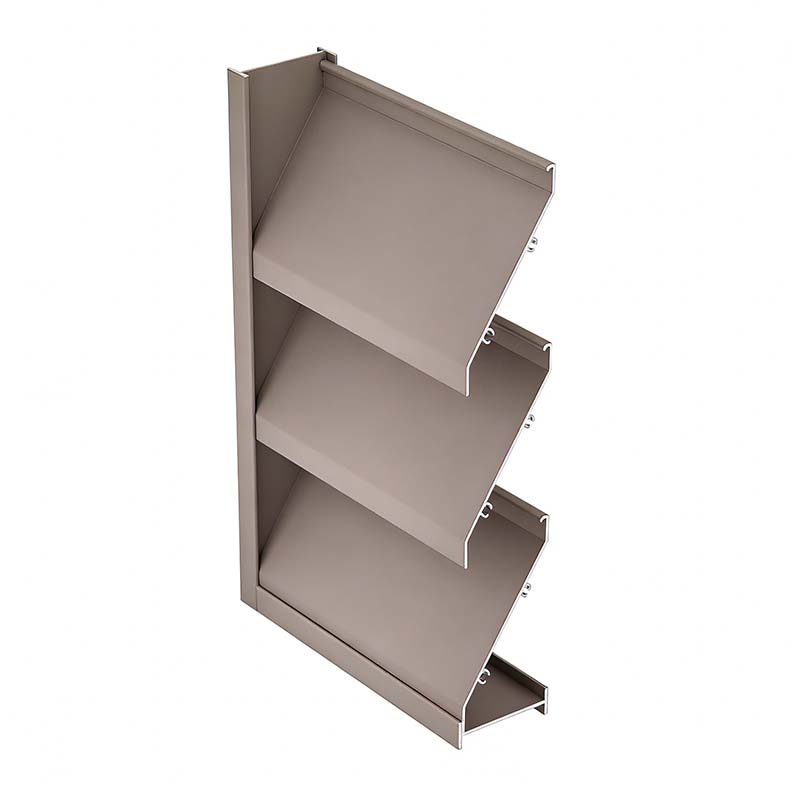
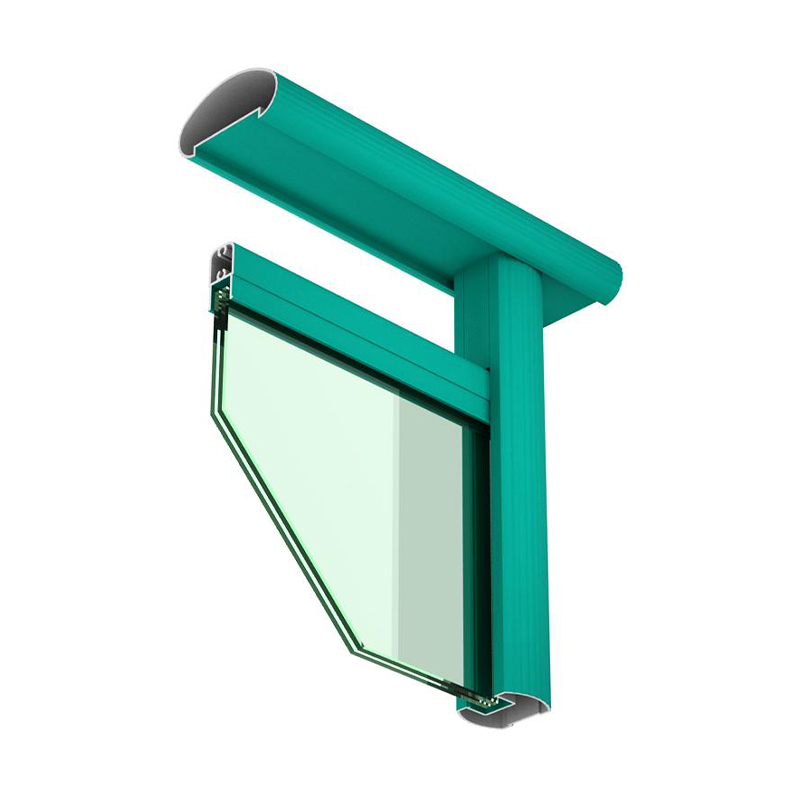
Architectural profiles are among the most familiar extruded aluminum products. They become window frames, door frames, curtain wall systems, sunshades, balcony railings, and louver systems. These profiles need smooth surfaces, accurate dimensions, and reliable weather resistance. Products such as non-thermal casement window profiles show how extrusion supports both function and appearance in buildings.
In the photovoltaic industry, extruded aluminum is used for solar panel frames and mounting brackets. These profiles must handle outdoor exposure, wind loads, and temperature changes while keeping solar modules secure for years. A well-designed frame is light, strong, and resistant to corrosion.
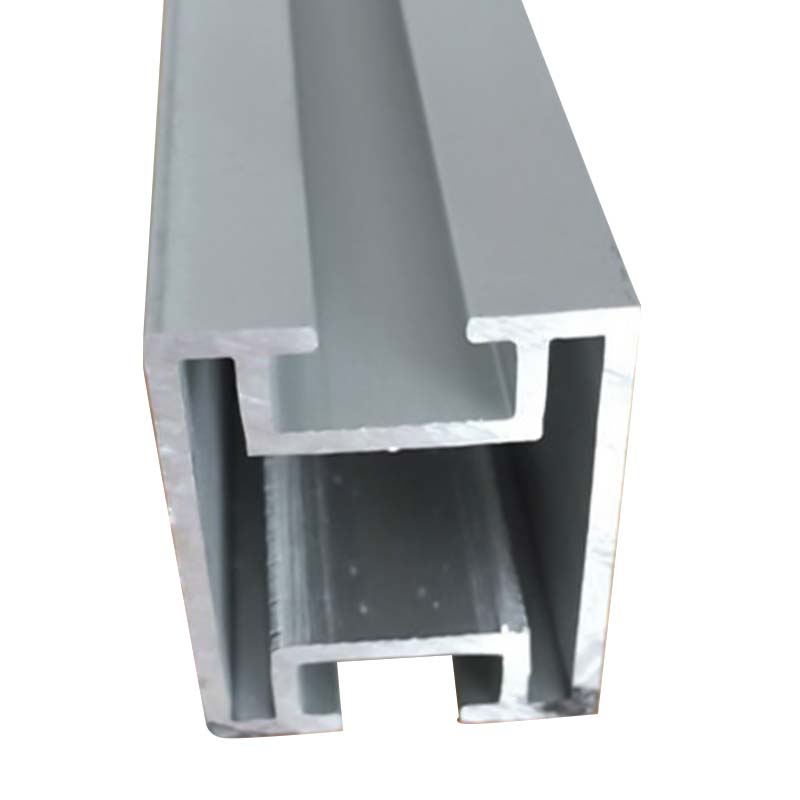 Aluminum Solar Panel Frame Profiles for Photovoltaic ModulesLightweight, corrosion-resistant aluminum profiles for solar panel frames and mounting brackets, suited to outdoor photovoltaic installations requiring long-term module protection.View Product →
Automotive lightweighting is another important area. Extruded aluminum helps reduce vehicle weight while maintaining crash performance and structural integrity. Profiles can be used for crash boxes, battery trays, bumper beams, sill beams, motor housings, and other components. These parts often require tight tolerances, specialized alloys, and deep processing such as CNC machining and friction stir welding.
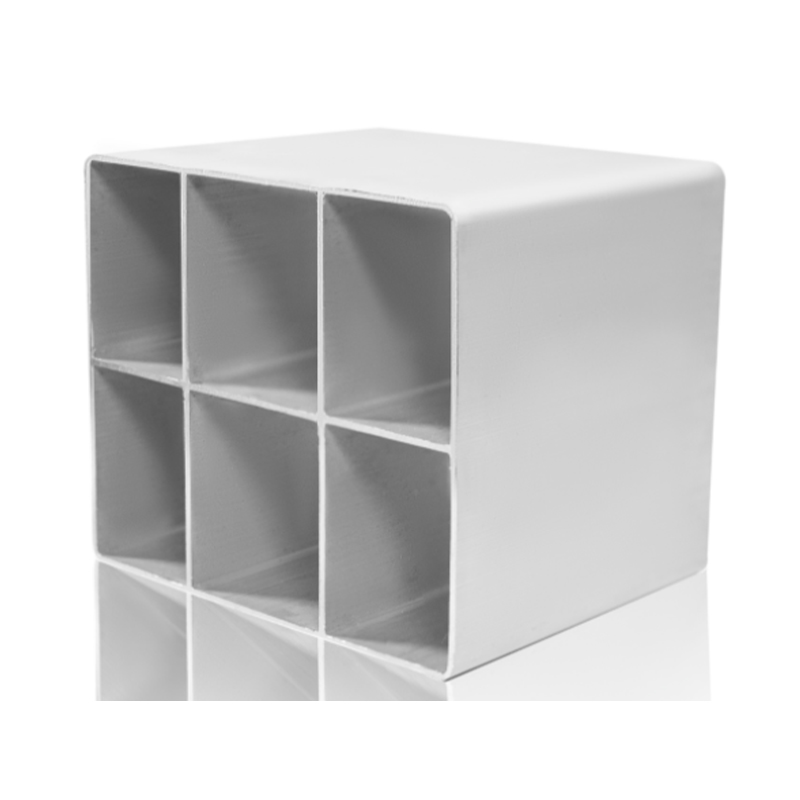 Automotive Crash Box Aluminum Profiles for Impact Energy AbsorptionLightweight extruded aluminum profiles for automotive crash boxes, positioned within vehicle lightweighting to help absorb impact energy and support safety.View Product →
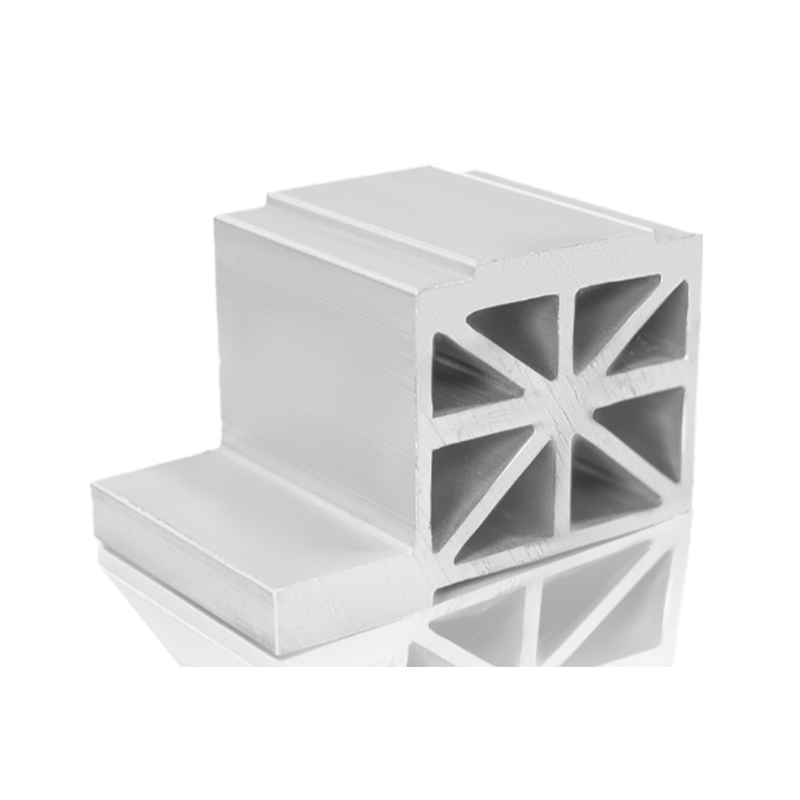 Battery Tray Aluminum Profiles for New Energy VehiclesHigh-strength, lightweight aluminum extrusion profiles for new energy vehicle battery trays, offering heat dissipation and structural support in battery systems.View Product →
Industrial extrusion covers a broad range as well. Assembly line frames, machine guards, workstations, medical device frames, and automation structures all rely on aluminum profiles because they are modular, easy to assemble, and resistant to corrosion. For these applications, dimensional consistency and a clean surface are often just as important as raw strength.
Extruded aluminum offers an unusual combination of properties. It is lightweight but strong enough for structural applications. It resists corrosion because a natural oxide layer forms on its surface. It conducts heat and electricity well, which makes it useful for heat sinks and electrical enclosures. It can be recycled repeatedly without losing its fundamental qualities. Most importantly, it can be formed into complex cross-sections that would be difficult or expensive to produce by machining or welding alone.
That design freedom is why engineers keep returning to extrusion. A single die can produce thousands of identical profiles with integrated ribs, channels, screw ports, and snap-fit features. The process is efficient at scale, yet flexible enough for custom projects, short production runs, and ongoing product improvements.
Knowing how extruded aluminum is made is useful, but choosing the right manufacturing partner matters just as much. A reliable extruder understands alloy selection, die design, press control, cooling, aging, finishing, and quality inspection. That knowledge helps prevent costly delays and ensures the final profile performs as expected in its application.
At Huilv, we produce aluminum profiles for architecture, photovoltaics, automotive lightweighting, and industrial equipment. Our experience covers the full journey from billet to finished profile, including deep processing and assembly. We believe good extrusion is not just about pushing metal through a die. It is about controlling every variable and paying attention to what the customer actually needs.
The extruded aluminum process begins with a heated billet and a precisely machined die, but it depends on dozens of small decisions along the way. Temperature, pressure, speed, cooling, stretching, aging, and finishing all shape the final result. When these steps are handled with care, extruded aluminum becomes one of the most versatile and reliable materials in modern manufacturing.
Whether you are developing a window system, a solar mounting solution, an automotive component, or an industrial frame, understanding the process helps you ask better questions and make better choices. And if you ever want to see how it all comes together, the team at Huilv is always glad to talk aluminum.
 +86-19156366875
 No. 1016, Baocheng Road, Economic and Technological Development Zone, Xuancheng City, Anhui Province, China
Copyright © Anhui Huilong Group Huilv New Material Technology Co., Ltd. All Rights Reserved
Aluminum Profiles Manufacturers