Ask anyone on our extrusion floor what the most-referenced document in the plant is, and they will not say a drawing. They will say the aluminum grades chart. It is the single page that explains why a window profile, a battery tray and a machine frame can all be made of aluminum yet behave like three completely different materials.
This guide walks through the alloy series, the temper designations and the practical differences that matter when you are specifying extrusions. If you already know which series you need, the chart below will confirm it. If you are still deciding, the notes that follow will help you narrow it down the way we do on the shop floor.
Content
Aluminum is rarely used in its pure form. Almost every commercial profile contains a small, carefully controlled addition of another element, such as magnesium, silicon, copper, zinc or manganese. That addition changes nearly everything: tensile strength, corrosion resistance, how smoothly the metal extrudes, how well it welds, and how evenly it anodizes.
A grade chart exists to make those trade-offs visible at a glance. Read one well and you can tell, before a single billet is cut, whether a design will extrude cleanly, whether it will survive a coastal environment, and whether the finished part will hold tolerance after machining. That is why we treat the chart as a working tool rather than a reference poster.
Wrought aluminum grades use a four-digit system, and it is more logical than it first appears. The first digit identifies the principal alloying element, meaning the family the metal belongs to. The second digit, when it is not zero, indicates a modification of the original alloy. The final two digits simply identify the specific alloy within that family.
A few examples make the logic obvious:
Cast alloys follow a different naming convention, and they are usually marked with a decimal point, such as 356.0. Since extrusion is a wrought process, the rest of this article focuses on the wrought side of the chart.
The table below is a condensed version of the chart we keep on the wall. It is deliberately simplified, but it captures the character of each series and the industries that rely on it most.
| Series | Main Alloying Element | Strength Level | Where You Usually See It |
|---|---|---|---|
| 1000 | None, 99% pure | Low | Electrical conductors, foil, decorative trim |
| 2000 | Copper | Very high | Aerospace structures, high-strength machined parts |
| 3000 | Manganese | Moderate | Roofing sheet, heat exchangers, signage |
| 4000 | Silicon | Moderate | Welding wire, brazing filler, pistons |
| 5000 | Magnesium | Moderate to high | Marine sheet, fuel tanks, pressure vessels |
| 6000 | Magnesium and silicon | Moderate, heat treatable | Architectural and industrial extrusions |
| 7000 | Zinc | Very high | Aircraft, high-stress automotive and sports parts |
| 8000 | Other elements | Varies | Specialist and experimental alloys |
A grade on its own tells only half the story. The suffix after the dash describes the temper, which is the mechanical treatment the metal has received. Two profiles made from the same 6061 alloy can differ significantly in strength and ductility depending on whether they are supplied as T4, T6 or T651.
The most common temper families are easy to remember:
T5 means the profile was cooled from the extrusion press and then artificially aged, without additional solution treatment. It is the workhorse temper for architectural extrusions because it delivers a good balance of strength and surface finish. T6 adds a separate solution treatment before aging, which raises strength further and suits structural and machined parts. T4 is solution treated but naturally aged, giving better formability for parts that will be bent after delivery.
Although the chart lists eight series, extrusion production concentrates on a small handful. Knowing why is more useful than memorizing numbers.
6063 extrudes beautifully, takes an anodized or powder-coated finish evenly, and offers enough strength for windows, doors, curtain walls, louvres and railings. When a designer asks for a clean, consistent surface across long runs, this is usually the answer. Our own technical team has gathered practical notes on 6063-T5 extrusion properties and design tips for anyone specifying it for the first time.
6061 contains more magnesium and silicon, and with the T6 temper it reaches notably higher strength. It machines well, welds acceptably and is the natural pick for brackets, frames, battery housings and load-bearing parts.
Both sit close to 6061 in strength and are common in transport and structural applications where thicker walls and larger sections are needed.
5052 is a sheet and plate alloy with outstanding corrosion resistance, while 7075 delivers the highest strength of the common grades but is harder to weld and less tolerant of sharp bends.
In our experience, most selection mistakes happen not because someone read the chart incorrectly, but because they stopped reading after the strength column.
Window and door systems, curtain walls, sunshades and balcony railings are dominated by 6063-T5, with 6061-T6 reserved for structural connections. Corrosion resistance, coating adhesion and dimensional consistency matter more here than raw tensile strength.
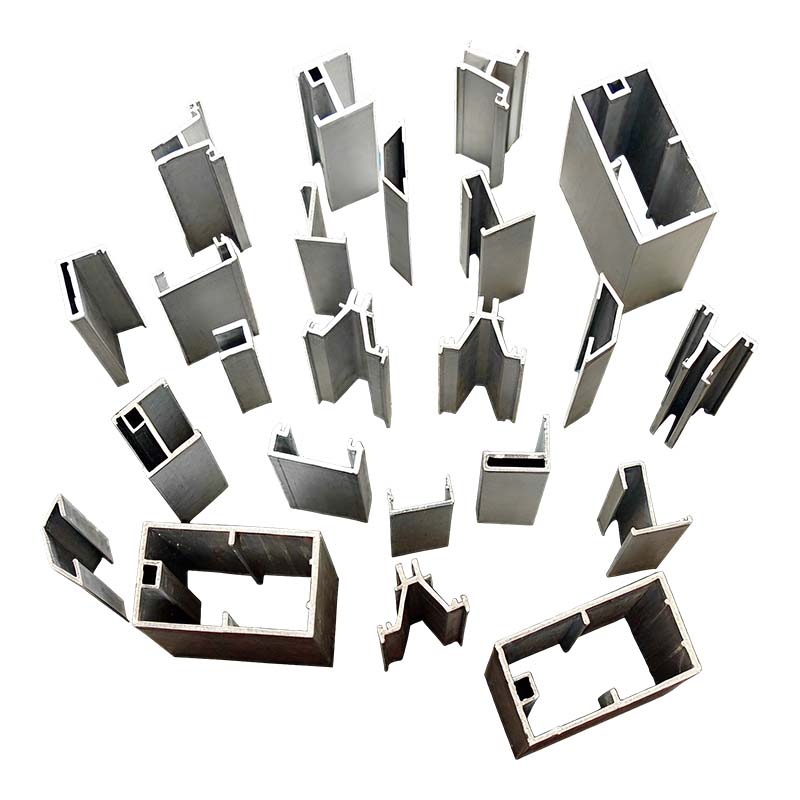 Aluminium Curtain Wall ProfilesThe Aluminium Curtain Wall Profiles features high precision and is compatible with various curtain wall systems (unitized, framed, etc.). It possesses excellent wind p...View Product →
For residential window systems that do not require a thermal break, profiles such as non-thermal casement window profiles remain a cost-effective and durable option.
Solar panel frames and mounting brackets are usually produced from 6005A or 6063 modified alloys, chosen for a stiffness-to-weight ratio that keeps modules stable under wind load without adding shipping cost.
Lightweight structural parts, from crash boxes and bumper beams to sill beams and battery trays, lean on 6005A, 6061 and, in some cases, 7000 series. Assembly line frames and machine guarding, by contrast, are frequently built from standardized T-slot extrusions in 6063.
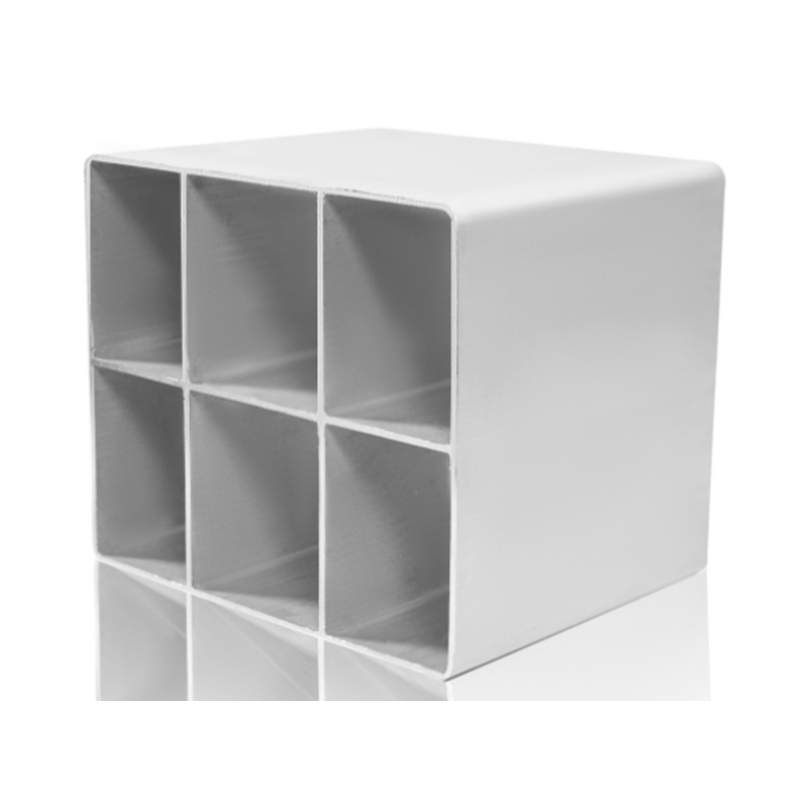 Automotive Crash Box Aluminum ProfilesAutomotive crash box aluminum profiles absorb impact energy through structural deformation during a collision, enhancing overall vehicle safety performance. Aluminum a...View Product →
On the factory floor, the priority shifts again. Modular framing needs straightness, repeatable slot dimensions and a consistent finish so that components from different batches bolt together without rework.
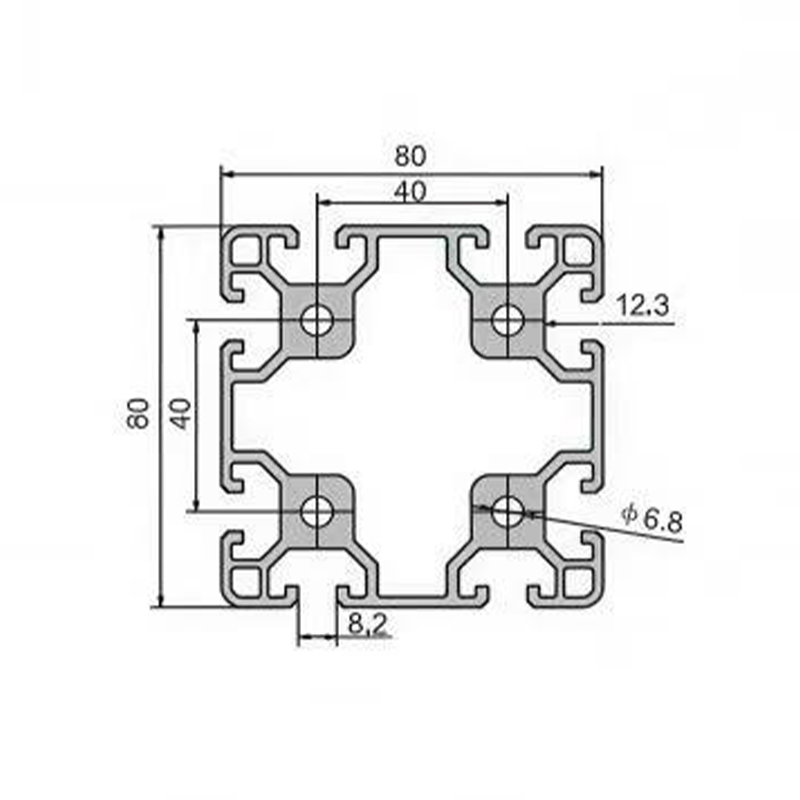 Assembly Line Aluminum ProfilesAssembly Line Aluminum Profiles feature a modular design for quick assembly and adjustment. They offer high load-bearing capacity and are highly reusable.View Product →
After years of quoting projects, we see the same handful of issues appear again and again.
An aluminum grades chart is a map, not a decision. It tells you which family a material belongs to, what its alloying element does, and how its temper changes the outcome. The final choice still depends on the load it must carry, the environment it will live in, and the process it must survive on the way to installation.
If you are weighing two grades for a project and the chart is not settling the question, send us the application details. Comparing extrusion behaviour, finishing options and long-term durability is something we do every day, and it is usually faster than testing your way to an answer.
 +86-19156366875
 No. 1016, Baocheng Road, Economic and Technological Development Zone, Xuancheng City, Anhui Province, China
Copyright © Anhui Huilong Group Huilv New Material Technology Co., Ltd. All Rights Reserved
Aluminum Profiles Manufacturers