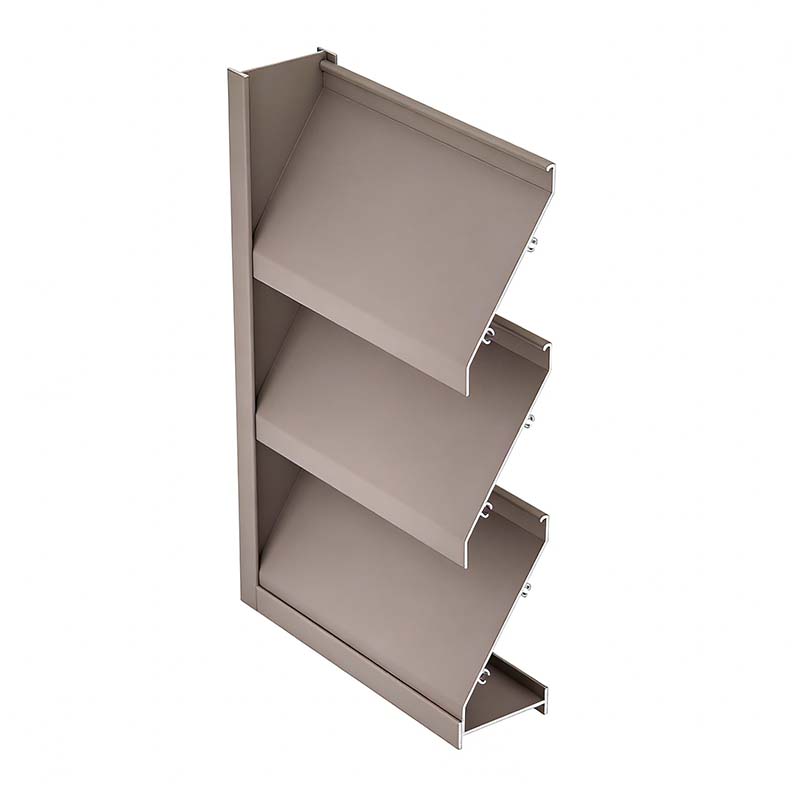
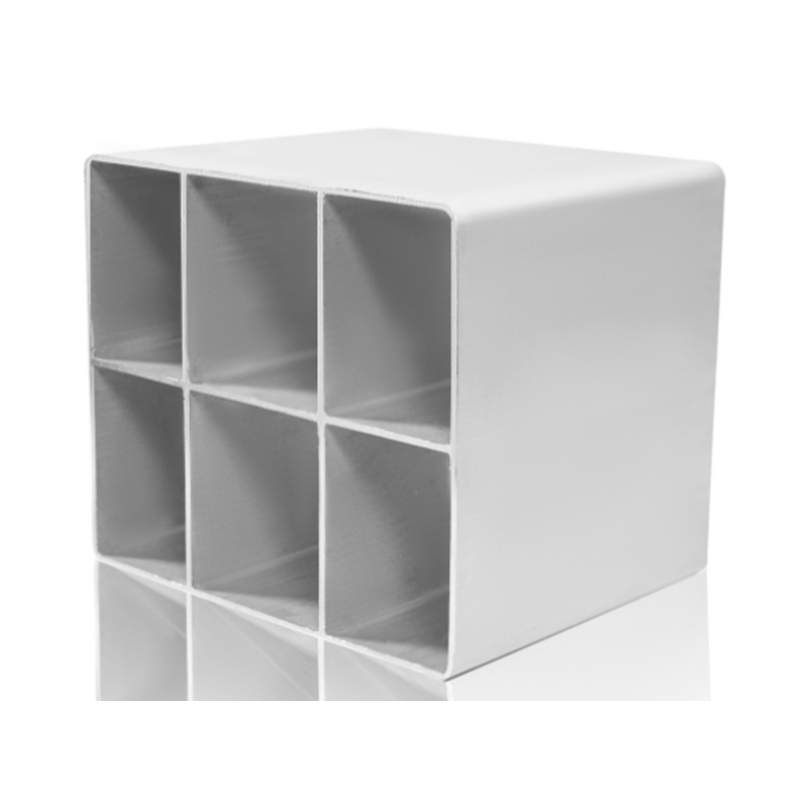
Ask five extrusion plants to quote the same window section and you will get five prices that look similar — plus one or two that look suspiciously low. The real differences rarely appear on the quotation. They appear when a mitered corner refuses to close, when an anodized frame streaks after six months, or when the delivery date slips for the third time. For architects, facade contractors, and window fabricators, choosing an architectural aluminum profiles supplier is really about consistency: consistent alloy, consistent tolerances, consistent surface finish, and consistent delivery. That consistency — more than catalog breadth — is what separates a true architectural supplier from a general extrusion shop.
This guide walks through the factors that matter at the purchasing stage: material specifications, dimensional control, surface treatment, thermal-break performance, customization support, and supply reliability. It closes with a checklist you can take to any supplier conversation.
Content
Architectural aluminum profiles go into the building envelope: casement and sliding windows, doors, curtain walls, skylights, balcony railings, louvers, and sunshades. These sections are visible, exposed to weather, and assembled by fabricators who do not want to re-machine parts. A supplier in this category should be able to deliver a complete architectural aluminum profiles range, from standard shapes to custom dies, while holding straightness, twist limits, and surface integrity from the first batch to the last.
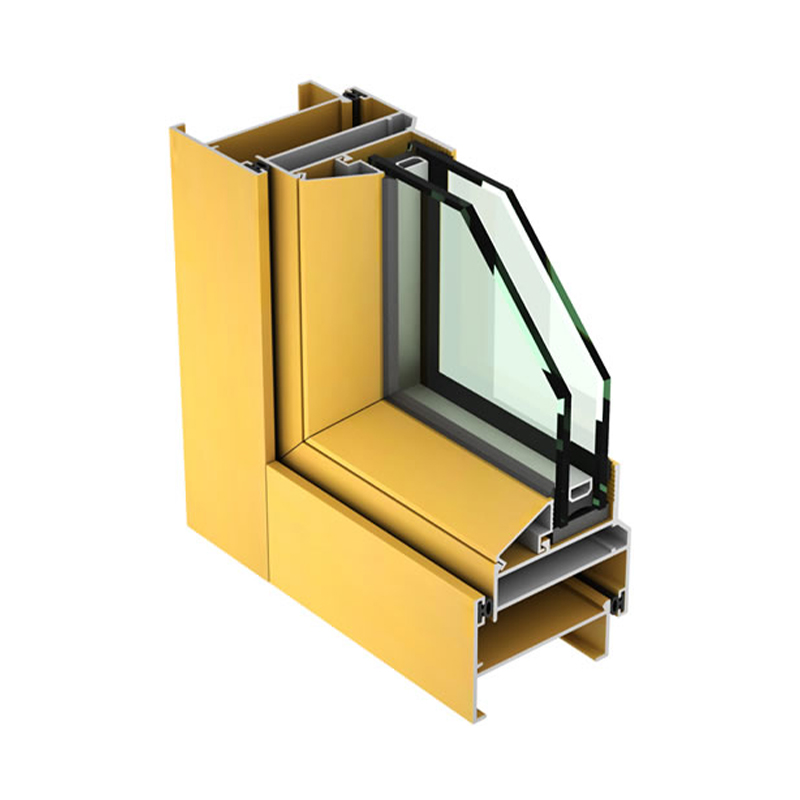 Architectural Aluminum Profiles Supplier, Architectural Aluminum Systems CustomHuilv provide Custom Architectural Aluminum Systems, are Architectural Aluminum Profiles Suppliers and Architectural Aluminum Extrusions ...View Product →
Material traceability belongs in the same conversation. You should be able to trace any profile back to its alloy and temper, and the supplier should confirm conformity to recognized standards such as EN 755, ASTM B221, or GB/T 5237. If a supplier cannot state the exact alloy and the standard it was tested against, every downstream performance claim becomes unverifiable.
The most common architectural alloy, 6063, is supplied in T5 and T6 tempers. 6063-T5 offers excellent surface quality and flows well into complex thin-wall sections. 6063-T6 adds roughly 10 to 15 percent more yield strength through artificial aging, which matters when mullions or transoms must carry higher wind loads or wider spans. Many anodized projects specify 6060 instead, because its surface response is predictable across batches. The supplier's job is to match the alloy and temper to the function of each profile, not to run everything in the same material.
Temper mistakes are expensive. Replacing T5 with T6 without adjusting extrusion and aging parameters can produce hairline surface defects. Substituting a lower-strength temper in a structural mullion invalidates the facade calculation. Ask for a mill certificate on every batch and keep your own records for critical sections. For a closer look at how the alloy behaves, our guide to 6063-T5 properties, uses, and design tips explains where it works well and where it does not.
Die lines, blisters, and extrusion ladders are visible evidence of poor process control. A disciplined supplier checks dies at defined intervals, controls billet temperature, and follows documented aging curves. If the supplier has no in-house rejection-rate data, assume the process is uncontrolled.
You do not need to hardness-test every batch yourself, but you do need to know where the test report comes from. Look for hardness numbers that match the alloy and temper in your order, not a certificate template that changes only the date.
Tolerance charts look abstract until a fabricator tries to assemble forty windows with a 0.5 mm step between frame and sash. The profiles that matter are those with tight control on cross-section dimensions, twist, longitudinal straightness, and cut length. EN 755-9 defines tolerance classes, and a competent architectural extruder works to precision or high-precision classes rather than the loose end of the range.
Out-of-tolerance profiles usually come from worn dies, inconsistent billet temperature, uneven quenching, or rushed aging. That is why the supplier's quality system matters more than the tolerance table in the brochure. Ask how often dies are checked, how many runs are held for full inspection, and what happens to profiles that fall outside the limit — scrapped, reworked, or shipped anyway. For window fabricators, tight tolerances mean miters close, gaskets seat evenly, and hardware moves without forcing. For curtain-wall contractors, they mean a grid that aligns on site instead of needing shims and grinding.
Architectural profiles are finished in two principal ways: anodizing and powder coating. For exterior use, an anodic film of AA10 to AA15 (10 to 15 microns) is the normal starting point, while coastal and industrial environments often require AA15 or a protective clear coat. Powder coating typically runs from 60 to 120 microns depending on the system and texture. What matters beyond the number is the test data: adhesion, hardness, and salt-spray hours. If a supplier cannot show a corrosion test report for the exact coating system, the warranty is just a promise.
Color consistency matters just as much. Anodized batches can drift between dye lots, and powder-coated batches can shift shade with oven temperature. Ask for samples produced in the same run, and confirm that the supplier can handle small repeat batches for repair or extension work. That practical flexibility is where an experienced manufacturer shows its real capability.
Thermally broken profiles are the standard choice for energy-efficient windows and curtain walls because they interrupt the heat path between interior and exterior aluminum surfaces. The performance questions are not about the polyamide strip alone, but about the tested system: U-value, air leakage, water tightness, and condensation resistance. A supplier should provide profile sections and thermal data together, not force you to combine documents from different sources.
For residential projects, the practical decision is often between a complete set of matching aluminum doors and windows profiles — sashes, frames, and hardware channels that align correctly — and a mixed set from different suppliers that may not share the same tolerances or finish.
Aluminum Doors and Windows Profiles Suppliers, ManufacturersHuilv offer Custom Powder Coated Aluminum Windows/Doors Profiles, China Aluminum Doors Profiles Suppliers and Anodized Aluminum Window Pr...View Product →
Check the geometry of the polyamide strip and the way the profile is crimped or roll-formed. A poorly assembled thermal-break bar can deform during finishing and leave visible marks on the final product. Ask for a cut sample and inspect the joint together with the glazing rebate and the hardware groove.
Non-thermal profiles remain useful for interior partitions, sunshades, louvers, and balcony railings where the structure is ventilated by design. Choosing between the two should follow the project specification, not the supplier's default range. If the project is in a mild climate, non-thermal sections also reduce cost without compromising appearance.
Curtain walls, balcony railings, louvers, and sunshades each impose different demands. Curtain-wall profiles need higher strength, precise glass pocket geometry, and drainage slots designed for the expected rain load. Railing profiles are judged on stiffness, hand-feel, and fixing points for glass infill. Louver profiles must hold their angle over long lengths without sagging. A full-line supplier should offer tested sections for these applications instead of leaving you to improvise with window profiles.
For facade projects, the interaction between profile, glass, gaskets, and pressure plates determines both the appearance and the long-term weather performance. You can read more about how curtain wall profiles balance architectural aesthetics and structural performance in our industry guide. When the project needs a dedicated facade solution, check whether the supplier carries a specific curtain wall aluminum profile line with documented load and drainage data, rather than a generic corner extrusion adapted for the job.
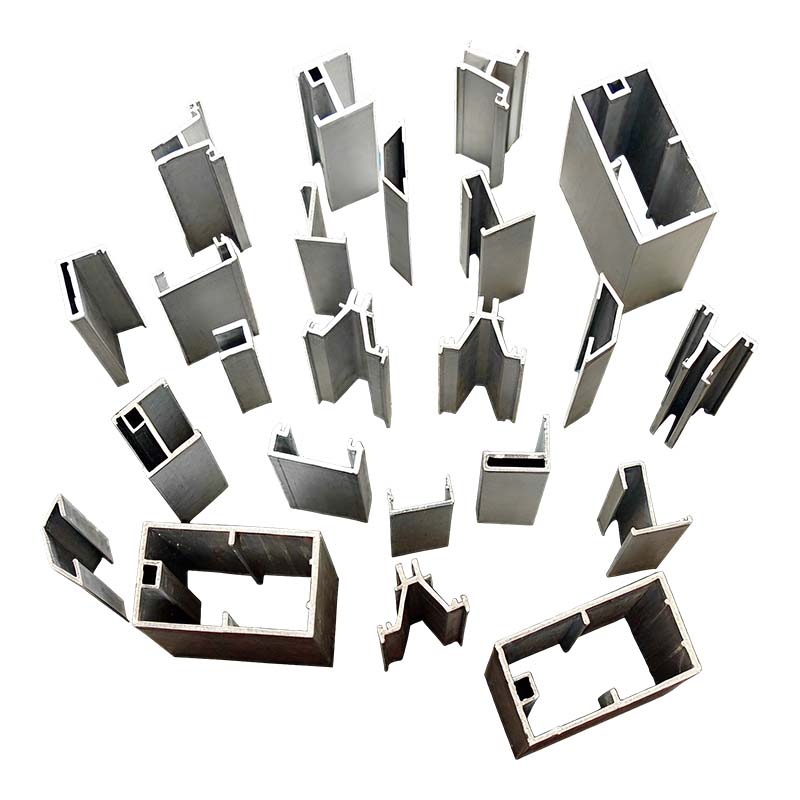 Aluminum Curtain Wall Profiles Manufacturers - Aluminum Facade SolutionsHuilv offer Custom Aluminum Curtain Wall System, Glass Curtain Wall Structure, Aluminum Curtain Wall Profiles Manufacturers and Facade Al...View Product →
Architectural work is rarely a pure off-the-shelf purchase. Site dimensions, hardware selections, and design intent all push toward custom sections. Before ordering, confirm three things: die ownership and cost, prototype policy, and machining capability. A supplier that can cut, punch, and machine profiles after extrusion — instead of sending raw lengths — shortens your fabrication time and reduces waste.
It is also worth asking about the supplier's production beyond architecture. A manufacturer with experience in photovoltaic frames or automotive lightweight parts usually applies the same quality habits to architectural orders. That experience does not guarantee good design taste, but it is a useful indicator of process discipline.
Delivery reliability is part of product quality. A profile that arrives a week late can stall a window fabrication line or delay a facade installation crew. Check the supplier's typical lead time for standard and custom die sections, its packaging method, and whether profiles come with protective film and stable bundling. Aluminum surfaces are easy to damage in transit; proper interleaving, edge protection, and film prevent jobsite disputes.
Also confirm how the supplier handles short batches and repeat orders. The ability to deliver the same color, alloy, and tolerance years after the design freeze is the practical test of a long-term partner.
Before issuing a purchase order, run through this checklist with the supplier. The answers will tell you more about the factory than any brochure.
| What to verify | Why it matters | Red flag to notice |
|---|---|---|
| Alloy and temper certificate | Confirms mechanical strength and expected surface behavior | A generic certificate with no batch number |
| Dimensional tolerance class | Determines fit during fabrication and installation | "We meet standards" without naming a class |
| Coating thickness and salt-spray data | Backs the durability claim with test numbers | No coating or corrosion test results |
| Thermal-break test values | Validates energy performance and condensation risk | No U-value or system test report |
| Die ownership and lead time | Shows whether you can iterate on your design | No engineering support for die changes |
| Batch QC records and rejection rate | Indicates process stability across repeat orders | No inspection data or defect history |
Choosing an architectural aluminum profiles supplier comes down to verifiable facts: alloy certificates, tolerance classes, coating test data, thermal values, and delivery promises that hold across multiple orders. The right supplier will welcome these questions because its processes are built to pass them. If you are evaluating partners and want to see how a manufacturer with cross-industry experience responds to detailed technical queries, review the product scope and production background described on our company homepage.
 +86-19156366875
 No. 1016, Baocheng Road, Economic and Technological Development Zone, Xuancheng City, Anhui Province, China
Copyright © Anhui Huilong Group Huilv New Material Technology Co., Ltd. All Rights Reserved
Aluminum Profiles Manufacturers