Most aluminum projects begin with a drawing and end with a document that few people read until something goes wrong. That document is the standard, and the numbers inside it are the data. Together they decide whether the extrusion that arrives on site fits the frame, carries the load, and passes inspection — or turns into a very expensive conversation.
In our daily work across building profiles, solar frames, and automotive parts, the same questions keep coming back: which standard applies here, what does the temper really mean, and why do two suppliers quote the same alloy with different tolerances? This guide walks through how aluminum standards and data are organized, where the numbers come from, and how to read them without a metallurgy degree.
Content
When engineers say "aluminum standards and data," they usually mean the reference volume published by the Aluminum Association. The most recent update we have worked from is the 2024 edition, and it carries far more than a list of alloys. It is a working compilation, and it typically covers:
The important point is that the book is American in origin. European work is covered by the EN 573, EN 515, and EN 755 families, and Chinese production follows GB/T 3190, GB/T 5237, and GB/T 6892. The content overlaps heavily, but the limits are not identical, and the edition year matters as much as the number on the cover.
A designation is a compact contract. Take 6063-T5, the workhorse of architectural extrusion. The first digit tells you the principal alloying element — 6 means magnesium and silicon. The last two digits identify the specific registered composition. The temper letter describes the thermal history, and T5 means the profile was cooled from hot working and then artificially aged, without additional cold work.
Swap T5 for T6 and you have added a solution heat treatment and a different cooling path. Strength goes up, straightness becomes harder to hold, and the price changes. T66 is a further refinement of T6 with tighter mechanical limits. None of these are marketing labels; each is a processing route with consequences on the press and in the aging oven.
Under the European system the same material appears as EN AW-6063 T5, and under the Chinese system as 6063 in GB/T 3190, with mechanical limits set in GB/T 5237.1 for architectural work or GB/T 6892 for industrial profiles. A drawing that says only "6063-T5" is therefore incomplete. It names the material but not the rulebook that governs its tolerances and test methods.
Export orders usually follow the buyer's national system, while domestic projects follow GB/T. The table below is the shorthand we use when a specification arrives with more than one reference on it.
| System | Designation reference | Product and tolerance reference | Where it is commonly specified |
|---|---|---|---|
| Aluminum Association (US) | ANSI H35.1 / H35.2 | ASTM B221, ASME and customer drawings | North America, defense and machinery programs |
| European (CEN) | EN 573-3, EN 515 | EN 755-2 and EN 755-9, EN 12020-2 for precision profiles | Europe, UK, Middle East, and African tenders |
| Chinese (GB/T) | GB/T 3190 | GB/T 5237.1 for architectural, GB/T 6892 for industrial | China, Southeast Asia, and many Belt and Road projects |
| International (ISO) | ISO 6362 series | ISO 6362-2 mechanical properties, ISO 6362-5 tolerances | Global tender documents and multi-country supply |
Almost every dispute we see involves tolerance rather than chemistry. Wall thickness is the classic case. A curtain wall mullion drawn at 2.0 mm may be perfectly compliant at 1.85 mm under one standard class and out of specification under another. Straightness, twist, and cross-sectional tolerance follow the same logic — each standard defines classes, and each class carries a different cost at the press.
Surface treatment is the other quiet trap. An anodizing requirement of "15 microns" without a class, a sealing test, and a color reference leaves room for interpretation on both sides. When a specification names the standard, the class, and the test method, the argument usually disappears before the first billet is loaded.
Inside our plant, a customer drawing becomes a production route in a fixed order: confirm alloy and temper against the named standard, verify billet chemistry, design or select the die, set quench and aging parameters, then test. Tensile and yield values are measured on the finished profile, not assumed from the billet certificate, and dimensional checks follow the tolerance class written on the order.
If you are still at the design stage, our notes on 6063-T5 extrusion properties and design tips cover the practical limits of wall thickness, corner radius, and heat dissipation in more detail.
Architectural work lives on GB/T 5237.1 or EN 755-9, depending on the market, with thermal performance layered on top. For insulated systems, the numbers that matter are not only tensile strength but also the polyamide strip width, the drainage path, and the wind load calculation behind the mullion depth. We usually ask for the project wind pressure and the required U-value before recommending a profile series.
Anodized and powder-coated finishes need a class, a film thickness, and a test method in the specification. When those are present, the aesthetic and durability expectations are far easier to meet.
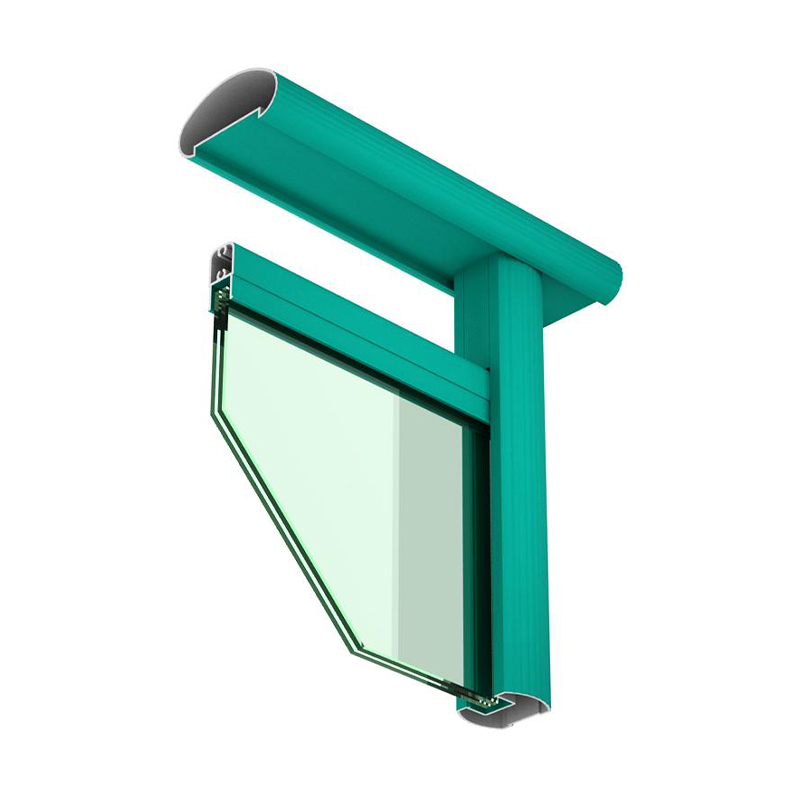
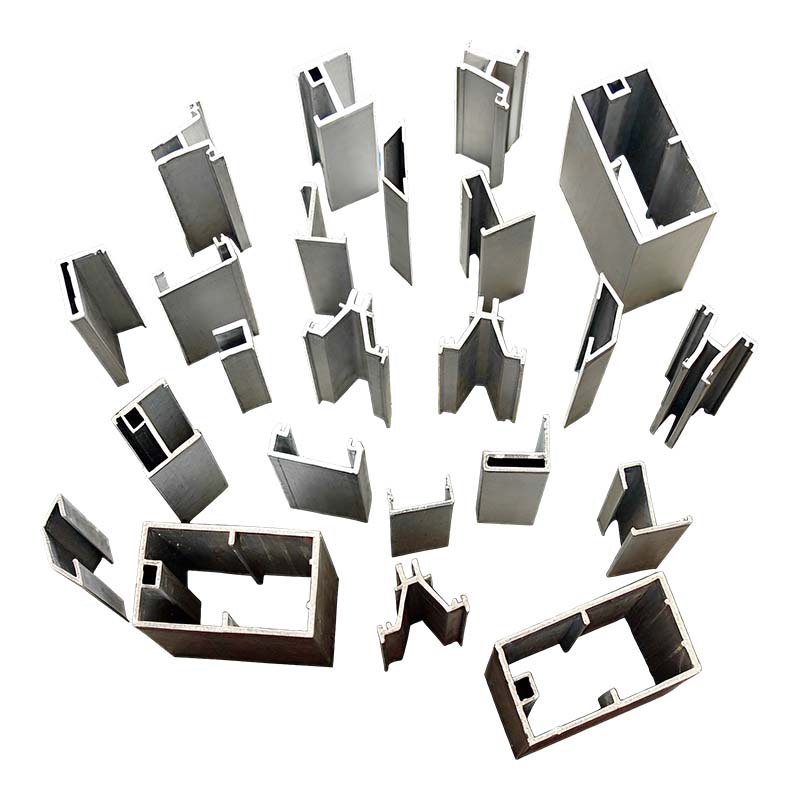 Aluminium Curtain Wall Profiles for Building ProjectsHigh-precision aluminium curtain wall profiles for medium- to large-scale buildings, supporting unitized and framed systems with customizable finishes and structural safety.View Product →
Photovoltaic profiles are a good example of standards doing quiet work. A frame is a thin-wall, long-length extrusion that must resist wind uplift for twenty-five years, so the relevant data are yield strength, wall thickness tolerance, and corrosion resistance of the finish. Ground-mount brackets add a fourth: hole position tolerance, because a misaligned rail costs a crew half a day on site.
Most solar work specifies 6005A or 6063 in T5 or T6, with mechanical limits drawn from EN 755-2 or GB/T 6892. The chemistry is rarely the problem; the tolerance stack across frame, corner key, and laminate usually is.
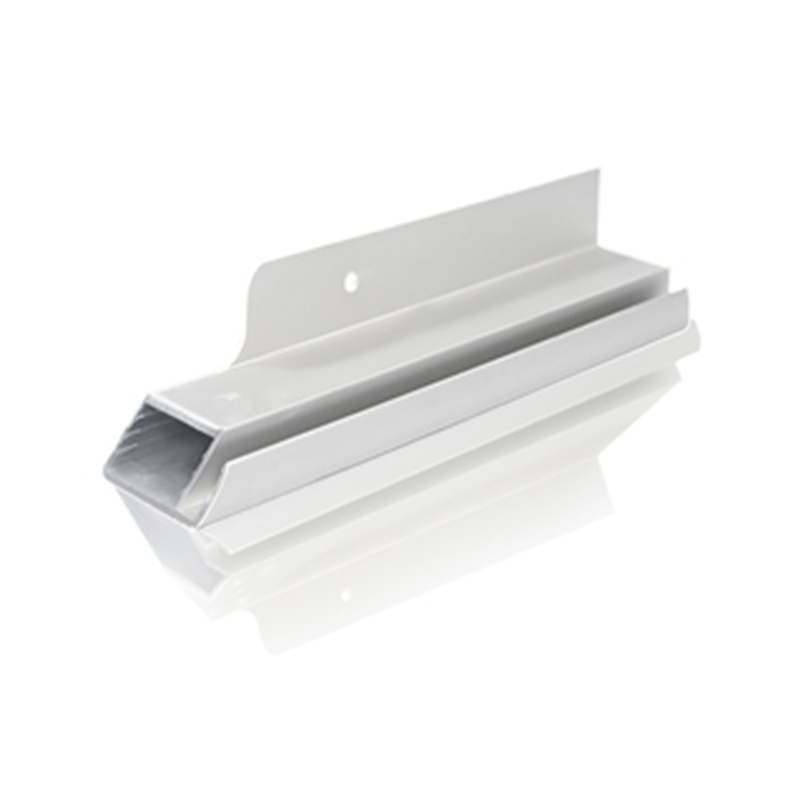
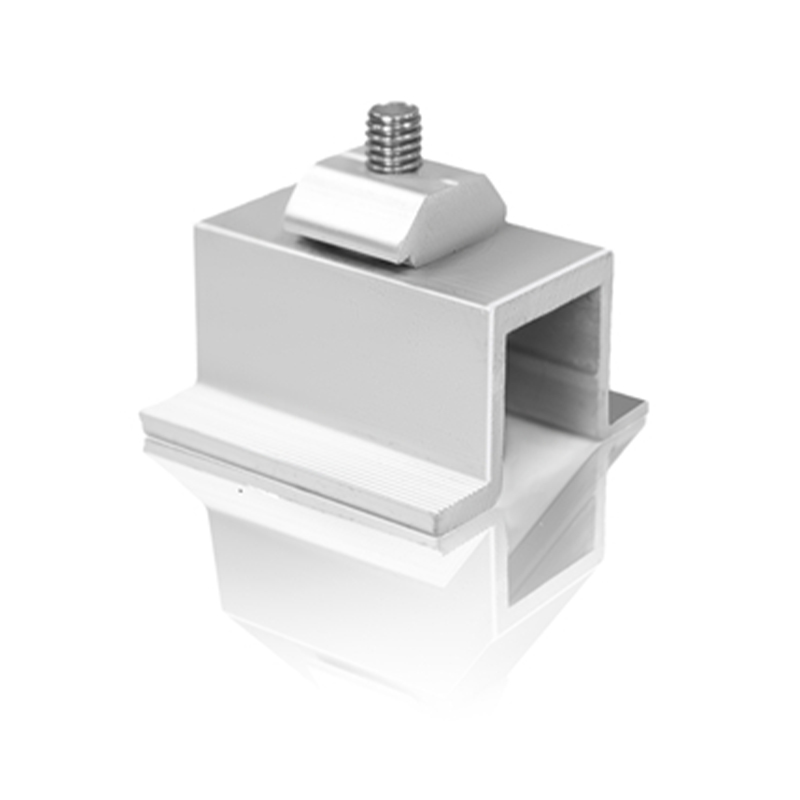
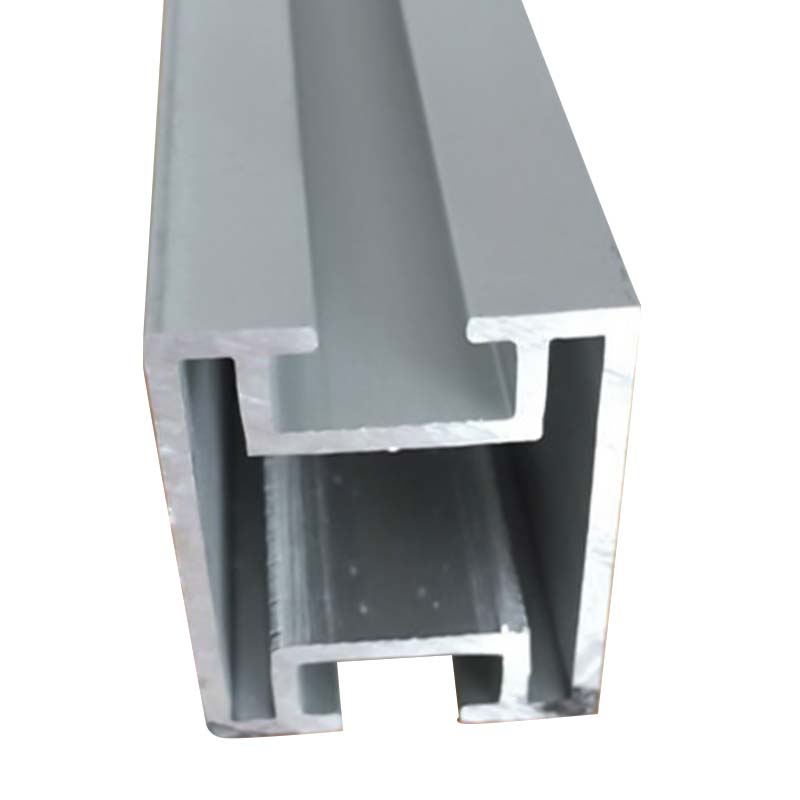 Aluminum Solar Panel Frames for Module ProtectionSolar panel frames with high dimensional accuracy and corrosion resistance suit ground-mounted and rooftop modules where frame, corner key, and laminate tolerances matter.View Product →
Automotive extrusion raises the bar in a different way. Battery trays, crash boxes, bumper beams, and sill beams are safety-relevant parts, so the standard is only the starting point. Customers add their own material specifications, crush requirements, and dimensional reports, and the alloy often moves to 6082 or a 6xxx variant with tighter limits on iron and copper.
For these programs, the useful conversation is about the whole chain — alloy, temper, wall thickness, bend radius, and machining allowance — rather than a single line on a data sheet. Our automobile lightweight aluminum profiles are developed with that chain in view.
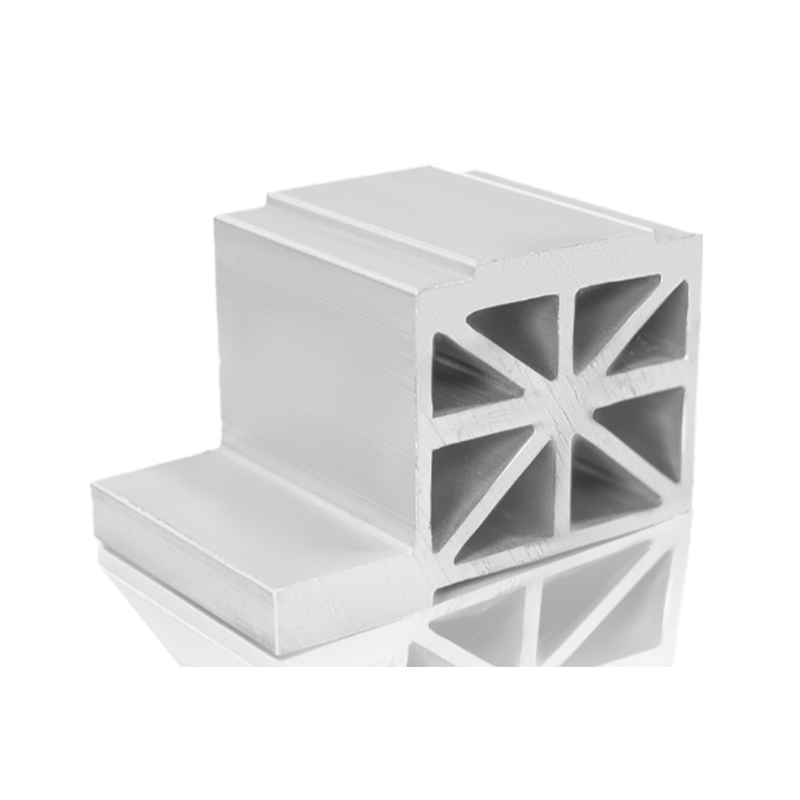 Battery Tray Aluminum Profiles for New Energy VehiclesLightweight, high-strength extrusions for new energy vehicle battery trays, providing structural support and heat dissipation with multiple alloy and temper options.View Product →
A good extrusion order answers six things: which standard and edition governs the product; which alloy and temper, verified how; which tolerance class applies to dimensions, straightness, and twist; which mechanical minima are required and how often they are tested; which surface treatment standard and class apply; and how the profiles are packed, bundled, and protected in transit.
If you send us a drawing with those six answers, we can confirm feasibility, flag the details that will drive cost, and quote against a shared definition of "correct." If some are still open, that is also fine — it is usually a short conversation, and it is far cheaper than a container of profiles that meets a standard nobody agreed on.
 +86-19156366875
 No. 1016, Baocheng Road, Economic and Technological Development Zone, Xuancheng City, Anhui Province, China
Copyright © Anhui Huilong Group Huilv New Material Technology Co., Ltd. All Rights Reserved
Aluminum Profiles Manufacturers