An electric bus is a battery, a powertrain, and a twelve-tonne structure that must carry both for fifteen years. Every kilogram saved above the battery either extends range or frees payload for passengers. That is why aluminum components for electric busses have moved from a nice-to-have to a central design decision. We extrude aluminum profiles for transport applications, and most conversations with bus builders begin in the same place: where can mass come out without making the vehicle harder to certify, repair, or recycle?
The honest answer is that aluminum is not a blanket replacement for steel. It wins where stiffness-to-weight, corrosion resistance, thermal management, and part consolidation matter at once — which describes a large share of an e-bus.
Content
Battery capacity is still the most expensive part of an electric bus, and it is also the heaviest. A lighter body does not just improve efficiency; it can reduce the kWh needed for a given route, lower axle loads, and allow more passenger space within the same gross vehicle weight. Industry life-cycle studies have shown that aluminum-intensive bus bodies can be roughly 46% lighter than conventional steel structures, which translates directly into lower energy demand.
Three properties do most of the work. Aluminum has about one-third the density of steel, so a well-designed extrusion can deliver the same bending stiffness at a fraction of the mass. It forms a natural oxide layer, which matters for buses washed daily and operated on salted winter roads. And it conducts heat well, useful when a battery tray or motor housing also has to act as part of the thermal system.
Recycling closes the loop. Aluminum retains its properties after remelting, and the scrap value of an extruded frame at end of life is a real financial asset, not a disposal cost. For operators planning fifteen-year duty cycles, that residual value belongs in the total cost calculation.
Not every part deserves the same attention. In our experience, five families of extruded and machined components decide whether an aluminum bus design actually delivers its promised weight saving.
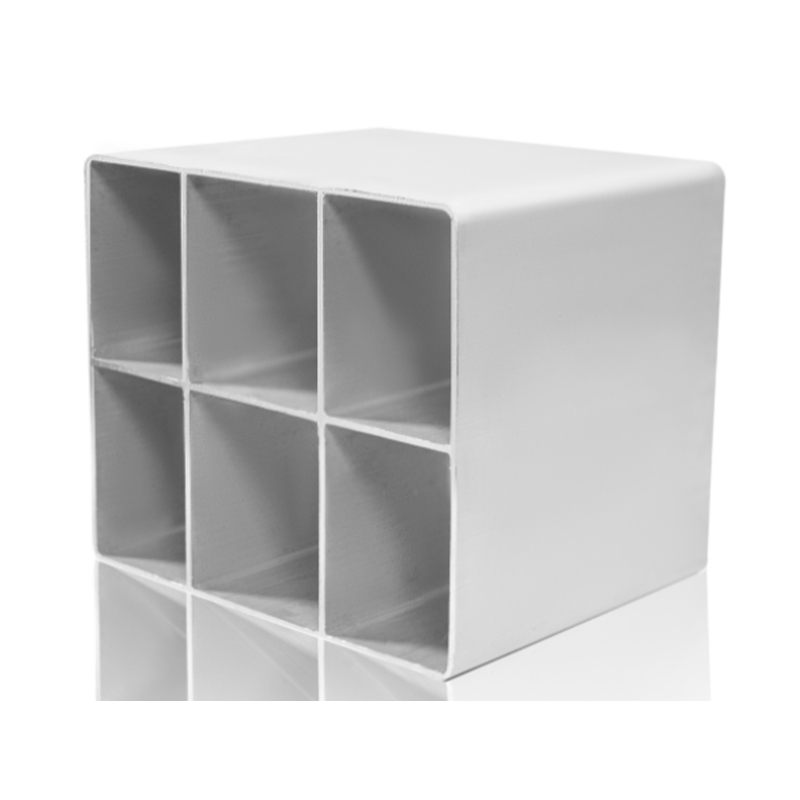
The battery tray is usually the single biggest opportunity. A steel tray can weigh several hundred kilograms; a multi-port aluminum extrusion frame with a welded base plate often cuts that by 30–40%. The profile can integrate mounting rails, crush ribs, and even cooling channels, while the base plate is friction-stir welded for a leak-tight seal. Flatness and hole position matter as much as strength, because the pack interface and vehicle mounts are machined afterward.
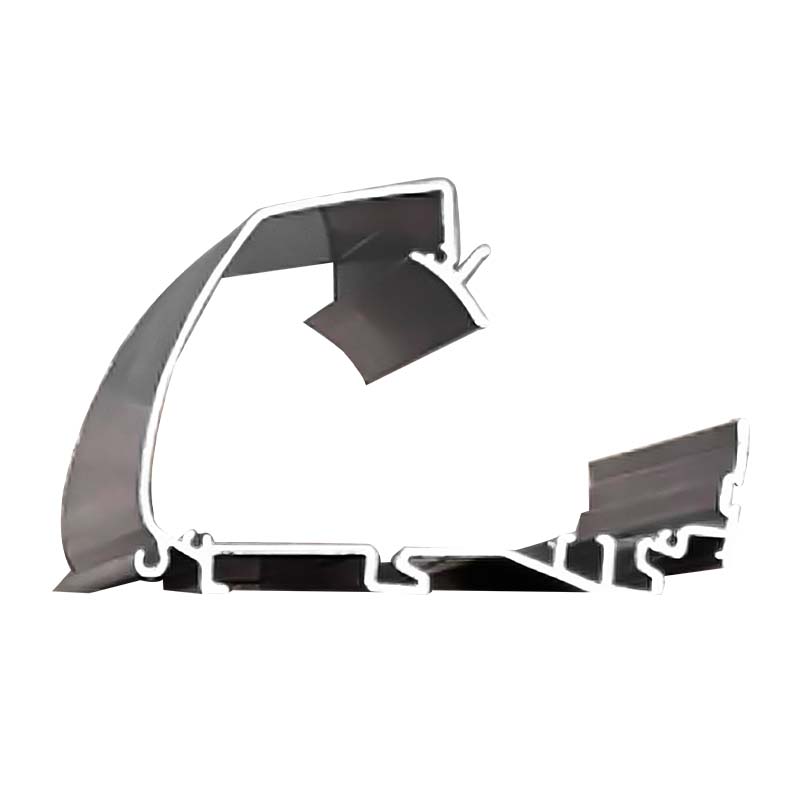
Aluminum crash boxes are designed to fold in a controlled, predictable way rather than fracture. Multi-cell extrusions with tuned wall thickness and trigger features absorb frontal energy, and a bolt-on design lets a depot replace the box after a minor impact instead of scrapping a structural section. Curved bumper beams add bending stiffness across the front while keeping pedestrian-protection geometry manageable.
Multi-port extrusions make excellent floor beams and sill members because they put material where bending and torsion loads are. They also create a continuous side-impact load path around the battery pack, a safety function that is difficult to achieve with steel without adding significant mass.
The traction motor housing benefits from aluminum's thermal conductivity, especially when cooling fins or a jacket are extruded into the profile. Smaller parts — bushings, pipe connectors, brackets, and mounting blocks — are usually machined from extruded bar or custom profiles. They are light, corrosion-resistant, and easy to keep within tight tolerances.
Most e-bus structural profiles are 6xxx-series alloys. 6063 extrudes cleanly and gives good surface finish, which makes it practical for long, visible members. 6061 and 6082 offer higher strength for highly loaded brackets, crash boxes, and battery frames, at some cost in extrusion speed and quench sensitivity. Tempers are typically T5 or T6; T4 is used where forming follows extrusion.
Wall thickness in bus structures usually lands between 2 mm and 5 mm. Going thinner saves mass but shifts failure modes toward local buckling, so profile geometry — ribs, multi-port cells, corner radii — matters more than the alloy name on the certificate. Hollow profiles consolidate parts and reduce welding, but they demand careful die design and, for pressure-tight battery parts, verified weld quality.
Joining is where prototypes are won or lost. MIG and TIG welding remain common; friction stir welding is preferred for battery tray base plates; adhesive bonding and riveting work where heat distortion must be avoided. Steel fasteners need isolation washers or coatings to prevent galvanic corrosion.
The right comparison is not "aluminum versus steel" in the abstract, but "which material for which load case." The table below summarizes how we usually frame the trade-off with bus body engineers.
| Component | Typical aluminum form | Primary design driver | What aluminum changes |
|---|---|---|---|
| Battery tray | Multi-port frame, welded plate | Crash, sealing, flatness | 30–40% lighter, integrated cooling |
| Crash box | Multi-cell extrusion | Controlled crush, replaceability | Predictable folding, bolt-on repair |
| Bumper beam | Curved hollow extrusion | Bending stiffness, protection | Corrosion resistance, lower mass |
| Floor beam / sill | Multi-port extrusion | Torsion, side impact | Part consolidation, load path |
| Motor housing | Extruded tube, CNC ends | Heat rejection, NVH | Thermal conductivity, fins |
| Bushing / connector | Extruded bar, machined | Fatigue, fit | Machinability, no paint needed |
When a bus program moves from concept to tooling, these questions save the most time:
None of this is exotic, but skipping a step usually shows up later as a welding fixture that cannot hold tolerance or a tray that passes pressure testing and fails vibration.
Our industrial extrusion line supplies the automotive lightweight family of profiles, including the parts closest to the battery and crash load paths. Three examples show how the catalogue maps onto e-bus design.
For battery packs, our battery tray aluminum profiles use multi-port geometry and are produced with downstream cutting and machining so the pack interface arrives close to final form.
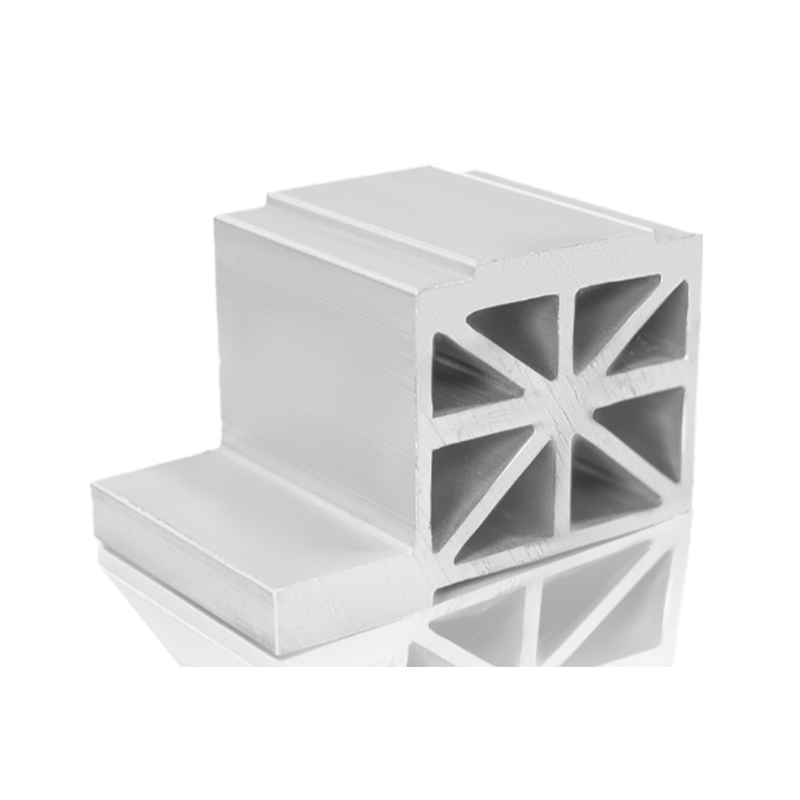 Battery Tray Aluminum Profiles for New Energy VehiclesExtruded multi-port profiles for battery trays, offered in multiple alloys and surface finishes with cutting and machining for pack interfaces.View Product →
For frontal protection, crash box aluminum profiles are extruded with controlled wall sections that support stable axial folding in a bolt-on package.
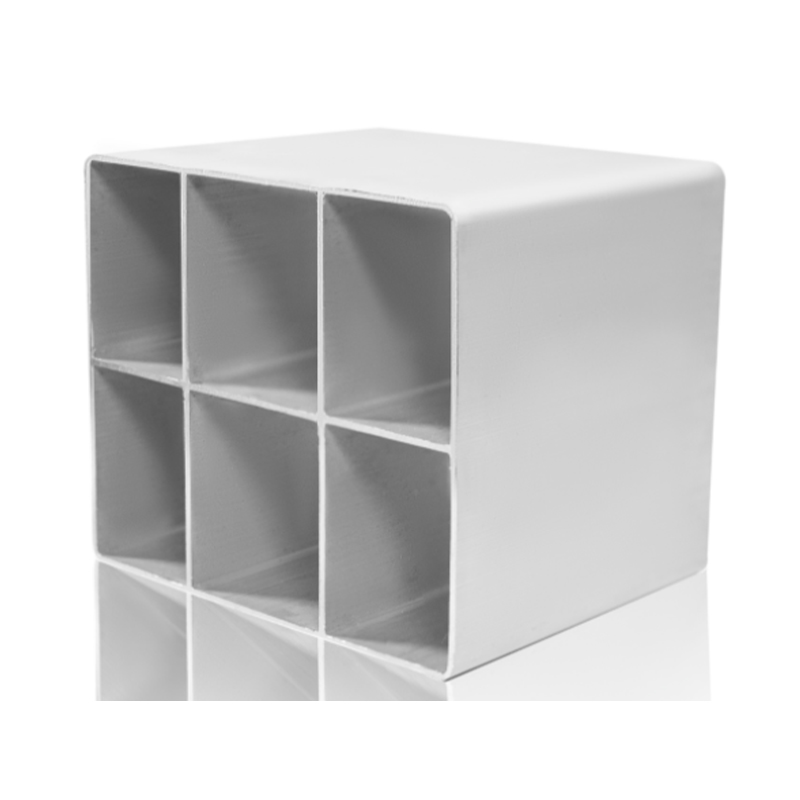 Automotive Crash Box Aluminum Profiles for Impact ProtectionExtruded aluminum profiles designed to absorb collision energy through structural deformation, suited to front and rear crash protection systems.View Product →
For the drivetrain, motor housing aluminum profiles combine an extruded shell with machined end interfaces, giving the thermal path a head start.
 Motor Housing Aluminum Profiles for Electric Drive SystemsExtruded housings with machined end interfaces, offering structural support and heat dissipation for motors and drive systems.View Product →
Bus programs rarely move in a straight line. A tray that works in a single prototype may need a different weld sequence at 200 units per year; a crash box tuned for one front-end geometry may need a new trigger feature for the next. The useful supplier conversation is therefore about how the profile, the die, the machining fixture, and the validation plan fit together — not just price per kilogram.
If you are still mapping the lightweight structure, our guide to EV aluminum structure and lightweight vehicle parts walks through the load paths and joining choices. For a broader view of the extrusion portfolio, see our automobile lightweight aluminum profiles.
A successful aluminum e-bus is not the one with the most aluminum. It is the one where the battery tray is flat, the crash box folds as predicted, the motor housing rejects heat without extra hardware, and the depot can replace a damaged section without cutting the bus apart. Those outcomes come from profile design, alloy selection, and joining discipline — not from a material datasheet alone.
If you are weighing aluminum components for an electric bus platform, bring us the load cases and the package space. We will tell you what extrudes well, what needs machining, and where steel may still be the better answer.
 +86-19156366875
 No. 1016, Baocheng Road, Economic and Technological Development Zone, Xuancheng City, Anhui Province, China
Copyright © Anhui Huilong Group Huilv New Material Technology Co., Ltd. All Rights Reserved
Aluminum Profiles Manufacturers