Ask three engineers what 2024 aluminum is good for and you will get three different answers — an aircraft skin, a truck wheel, a hydraulic manifold — and all three will be right. 2024 is one of the oldest and most respected workhorses in the 2xxx family, and its combination of high strength and long fatigue life still makes it the reference point for copper-bearing aluminium. What follows is a practical walkthrough of 2024 aluminum material properties: what the numbers really are, how they shift with temper, where the alloy struggles, and how to judge whether it belongs in your design.
Content
2024 belongs to the 2xxx series, which means copper is its primary alloying element rather than the magnesium–silicon pair that defines the 6xxx family. Copper and magnesium together form the Al2CuMg phase that does the strengthening during ageing, which is why 2024 reaches tensile strengths that 6061 only approaches after a very different heat treatment.
The alloy is standardised as AA2024 in the United States (UNS A92024) and as EN AW-2024, or AlCu4Mg1, in Europe. It is normally supplied as sheet, plate, rod, bar, wire and tube, and it is also stocked as Alclad 2024 — a 2024 core bonded to a thin surface layer of commercially pure aluminium or a zinc-bearing cladding alloy for corrosion protection, a detail worth returning to later.
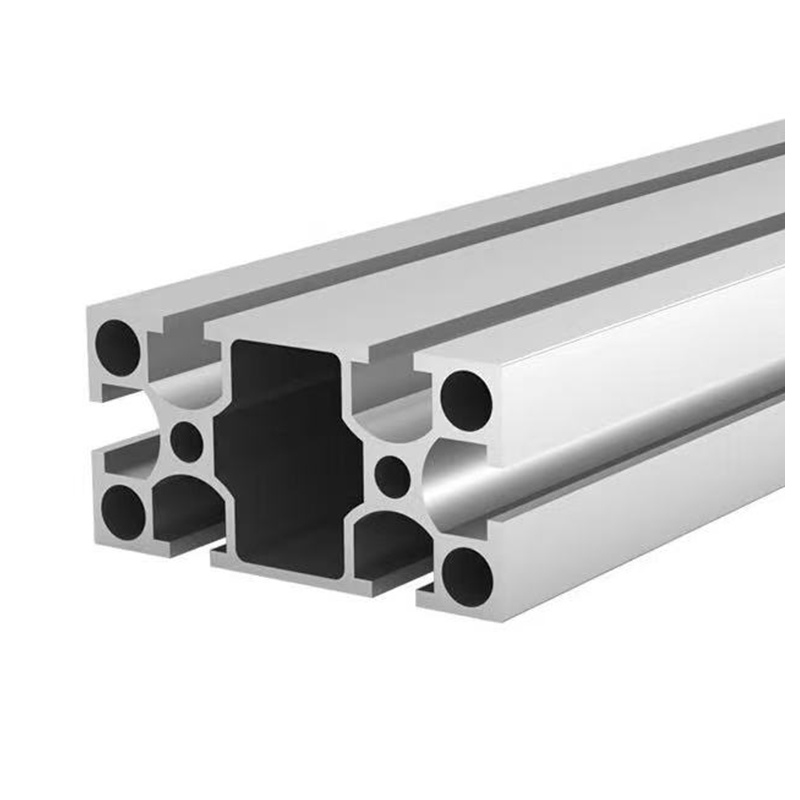
Here is where we should be straight with you. 2024 is not a common extrusion alloy. Most of the profiles leaving our presses — window and curtain wall sections, solar frames, assembly line rails, battery trays — are 6xxx grades, because they extrude cleanly, weld well and take an anodised finish predictably. When a drawing calls for 2024, it usually means sheet or plate, or a machined part cut from bar. Knowing which form you actually need is the first step in choosing sensibly.
The composition window is tight, and that tightness is the point: the mechanical properties of 2024 depend on keeping impurities low enough that the strengthening phases dominate rather than coarse iron- and silicon-bearing particles.
| Element | Content (wt.%) |
|---|---|
| Aluminium | Balance |
| Copper | 3.8–4.9 |
| Magnesium | 1.2–1.8 |
| Manganese | 0.3–0.9 |
| Silicon | 0.50 max |
| Iron | 0.50 max |
| Zinc | 0.25 max |
| Titanium | 0.15 max |
| Others, each | 0.05 max |
| Others, total | 0.15 max |
Copper provides the strength, magnesium partners with it, and manganese works on grain structure and toughness while helping to control intermetallic particle size. Iron and silicon are treated as impurities and held to half a percent each, so the alloy behaves predictably from heat to heat rather than drifting with whatever scrap went into the furnace.
Temper tells you almost everything about how a 2024 part will behave. In the annealed O condition the alloy is soft and formable. T3 means solution treated, cold worked and naturally aged; T351 is the same with a stretching pass that relieves most residual stress. T4 is naturally aged without the cold work, while T81 and T851 are artificially aged after cold working — stronger and harder, with less ductility but far better dimensional stability when you machine them.
| Temper | Tensile strength | Yield strength (0.2%) | Elongation | Typical hardness |
|---|---|---|---|---|
| 2024-O | ≈186 MPa | ≈76 MPa | ≈20% | ≈47 HB |
| 2024-T3 / T351 | ≈470–483 MPa | ≈325–345 MPa | ≈18–19% | ≈120 HB |
| 2024-T4 | ≈469 MPa | ≈324 MPa | ≈20% | ≈120 HB |
| 2024-T81 / T851 | ≈490–495 MPa | ≈440–455 MPa | ≈8–10% | ≈130 HB |
Those figures are typical values, not design allowables. Published minima in ASTM B209 or EN 485 sit below them, and good practice is to design against the specification minimum and then confirm with mill certificates. The other number that matters is fatigue: in the T3 temper, rotating-beam endurance runs around 138 MPa at 500 million cycles, high relative to the tensile strength. That ratio is precisely why the alloy survived decades of airframe service.
The thermal numbers deserve a pause. If the part is a heat spreader, a housing or a cover that has to shed heat, an extruded 6xxx section will move that heat away far more effectively than 2024 plate. Where thermal management is the real job, that is usually the route we recommend.
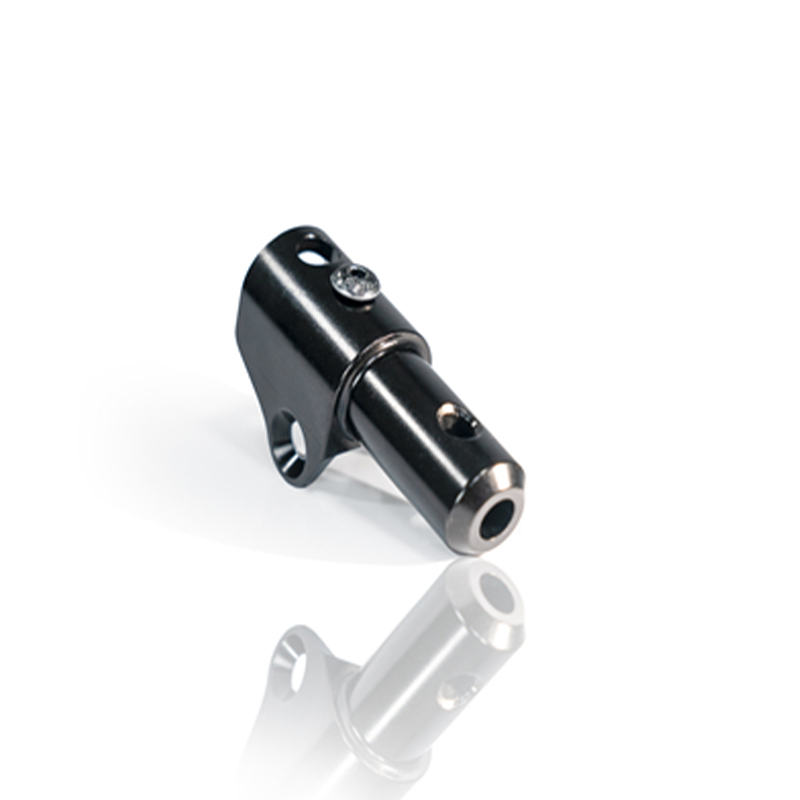
 Motor Housing Aluminum Profiles for Electric Drive SystemsExtruded 6xxx motor housing profiles support electric drive systems and heat dissipation, making them relevant where thermal management outweighs 2024 plate.View Product →
Copper is what makes 2024 strong, and copper is also what makes it one of the least forgiving common alloys in a wet environment. Copper-rich phases at the grain boundaries set up galvanic cells, so unprotected 2024 is prone to intergranular attack and, in thicker sections, exfoliation and stress corrosion cracking in the short-transverse direction.
Three practical responses cover most situations:
For coastal installations or parts that see regular washdown, this is the section to take seriously. Sometimes the honest answer is to move to a 5xxx or 6xxx alloy rather than spend years fighting the corrosion.
Form 2024 in the O condition and age it afterwards whenever the geometry allows. In T3 the bend radii have to be generous, and it is no competitor to 5052 or 3003 for deep drawing.
In T351 or T851, 2024 machines cleanly and produces well-broken chips. T351 is stretched after solution treatment, which relieves most residual stress; for large, tightly toleranced parts, T851 or a stress-relieved plate grade is usually the safer order.
This is the limitation that catches people out. 2024 is not a fusion welding alloy: arc welding invites hot cracking and destroys strength in the heat-affected zone. Riveting, bolting, adhesive bonding and, where tooling allows, friction stir welding are the workable routes. Design the joint before you design the part.
Most specification decisions in practice come down to these three alloys. Here is a design-level comparison:
| Property | 2024-T3 | 6061-T6 | 7075-T6 |
|---|---|---|---|
| Tensile strength | ≈483 MPa | ≈310 MPa | ≈572 MPa |
| Yield strength | ≈345 MPa | ≈276 MPa | ≈503 MPa |
| Elongation | ≈18% | ≈12% | ≈11% |
| Corrosion resistance | Fair, clad in practice | Good | Fair |
| Weldability | Poor | Good | Poor |
| Machinability | Good | Good | Good |
| Relative cost | Medium | Low | High |
| Typical fit | Fatigue-critical structure | Extrusions and frames | High-strength machined parts |
If your part is an extrusion rather than sheet or plate, the conversation changes, because 6063-T5 and its relatives dominate for good reasons. The differences in surface finish, tolerance and joining are set out in this guide to 6063-T5 properties and uses. It is not unusual for a customer to arrive asking about 2024 and leave with a 6xxx extrusion that is cheaper, weldable and strong enough for the actual load case.
On the electric vehicle side, the parts we build most often are not 2xxx at all. Battery enclosures and crash structures are dominated by extruded 6xxx and 7xxx sections, which weld and crush predictably. Where a design genuinely needs maximum strength in a bolted or bonded joint, though, 2024-class properties remain a real option, and an early conversation saves the most rework.
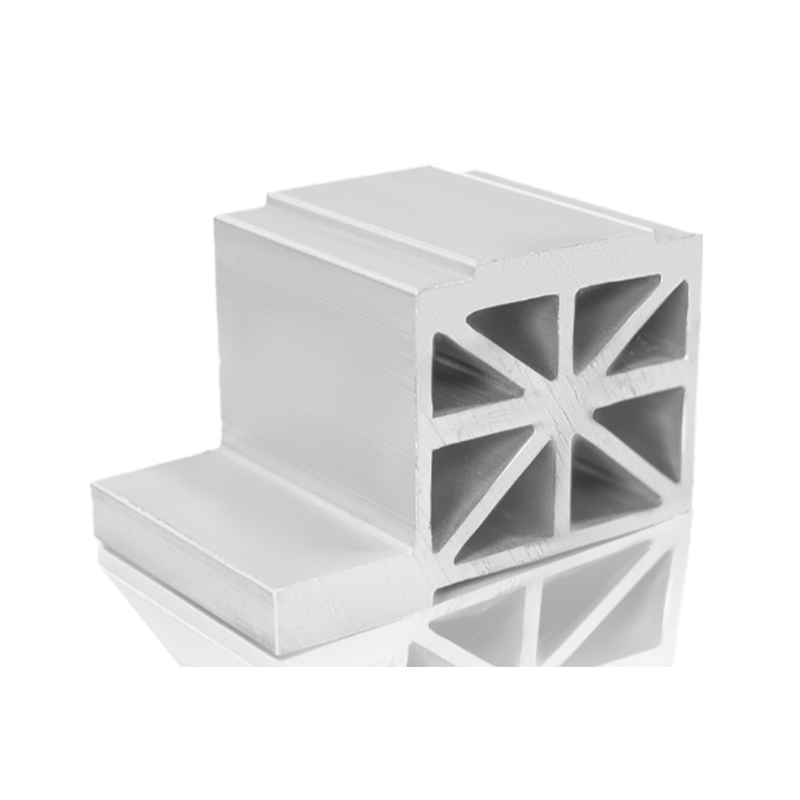 Battery Tray Aluminum Profiles for New Energy VehiclesLightweight aluminum battery tray profiles support new energy vehicle battery systems with structural strength and heat dissipation.View Product →
Energy-absorbing structures follow the same logic. A crash box has to fold in a controlled way, so alloy, temper and wall thickness have to be selected together rather than one at a time; our crash box aluminum profiles page covers the extrusion-side view of that trade-off.
Years of aluminium work teach you that alloy selection is rarely about the best number on a data sheet. It is about which properties matter for this part, in this environment, made on this process. If you are weighing 2024 against a 6xxx extrusion for a frame, a housing or a structural profile, send us the drawing and the load case — we will tell you honestly what we would run, and what we would avoid.
 +86-19156366875
 No. 1016, Baocheng Road, Economic and Technological Development Zone, Xuancheng City, Anhui Province, China
Copyright © Anhui Huilong Group Huilv New Material Technology Co., Ltd. All Rights Reserved
Aluminum Profiles Manufacturers