Content
As solar energy adoption accelerates across residential, commercial, and utility-scale projects, the components supporting photovoltaic panels have become just as important as the panels themselves. Aluminum profiles form the structural backbone of most mounting systems, holding panels securely in place while withstanding years of outdoor exposure. Unlike steel, which is heavier and more prone to rust, aluminum offers a combination of light weight and durability that has made it the material of choice for solar racking and framing systems worldwide.
For engineers, installers, and project developers evaluating mounting solutions, understanding the specific properties that make aluminum suitable for photovoltaic applications helps clarify why this material continues to dominate the industry, from small rooftop arrays to sprawling ground-mounted power plants.
Weight is a critical factor in solar mounting system design, particularly for rooftop installations where structural load limits must be carefully respected. Aluminum's naturally low density compared to steel means mounting profiles can be manufactured with sufficient strength while keeping overall system weight manageable. This reduces stress on roof structures and simplifies engineering calculations for load-bearing capacity.
Lighter profiles are easier for installation crews to transport, lift, and position on-site, reducing labor time and the physical strain associated with handling heavier steel alternatives. This efficiency becomes especially valuable on large-scale ground-mounted projects where thousands of linear meters of profile must be installed.
For rooftop distributed photovoltaic projects, minimizing added weight is often essential to avoid costly structural reinforcement. Aluminum profiles help keep total system weight within acceptable limits for a wider range of building types, including older structures with lower load tolerances.
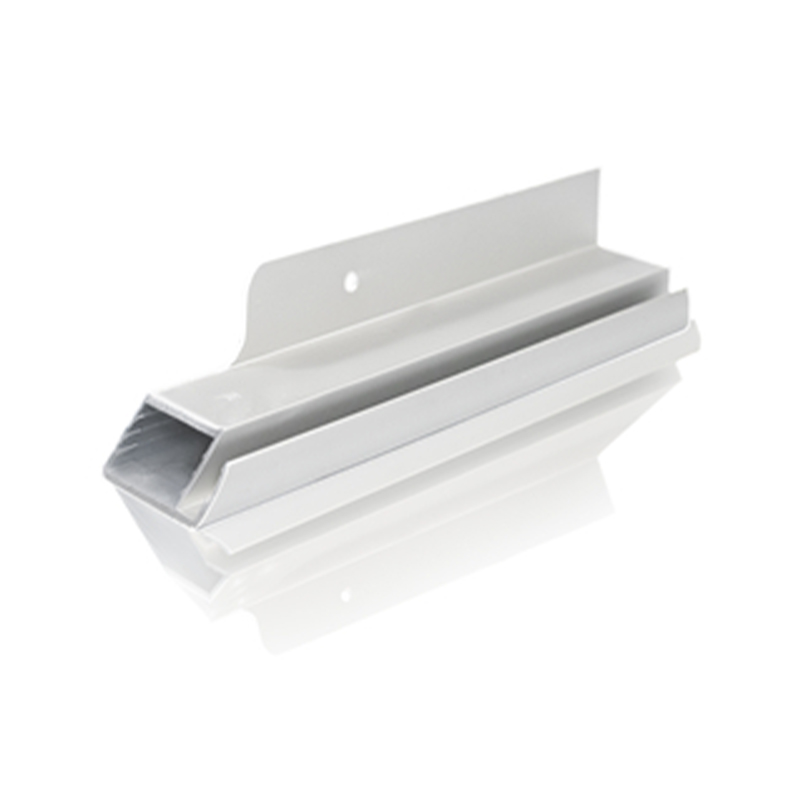
While light weight is important, it cannot come at the expense of structural performance. Photovoltaic aluminum profiles must maintain sufficient mechanical strength to support panel weight, resist wind uplift, and endure snow loads in applicable climates, all while remaining stable over a service life that often exceeds twenty five years.
| Stress Factor | Profile Requirement |
| Wind uplift | High tensile strength and secure fastening points |
| Snow load | Reinforced cross-sections for added rigidity |
| Panel weight distribution | Consistent load-bearing capacity across the full span |
| Thermal expansion | Stable dimensional performance across temperature swings |
Manufacturers achieve this balance through careful alloy selection and profile geometry, engineering cross-sections that maximize strength without unnecessary material bulk, which also helps control production costs for large-scale projects.
Solar installations are, by definition, exposed to constant outdoor conditions, including rain, humidity, temperature fluctuations, and in coastal areas, salt air. Corrosion resistance is therefore one of the most important performance criteria for photovoltaic aluminum profiles, directly affecting the long-term reliability of the entire mounting system.
Anodizing creates a protective oxide layer on the aluminum surface, significantly enhancing resistance to corrosion while also improving scratch resistance during handling and installation.
Projects located near coastlines or in tropical climates face accelerated corrosion risk due to salt exposure and persistent moisture. High-quality aluminum profiles with appropriate surface treatment maintain structural integrity even under these more demanding environmental conditions, protecting the investment over the full lifespan of the solar system.
Photovoltaic aluminum profiles are engineered to serve a range of project types, each with distinct structural and installation demands. Understanding these differences helps developers select the right profile configuration for their specific application.
Each of these applications places different demands on profile strength, weight, and corrosion protection, which is why manufacturers typically offer multiple profile series tailored to specific project categories rather than a single universal design.
For developers and procurement teams sourcing aluminum profiles for solar projects, several practical factors should guide the evaluation process. Confirming the alloy grade used in manufacturing provides insight into expected strength and corrosion performance, since different aluminum alloys offer varying levels of durability suited to specific environmental conditions.
It is also worth requesting documentation on load testing results, particularly for projects located in regions with high wind speeds or significant snow accumulation. Surface treatment specifications should be reviewed carefully, especially for coastal or high-humidity installation sites where corrosion resistance becomes a primary concern rather than a secondary consideration.
Ultimately, selecting the right photovoltaic aluminum profile requires balancing structural performance, weight efficiency, and environmental durability against the specific demands of the project site. A well-engineered profile system contributes directly to the long-term reliability and energy output of the solar installation, making this component decision one that deserves careful technical evaluation rather than a purely cost-driven choice.
 +86-19156366875
 No. 1016, Baocheng Road, Economic and Technological Development Zone, Xuancheng City, Anhui Province, China
Copyright © Anhui Huilong Group Huilv New Material Technology Co., Ltd. All Rights Reserved
Aluminum Profiles Manufacturers