Content
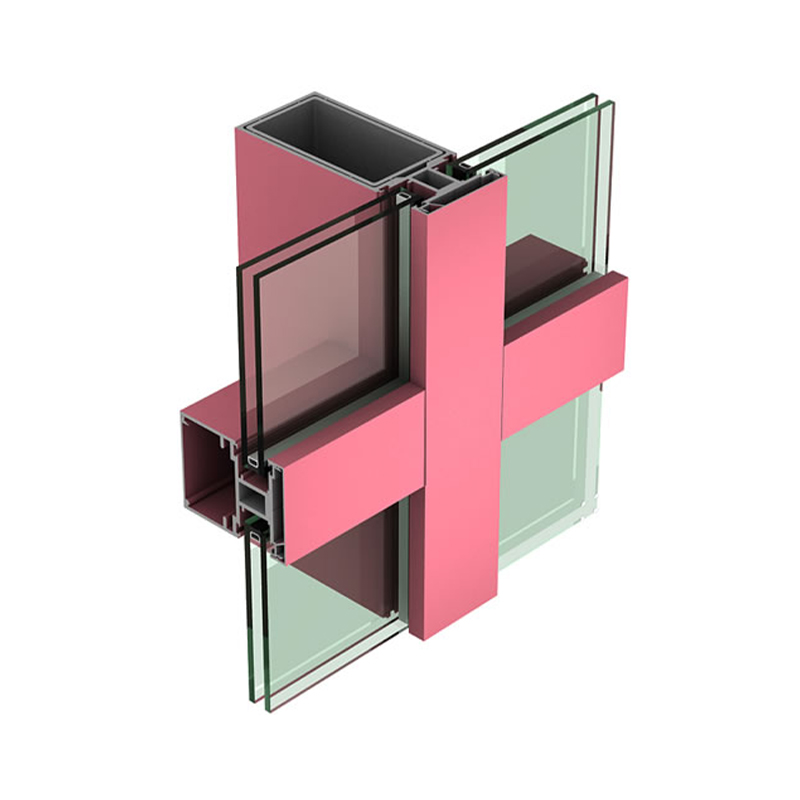
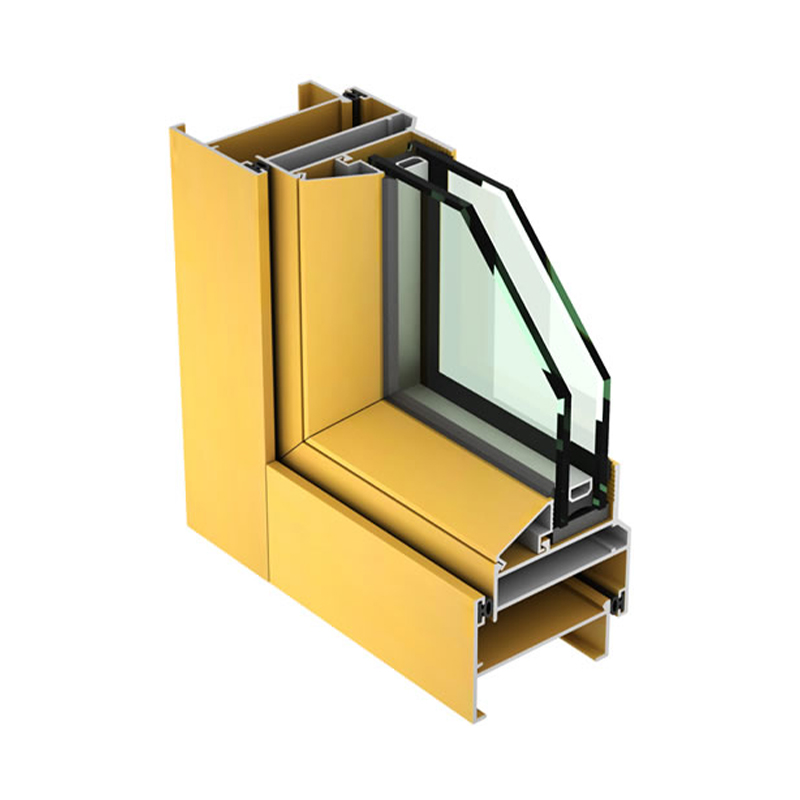
Aluminium curtain wall profiles are the structural and aesthetic backbone of modern building facades. Unlike load-bearing walls, a curtain wall is a non-structural outer skin attached to a building's frame, designed primarily to resist wind loads, weather, and thermal changes while allowing natural light to penetrate deep into interior spaces. These profiles—the extruded aluminium sections that form the grid-like framework—hold glass panels, metal cladding, stone, or other infill materials in place. Their lightweight nature, corrosion resistance, and design flexibility have made them the dominant choice in commercial construction worldwide, from high-rise office towers to cultural centres and airports.
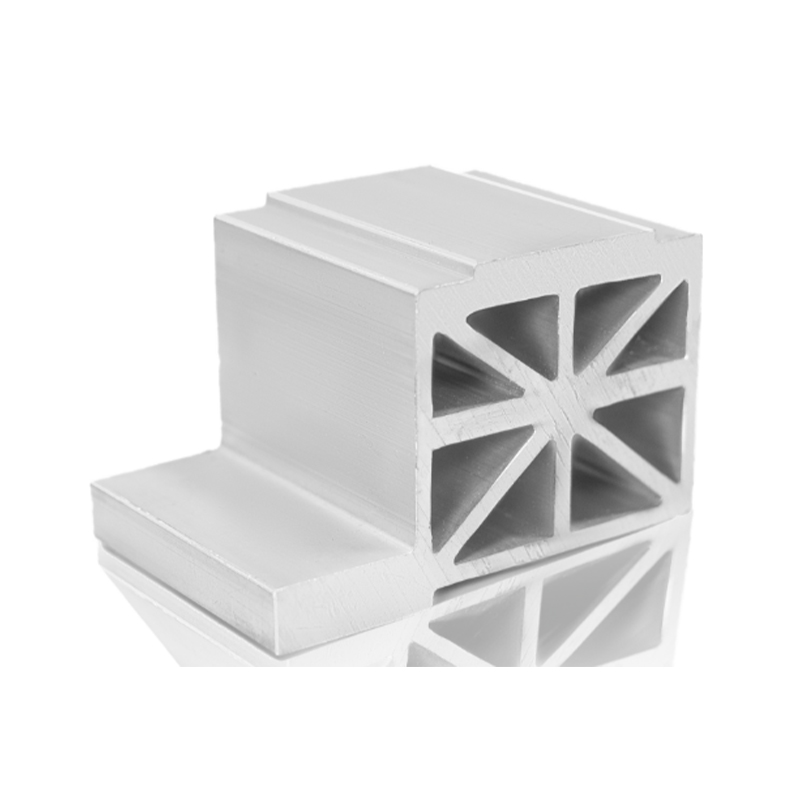
The performance of a curtain wall system depends heavily on the precision and quality of its aluminium profiles. These sections are typically produced through hot extrusion processes, where aluminium alloys (most commonly 6063-T5 or 6061-T6) are forced through shaped dies to create consistent cross-sectional geometries. The resulting profiles are then cut, machined, and assembled into unitised or stick-built curtain wall systems that meet specific structural and thermal requirements.
Understanding the different system types helps architects, engineers, and procurement teams select the right solution for their project scope and building use case.
Stick-built curtain walls are assembled piece by piece on-site. Individual aluminium mullions (vertical members) and transoms (horizontal members) are installed directly onto the building structure, and glass or panel infills are inserted afterwards. This system offers great flexibility for complex geometries and is particularly common in low- to mid-rise buildings where on-site adjustments are feasible. However, it is more labour-intensive and weather-dependent during installation.
Unitised curtain wall systems consist of pre-assembled panels fabricated in a factory, then shipped to the site and mechanically fixed to floor slabs or structural brackets. Each unit typically spans one floor height and one bay width. Because the majority of assembly happens under controlled factory conditions, quality control is superior and on-site installation is significantly faster. This system is preferred for tall towers and large-scale commercial developments where construction speed and consistency are critical.
A hybrid approach, semi-unitised systems combine aspects of both methods. Mullions may be pre-assembled in the factory while transoms and infill panels are fitted on-site. This offers a balance of installation efficiency and design flexibility, often used in mid-rise buildings or projects with moderate complexity.
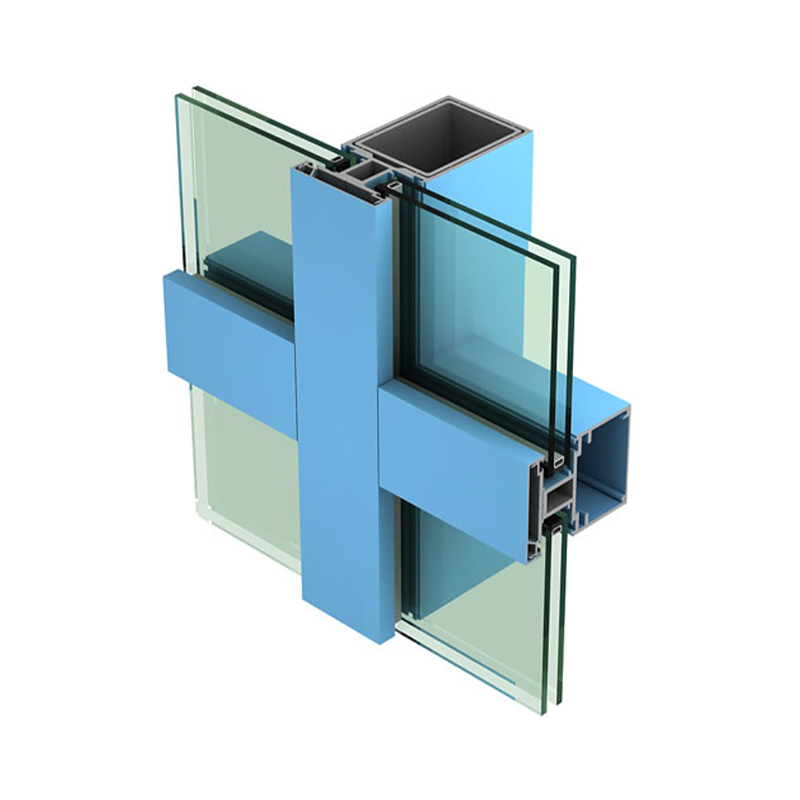
Every aluminium curtain wall system consists of several profile types, each engineered for a specific structural or sealing function:
Thermal performance is one of the most critical considerations when specifying aluminium curtain wall profiles today. Aluminium is an excellent conductor of heat, which means without intervention, energy losses through the facade can be substantial. The industry has developed two primary methods to address this:
The most widely used solution involves inserting a polyamide (nylon) strip between the inner and outer aluminium sections of the profile. This creates a physical barrier that reduces heat conduction. High-performance systems use wider thermal breaks and incorporate multiple sealing layers to achieve U-values (overall heat transfer coefficients) as low as 1.0 W/m²K for the frame alone, which can help buildings meet or exceed energy codes such as ASHRAE 90.1 and European EN 13947.
In this approach, a two-component polyurethane resin is poured into a channel within the aluminium profile, cured, and then a mechanical bridge section is removed, leaving only the insulating material connecting the two aluminium halves. This method offers superior bonding and is often used in high-performance facade systems requiring enhanced structural integrity alongside thermal efficiency.
For projects targeting green building certifications such as LEED or BREEAM, the choice of thermal break specification directly affects the building's energy model and credits achievable under the respective rating system.
The finish applied to curtain wall profiles determines both the visual character of the facade and its long-term durability in exposure to UV radiation, pollution, and moisture. The four most common finishing options are compared below:
| Finish Type | Process | Durability | Best Use Case |
| Powder Coating | Electrostatic spray + oven cure | 15–25 years | Most commercial projects |
| Anodising | Electrochemical oxidation | 25+ years | Premium facades, coastal environments |
| PVDF / Fluorocarbon | Liquid paint + high-temp bake | 30+ years | High-rise, landmark buildings |
| Electrophoretic Coating | Water-based immersion coating | 15–20 years | Interior-facing profiles |
PVDF (polyvinylidene fluoride) coatings, often marketed under the brand name Kynar 500, are widely specified on landmark commercial buildings due to their exceptional resistance to chalking, fading, and chemical attack, even decades after installation.
Selecting the right profile depth and moment of inertia is essential to ensure the curtain wall system performs safely under design wind pressures, seismic movements, and thermal expansion. Engineers use deflection limits—typically L/175 or L/200 of the span—as the governing criterion for mullion sizing. Deeper profiles with larger second moments of area are required for taller spans or high wind-pressure zones.
Thermal expansion must also be accommodated through slip joints and designed clearances within the profile system. Aluminium expands at approximately 23 mm per metre per 100°C change in temperature. Failure to accommodate this movement leads to cracking of seals, glass breakage, and profile buckling over time. Quality curtain wall profiles include designed-in clearances at splice joints and pin connections that allow controlled movement without compromising weathertightness.
Not all aluminium curtain wall profiles are equal. When evaluating suppliers and products, consider the following factors carefully:
Working with an established system supplier—rather than sourcing raw profiles independently—ensures that all components, including gaskets, thermal breaks, and fixings, are engineered and tested as a compatible system. This reduces liability risk and simplifies the certification process during building commissioning.
Aluminium curtain wall profiles offer compelling lifecycle benefits compared with alternative facade materials. Aluminium does not rust, rot, or require repainting as frequently as steel or timber, reducing whole-life maintenance costs considerably. At end of life, aluminium is 100% recyclable without loss of material properties, making it one of the most circular construction materials available. Many manufacturers now offer take-back schemes to ensure old profiles re-enter the recycling stream rather than going to landfill.
When combined with high-performance glazing, intelligent shading strategies, and well-designed thermal break profiles, an aluminium curtain wall system can contribute significantly to net-zero building performance targets—making it not just an aesthetic choice but a strategic one for future-proofed construction.
 +86-19156366875
 No. 1016, Baocheng Road, Economic and Technological Development Zone, Xuancheng City, Anhui Province, China
Copyright © Anhui Huilong Group Huilv New Material Technology Co., Ltd. All Rights Reserved
Aluminum Profiles Manufacturers