Choosing the right framing material for a curtain wall system is one of the most consequential decisions in commercial facade design. The profile material determines not just aesthetics, but structural performance, thermal efficiency, long-term maintenance burden, and total lifecycle cost. Aluminium has dominated the curtain wall market for decades, but steel, timber, PVC, and fibre-reinforced composite profiles each offer distinct trade-offs. This comparison cuts through the generalities to give specifiers, architects, and procurement teams the factual detail they need to make the right call.
Content
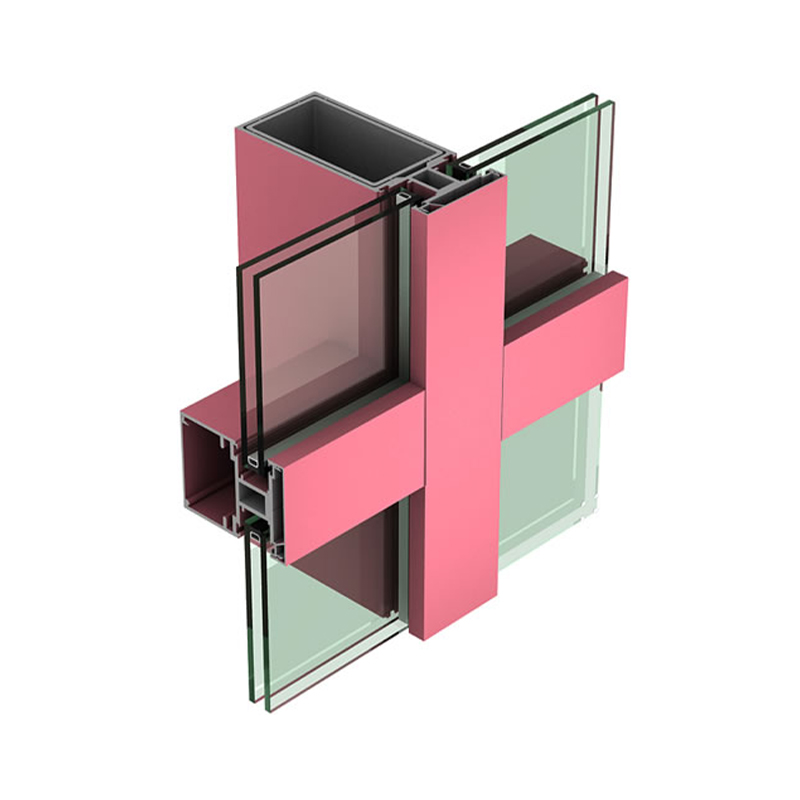
Aluminium alloys — most commonly 6063-T5 and 6061-T6 in curtain wall applications — offer a combination of properties that no single competing material fully replicates. The density of aluminium sits at roughly 2.7 g/cm³, approximately one-third that of steel, which translates directly into lower dead loads on the building structure and easier site handling. Despite its light weight, extruded aluminium profiles achieve tensile strengths of 150–310 MPa depending on alloy and temper, more than sufficient for the wind pressures, seismic drifts, and thermal expansion stresses that curtain walls must accommodate.
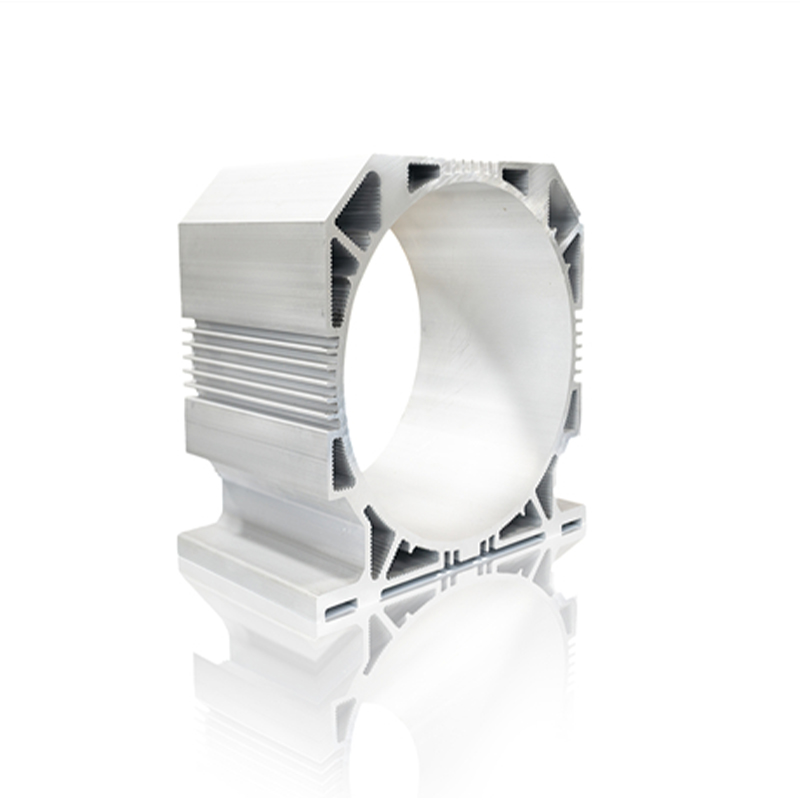
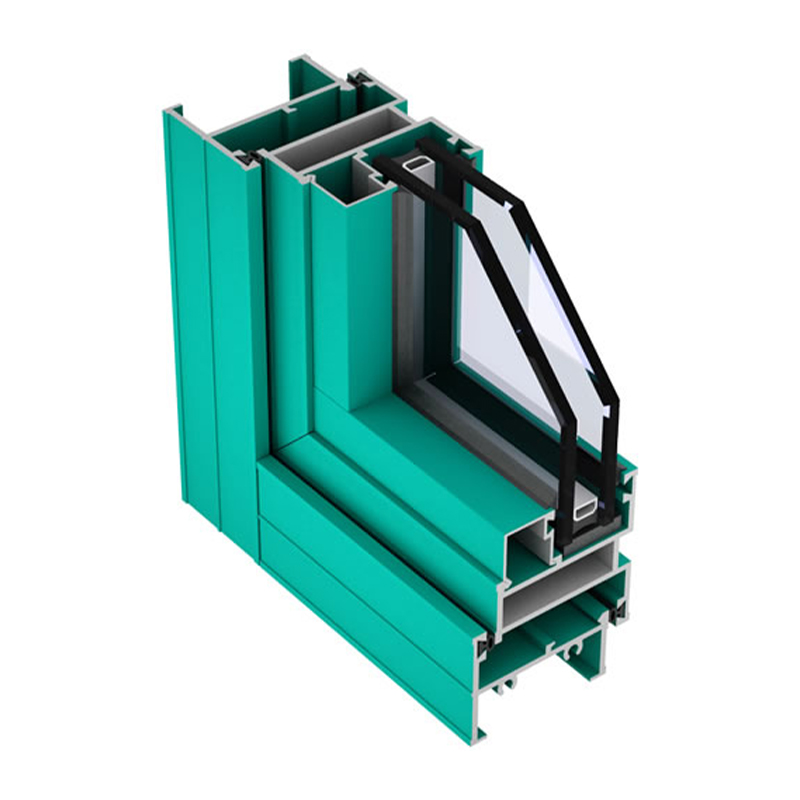
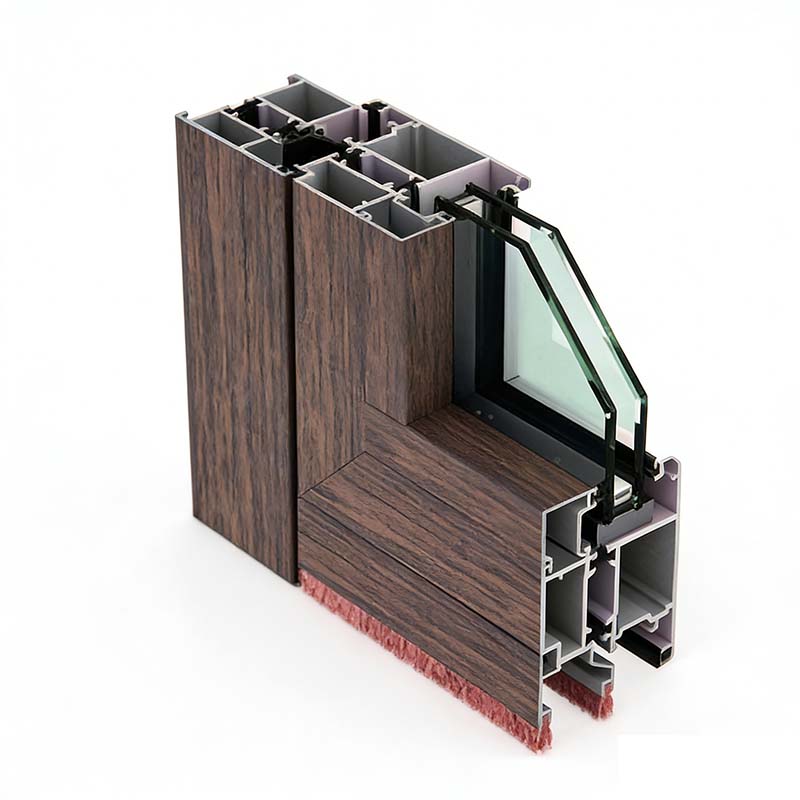
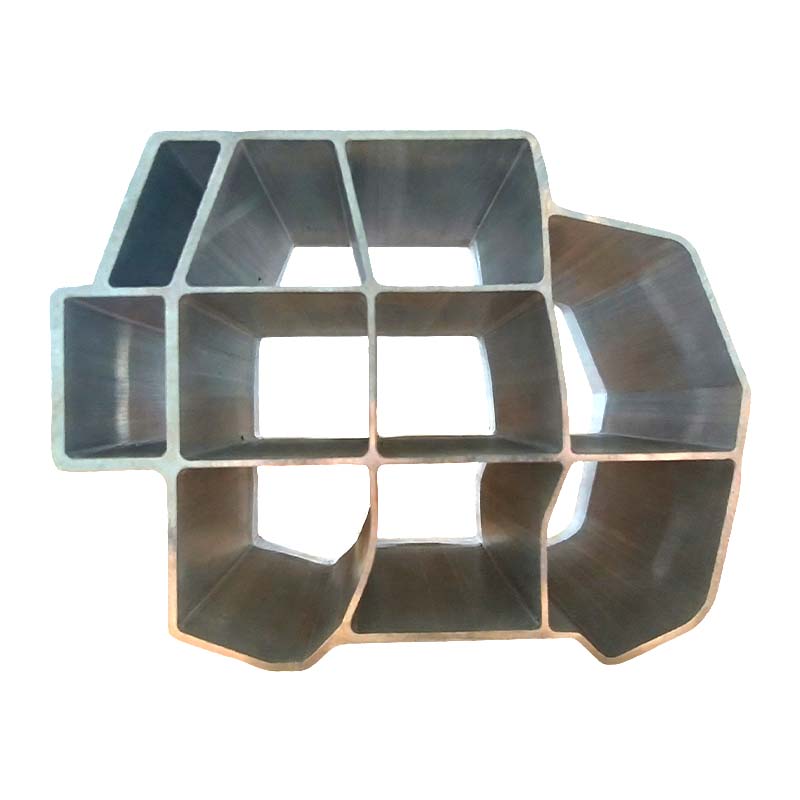
Aluminium's corrosion resistance stems from a self-forming oxide layer that regenerates when scratched, making it inherently durable in coastal, urban, and industrial atmospheres without continuous protective treatment. Modern surface finishes — powder coating, anodising, and PVDF fluoropolymer paint — extend service life beyond 40 years with minimal maintenance. The extrusion process also allows highly complex hollow section geometries, enabling integrated thermal break cavities, drainage channels, and glazing rebates in a single profile, something that is difficult or costly to achieve in competing materials.
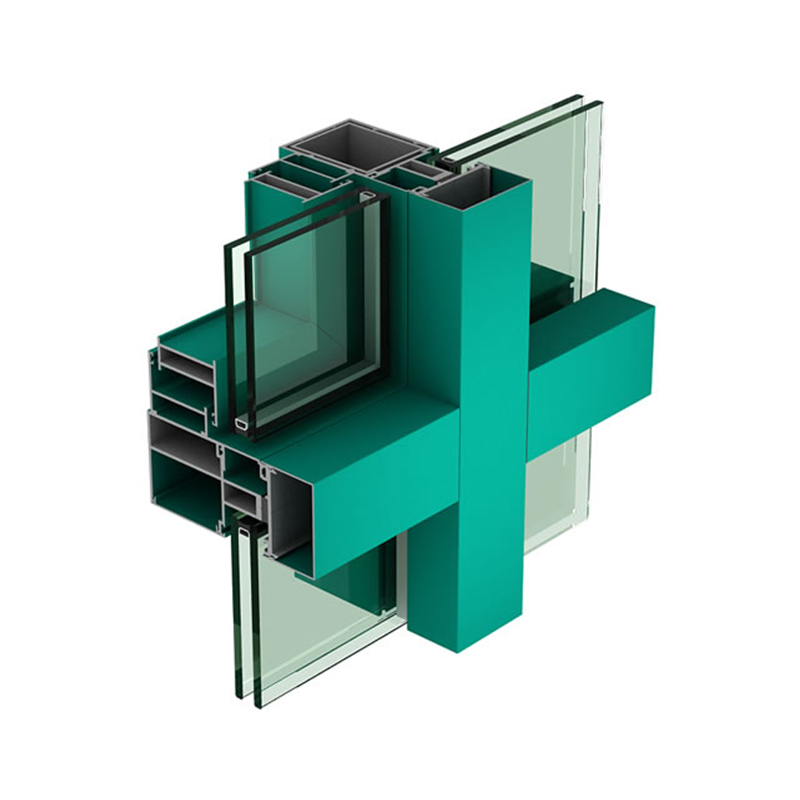
Steel profiles are the most direct structural competitor to aluminium in large-span or high-load curtain wall applications. Structural steel has a tensile strength of 400–550 MPa for mild and high-strength grades, meaning a steel profile can carry significantly higher loads for an equivalent cross-section. This makes steel the preferred choice for extra-large glazed facades, structural glazing roofs, and bespoke double-skin systems where spans exceed what aluminium can economically handle.
However, the weight penalty is substantial. Steel density is 7.85 g/cm³ — nearly three times that of aluminium — which increases structural steel tonnage in the supporting frame, foundation loads, and crane capacity requirements on site. Fabrication is also less flexible; steel curtain wall profiles are typically welded or bolted assemblies rather than extruded, making complex integrated geometries far more expensive.
Thermal performance is where steel falls most short. The thermal conductivity of steel is approximately 50 W/m·K, compared to aluminium's 160 W/m·K and — critically — both require thermal break technology to meet modern energy codes. Steel's higher conductivity actually makes effective thermal breaking more challenging, and proprietary steel thermal break systems are considerably less mature and more costly than the well-established polyamide strip and pour-and-debridge systems used in aluminium. For projects targeting Passivhaus or near-zero energy standards, this is a decisive disadvantage for steel.
| Property | Aluminium (6063-T5) | Structural Steel (S275) |
|---|---|---|
| Density (g/cm³) | 2.7 | 7.85 |
| Tensile Strength (MPa) | 150–310 | 400–550 |
| Thermal Conductivity (W/m·K) | ~160 | ~50 |
| Corrosion Resistance | Inherent (oxide layer) | Requires coating/galvanising |
| Profile Complexity (Extrusion) | High | Low |
| Recyclability | ~95% recovery rate | ~90% recovery rate |
Engineered timber — principally glued laminated timber (glulam) and cross-laminated timber (CLT) — has gained attention as a biogenic, low-carbon alternative for bespoke facade framing. Certified sustainably sourced timber is genuinely carbon-sequestering during its growth phase, giving it a compelling environmental narrative, and some architects specify exposed timber mullions specifically for the warmth and tactility they bring to interior spaces.
The practical limitations, however, are significant for curtain wall use. Timber is hygroscopic — it absorbs and releases moisture — causing dimensional movement that can compromise weathertight seals and glazing retention over time. External timber profiles require protective treatment (oils, stains, or cladding) and periodic re-treatment cycles every 3–7 years in temperate climates and more frequently in wet or tropical environments. Aluminium, by contrast, requires only periodic cleaning. Timber also presents a higher fire risk: although CLT exhibits predictable charring behaviour, exposed timber curtain wall systems must meet fire resistance requirements that typically demand additional intumescent protection, adding cost and complexity.
In practice, most "timber" curtain wall systems are hybrid designs — timber structural members clad externally with aluminium flashings and cappings to provide the durability and weathering performance that timber alone cannot reliably sustain at facade scale. This compromises some of the embodied carbon benefit while adding fabrication complexity. For projects where biophilic aesthetics are genuinely central and budget permits the maintenance commitment, timber-aluminium hybrid systems are a credible option. For the majority of commercial projects, fully aluminium systems remain more practical and economical over a 30–50 year building life.
PVC-U (unplasticised polyvinyl chloride) profiles are ubiquitous in residential window and door systems, but their application in true curtain wall construction is very limited. PVC-U has a low modulus of elasticity — roughly 2,500–3,000 MPa compared to aluminium's 70,000 MPa — meaning it deflects significantly under lateral wind load without steel reinforcing cores inserted into the chambers. Those steel reinforcing sections reintroduce thermal bridging and add weight, largely negating PVC's cost and thermal advantages at larger scales.
PVC-U also degrades under prolonged UV exposure, yellowing and becoming brittle over time unless UV stabilisers are incorporated into the compound. In high-temperature environments, PVC softens (glass transition around 80°C), which limits its use in facades with high solar gain. The maximum profile length for PVC systems is also constrained by thermal expansion: PVC expands at roughly 0.06–0.08 mm/m·°C, three to four times the rate of aluminium, creating challenging joint and seal detailing on long facade runs.
Where PVC-U genuinely competes is in low-rise residential and light commercial applications where spans are modest, budgets are tight, and thermal performance of the frame itself (rather than the overall facade system) is the primary driver. In those contexts, PVC-U outperforms aluminium on frame U-value without requiring a thermal break, and its lower material cost is a genuine advantage. Curtain wall specifiers, however, are rarely operating in that context.
Glass-fibre reinforced polymer (GFRP) and carbon-fibre reinforced polymer (CFRP) profiles represent the most technically sophisticated alternative to aluminium in high-performance facade engineering. GFRP profiles have thermal conductivity as low as 0.3–0.4 W/m·K — orders of magnitude lower than aluminium — effectively eliminating thermal bridging without the need for a separate thermal break component. This makes them highly attractive for Passivhaus-certified curtain walls and ultra-low energy buildings where frame conductance is a limiting factor.
GFRP also offers excellent corrosion resistance and is non-magnetic, which matters in specialist applications such as MRI suites, data centres, and electromagnetic shielding environments. Tensile strength of pultruded GFRP is broadly comparable to aluminium, though with lower ductility and more brittle failure modes that require different structural detailing approaches.
The barriers to wider adoption are primarily commercial. GFRP curtain wall profiles remain a niche product with a limited supplier base, and unit costs are typically 3–6 times higher than equivalent aluminium profiles. Connection detailing — particularly bolted and screwed connections — requires specialist knowledge because composites behave very differently from metals under point loading. End-of-life recyclability is also a concern: unlike aluminium, which is recycled at rates exceeding 90% globally, thermoset GFRP composites are difficult to recycle and most currently go to landfill or energy recovery.
CFRP profiles push performance further still — tensile strengths exceeding 1,500 MPa and stiffness approaching 150,000 MPa — but at costs that confine their use to prestige architectural projects, lightweight aerospace-inspired facades, and situations where minimising visible profile depth is an overriding aesthetic priority.
Thermal performance is one of the most decision-critical parameters in modern curtain wall specification, particularly as energy codes tighten globally. The frame conductance — expressed as the linear thermal transmittance (ψ-value) of the profile — varies enormously across materials:
For the vast majority of commercial curtain wall projects, thermally broken aluminium comfortably meets regulatory requirements while delivering the structural performance, durability, fabrication precision, and supply chain reliability that GFRP, timber, and steel cannot simultaneously match.
Aluminium's primary sustainability weakness is its high embodied energy during primary production — approximately 170–200 GJ per tonne for primary smelting, significantly higher than steel. However, secondary (recycled) aluminium requires only 5–8% of that energy, and the global curtain wall industry increasingly specifies profiles with 50–75% or higher recycled content. Because aluminium retains full mechanical properties through repeated recycling cycles, it is one of the most genuinely circular construction materials available.
Steel is similarly recyclable, timber is biodegradable or combustible at end of life (carbon-neutral if sustainably sourced), PVC-U is technically recyclable but less so in practice, and thermoset composites present the most challenging end-of-life profile. For whole-life environmental assessment using EN 15978 methodology, aluminium curtain wall systems with high recycled content frequently outperform perceived "green" alternatives once the full building lifespan and end-of-life recovery are properly modelled.
No single material wins across every parameter, but the decision logic for most projects is straightforward:
Aluminium curtain wall profiles dominate the market not by default or inertia, but because the combination of properties they offer is genuinely difficult to replicate. Understanding precisely where steel, timber, PVC, and composites close the gap — and where they fall short — equips design teams to specify confidently and avoid costly mid-project reassessments.
 +86-19156366875
 No. 1016, Baocheng Road, Economic and Technological Development Zone, Xuancheng City, Anhui Province, China
Copyright © Anhui Huilong Group Huilv New Material Technology Co., Ltd. All Rights Reserved
Aluminum Profiles Manufacturers