Content
Aluminum sliding door profiles have established themselves as the dominant structural choice in both residential and commercial construction worldwide, and the reasons extend far beyond simple preference or trend. Aluminum as an engineering material offers a combination of properties that no other readily available material can replicate at the same cost point: exceptional strength relative to its weight, natural corrosion resistance, precise extrudability into complex cross-sectional shapes, and an almost unlimited range of surface finish options. When these inherent material properties are translated into the context of sliding door profiles — components that must simultaneously bear structural loads, seal against weather, accommodate glass panels, and operate smoothly over decades of daily use — aluminum's advantages become concrete and measurable rather than abstract.
The global shift toward larger glazed openings in modern architecture has further accelerated the adoption of aluminum sliding door profiles. As architects and homeowners push for floor-to-ceiling glass walls, wide-span sliding panels, and minimal visible framing, the structural demands on door profiles increase dramatically. Aluminum profiles engineered with appropriate wall thicknesses and internal reinforcement chambers can span these large openings without the bowing, sagging, or deflection that would compromise the operation and weathertightness of a heavy glass door panel. Understanding the specific advantages that aluminum profiles bring to sliding door systems helps architects, builders, and homeowners make more informed specification decisions.
One of the most practically significant advantages of aluminum sliding door profiles is the exceptional strength-to-weight ratio of the material itself. Aluminum alloys used in architectural extrusions — most commonly 6063-T5 and 6061-T6 — deliver yield strengths in the range of 145 to 275 MPa while maintaining a density of approximately 2.7 g/cm³, roughly one-third the density of steel. This means that an aluminum profile can carry significant structural loads — the weight of large double-glazed panels, wind pressure loads, and the dynamic forces of daily sliding operation — while contributing minimal dead weight to the door assembly itself.
The practical implication of this strength-to-weight balance is twofold. First, the tracks, rollers, and hardware components that support and guide the sliding panels carry less total load, which extends the service life of these wear components and maintains smooth, effortless operation over the long term. Second, the reduced self-weight of aluminum frames makes it feasible to design very large sliding panel formats — multi-track systems with individual panels spanning 3 meters or more in width — that would become unwieldy or mechanically demanding if constructed from heavier materials like steel or timber. For users, this translates into sliding doors that open and close with minimal physical effort throughout their operational life.
Aluminum's natural corrosion resistance is one of its most commercially important properties in the context of sliding door profiles. When aluminum is exposed to air, it spontaneously forms a thin, stable layer of aluminum oxide on its surface that acts as a self-repairing barrier against further oxidation. Unlike iron and steel, which form iron oxide (rust) that is porous, mechanically weak, and continues to propagate through the base metal, aluminum oxide is dense, strongly adhered, and self-limiting. A scratch or cut through the surface of an aluminum profile will re-passivate within hours of exposure to air without any treatment, intervention, or coating.
This inherent corrosion resistance makes aluminum sliding door profiles particularly suitable for demanding environmental conditions where other materials would require intensive maintenance or premature replacement. Coastal installations exposed to salt-laden air, humid tropical climates with persistent moisture, and urban environments with acidic atmospheric pollution all represent conditions where aluminum profiles maintain their structural integrity and appearance with minimal intervention. When aluminum profiles are additionally treated with an anodized or powder-coated surface finish — as is standard practice in quality sliding door systems — the corrosion resistance is further enhanced, with quality finishes rated to withstand salt spray testing for 1,000 hours or more under international standards.
Aluminum is an excellent thermal conductor — a property that, in the context of window and door profiles, historically represented a significant disadvantage because it allowed heat to transfer readily between indoor and outdoor environments. Modern aluminum sliding door profiles address this challenge through thermally broken profile engineering, which has transformed aluminum from a thermally poor performer into a competitive option for energy-efficient building envelopes.
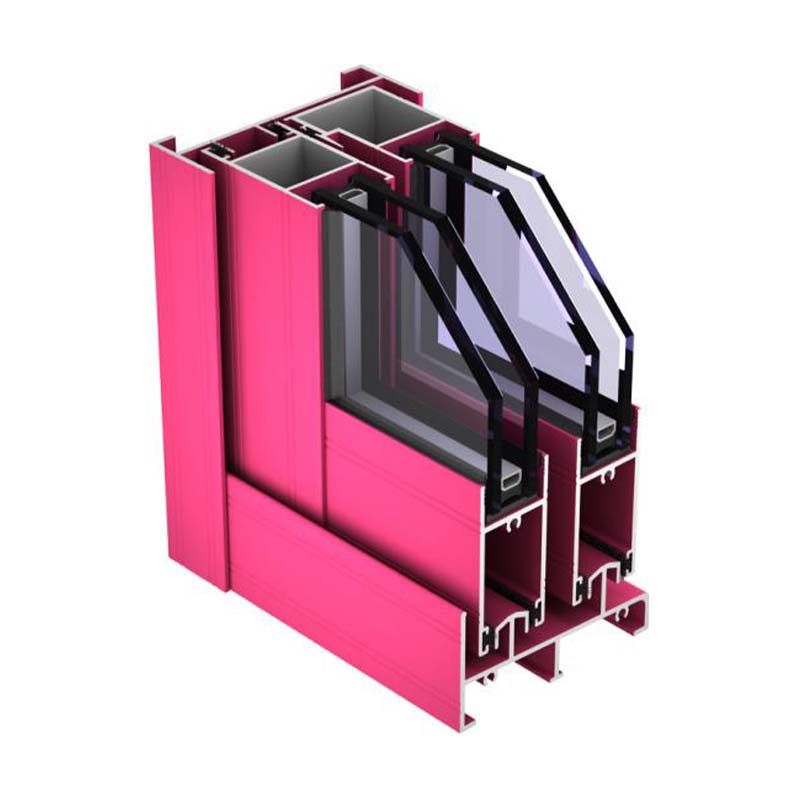
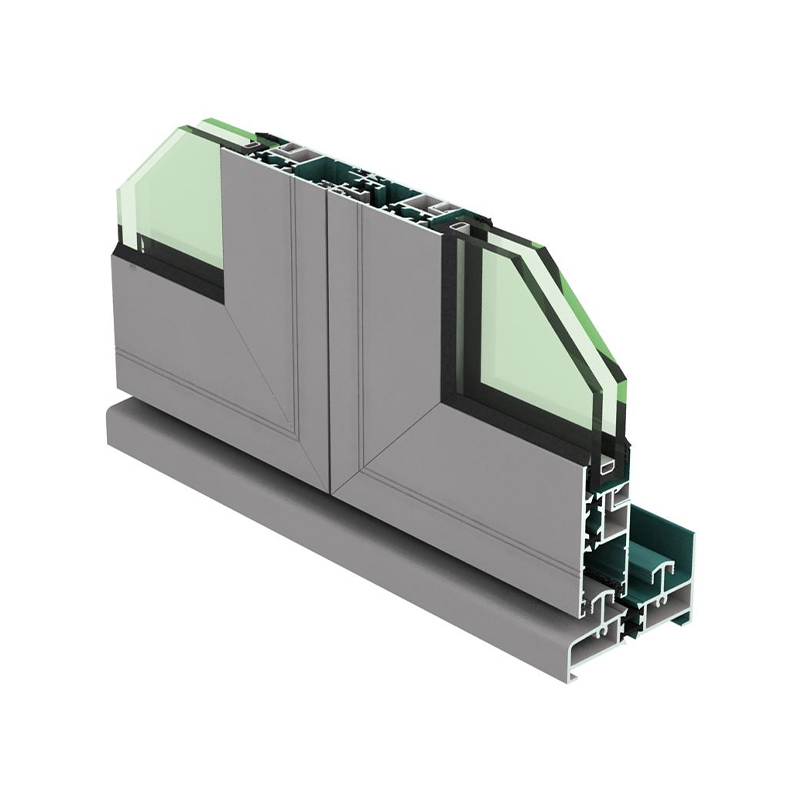
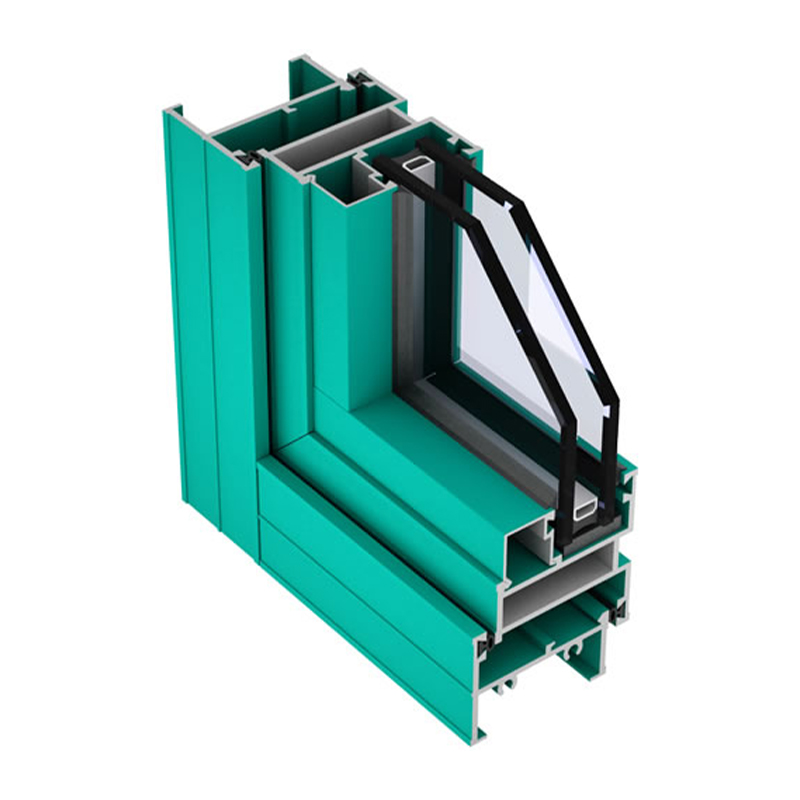
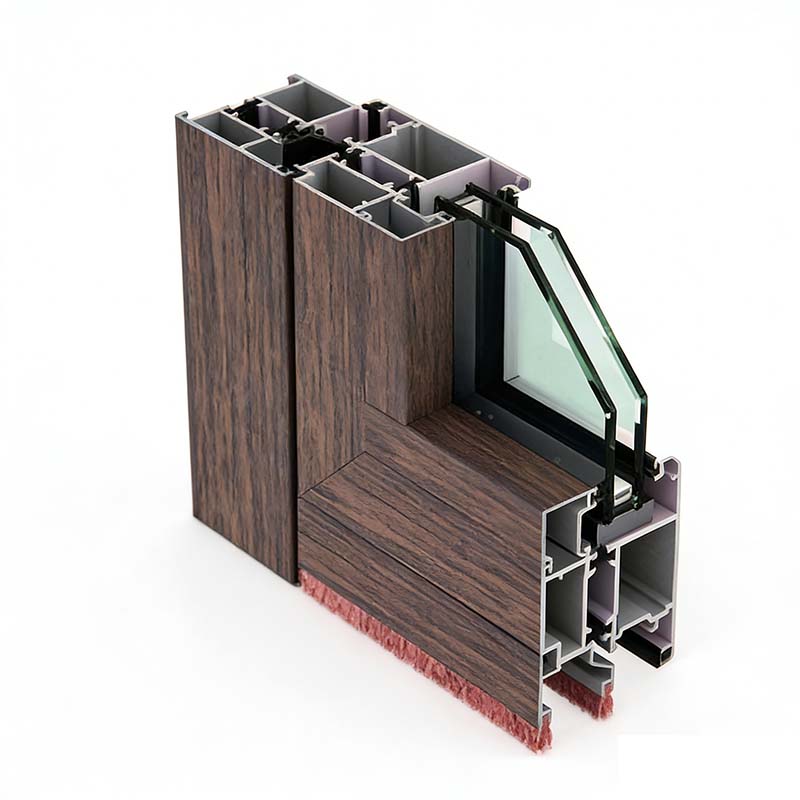
A thermal break is a continuous strip of low-conductivity material — typically a glass-fiber-reinforced polyamide (nylon) — that is mechanically locked between the inner and outer sections of an aluminum profile during extrusion assembly. This polyamide bridge interrupts the direct metal-to-metal thermal pathway that would otherwise allow heat to conduct freely through the profile from the warm side to the cold side of the building envelope. The thermal conductivity of polyamide is approximately 0.25 W/m·K compared to approximately 160 W/m·K for aluminum — a reduction factor of over 600 — making the thermal break enormously effective at reducing heat transfer through the profile cross-section.
Thermally broken aluminum sliding door profiles can achieve overall frame U-values well below 2.0 W/m²·K, and advanced systems with wider thermal break widths and optimized internal chamber geometries can reach U-values approaching 1.0 W/m²·K or below. These performance levels satisfy the energy efficiency requirements of demanding building standards including Passive House certification criteria, where the total window and door U-value must not exceed 0.8 W/m²·K in many climate zones. The thermal break also prevents condensation from forming on the interior face of the profile in cold weather — a problem that occurs with non-broken aluminum profiles and can lead to water damage to interior finishes and mold growth.
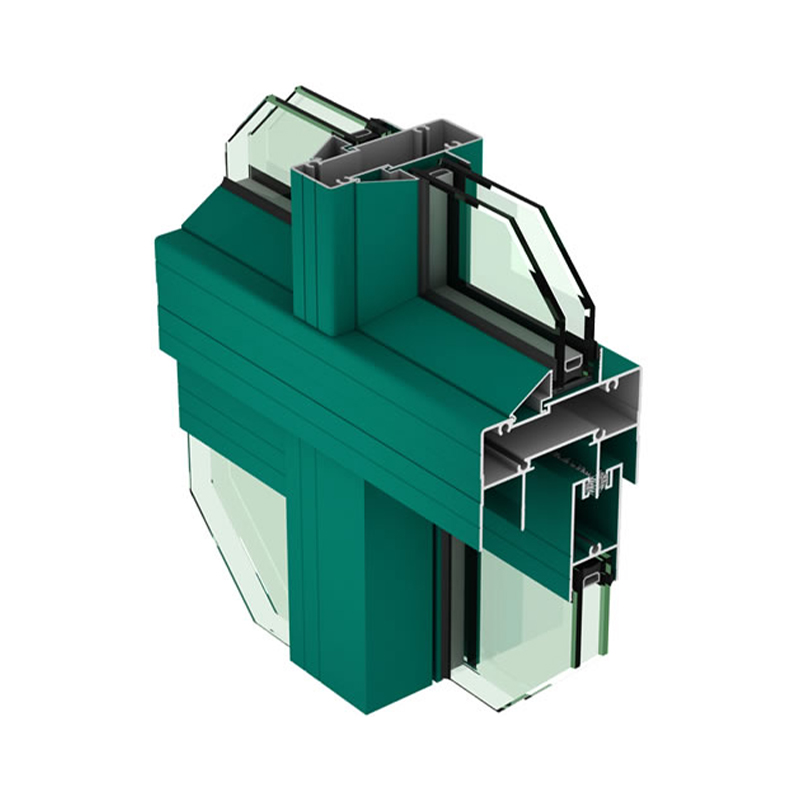
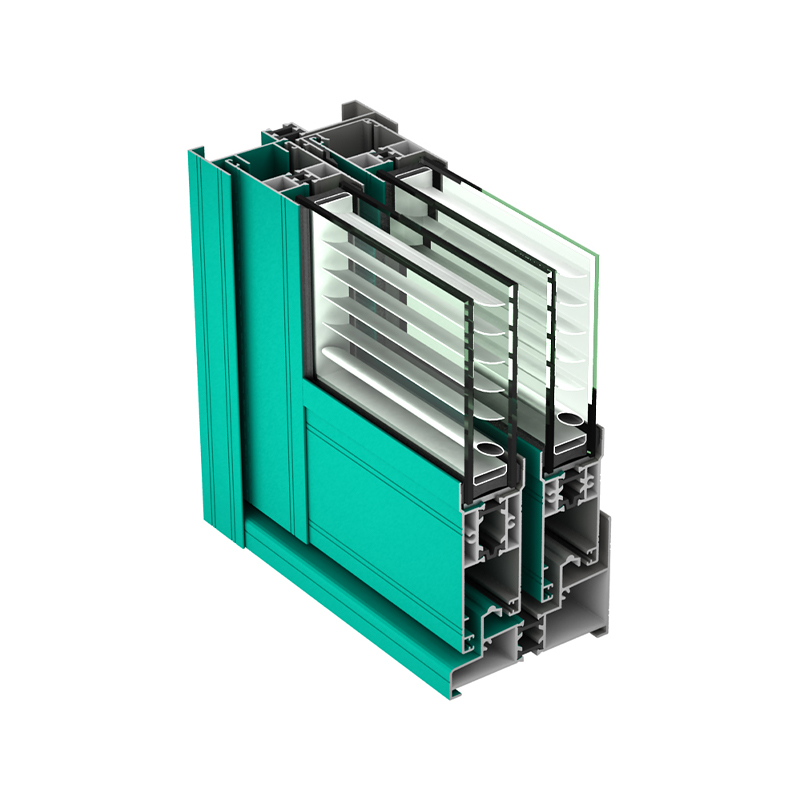
The aluminum extrusion process — in which heated aluminum billet is forced through a shaped steel die to produce a continuous profile of consistent cross-section — offers a degree of design flexibility that is unmatched by any other structural material manufacturing process. Profile cross-sections can be engineered to incorporate multiple hollow chambers for structural optimization, integral weather seal grooves, glazing bead channels, drainage slots, hardware mounting recesses, and thermal break pockets — all in a single extruded piece that requires no secondary machining operations to achieve these features.
This design freedom allows sliding door profile systems to be optimized simultaneously for multiple performance objectives: maximum structural efficiency with minimum material use, seamless weather seal integration, clean aesthetic lines with minimal visible frame depth, and compatibility with a wide range of glazing unit thicknesses from standard 24mm double glazing to premium 50mm or wider triple-glazed units. The same extrusion technology also makes it feasible for manufacturers to offer profile systems in multiple series widths — for example 50mm, 70mm, 90mm, and 120mm face depth options — allowing specifiers to select the appropriate structural depth for each project's span and load requirements without switching between incompatible system families.
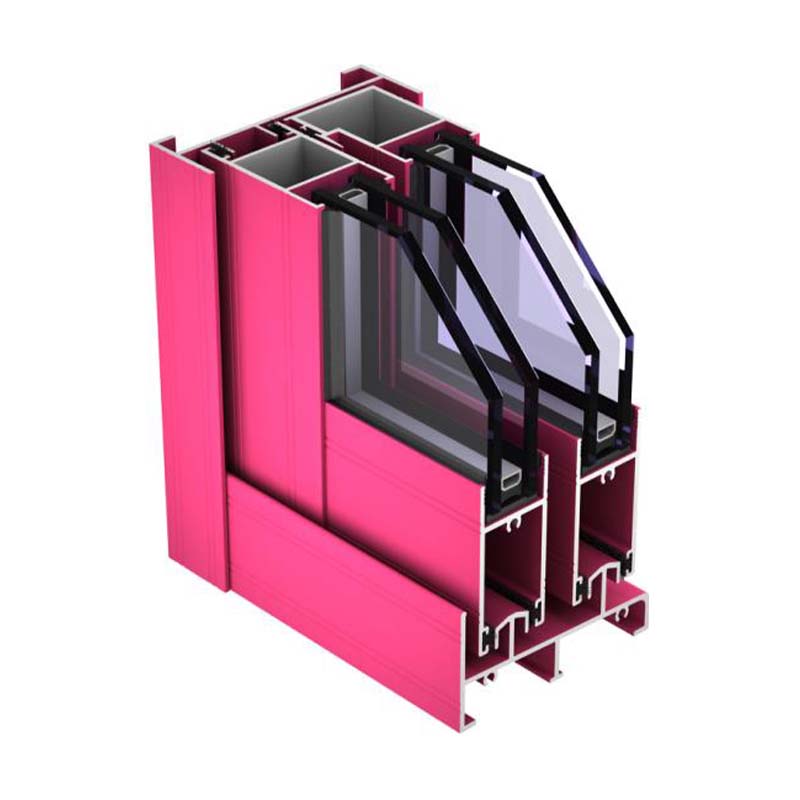
The surface finishing possibilities available for aluminum sliding door profiles give specifiers and homeowners a breadth of aesthetic choice that wood, steel, or uPVC profiles cannot match. The two primary finishing processes — anodizing and powder coating — each offer distinct visual characteristics and performance properties, and both are compatible with the full range of extruded aluminum profiles used in sliding door systems.
To fully appreciate the advantages of aluminum profiles, it is useful to compare them directly against the primary alternative materials used in sliding door construction. The table below summarizes the key performance dimensions side by side:
| Property | Aluminum | uPVC | Timber | Steel |
| Strength-to-Weight | Excellent | Low | Moderate | Good |
| Corrosion Resistance | Excellent | Excellent | Poor (untreated) | Poor |
| Thermal Performance | Very Good (broken) | Good | Good | Poor |
| Design Flexibility | Excellent | Moderate | Limited | Good |
| Maintenance Required | Minimal | Low | High | High |
| Large Span Capability | Excellent | Limited | Moderate | Excellent |
| Recyclability | 100% recyclable | Limited | Biodegradable | Recyclable |
Aluminum's sustainability credentials are a genuine and increasingly decisive advantage in building specification decisions where environmental performance is assessed through life cycle analysis. Aluminum is 100% recyclable without any degradation of its mechanical or physical properties — recycled aluminum is indistinguishable from primary aluminum in terms of performance. The energy required to recycle aluminum is approximately 5% of the energy consumed in primary production from bauxite ore, making aluminum recycling one of the most energy-efficient material recovery processes in the manufacturing economy.
In practical terms, aluminum sliding door profiles removed during building renovation or demolition have significant scrap value and are readily accepted by metal recyclers, ensuring a high rate of material recovery at end of life. This closed-loop recyclability means that the embodied carbon associated with primary aluminum production is effectively amortized across multiple product life cycles, improving the material's environmental profile when assessed over a long time horizon. For projects pursuing green building certification — BREEAM, LEED, or equivalent national schemes — the use of aluminum profiles with verified recycled content and documented recyclability at end of life contributes measurably to environmental credits in materials and resources categories.
When evaluated not merely on purchase price but on total cost of ownership over the realistic service life of a building, aluminum sliding door profiles consistently deliver superior value relative to alternative materials. A well-specified and correctly installed aluminum sliding door system will maintain its structural performance, weathertightness, and aesthetic appearance for 40 to 50 years or more with only routine maintenance consisting of periodic cleaning of profiles and tracks, lubrication of roller bearings and locking hardware, and inspection of weather seals for compression set or wear.
 +86-19156366875
 No. 1016, Baocheng Road, Economic and Technological Development Zone, Xuancheng City, Anhui Province, China
Copyright © Anhui Huilong Group Huilv New Material Technology Co., Ltd. All Rights Reserved
Aluminum Profiles Manufacturers