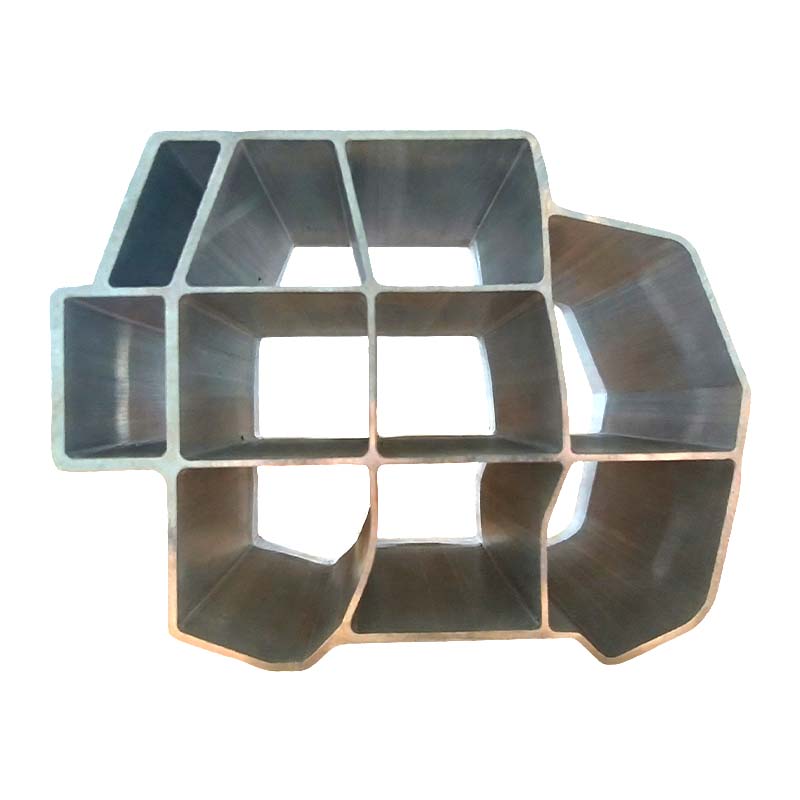
In the automotive safety system, there is a rarely-discussed but extremely important defense line: It is usually hidden behind the bumper, yet it often serves as the first "framework" to withstand impacts in accidents; it was once regarded as a standard metal component, but now it is evolving at the intersection of materials science, structural engineering, and intelligent design, transforming into a composite safety center that integrates passive safety and active warning. The automotive impact beam is undergoing a profound transformation from "strength supremacy" to "precise energy absorption and collaborative protection".
Not limited to "hard" aspects: Systematic evolution of materials and structures
The original mission of the traditional anti-collision beam was straightforward and clear - to protect the main structure of the vehicle body during low-speed collisions and reduce maintenance costs. However, the design philosophy of modern high-performance anti-collision beams has been upgraded to the art of "be strong where necessary and be flexible where appropriate" in terms of system energy management:
Material diversification: From a single type of high-strength steel, it has evolved to the differentiated application of aluminum alloys, ultra-high-strength steel (hot-formed steel), and even engineering plastics and composite materials based on regional stress requirements. For instance, the main beam body uses aluminum alloys or ultra-high-strength steel to ensure core impact resistance, while the energy absorption box achieves controlled and efficient progressive crush energy absorption through precise folding design, combined with specific steel or composite materials, to maximize the absorption and dispersion of impact forces.
Integrated structure and function: The impact beam system is no longer an isolated beam. It forms a "three-level energy absorption and transmission system" together with the energy absorption box and the connecting plate. The energy absorption box acts as the "sacrificial unit" and deforms as designed during the collision, dissipating most of the energy; the connection parts, through a breakable design, guide the remaining energy to be safely transferred to the main body structure of the vehicle such as the longitudinal beam, effectively preventing the cabin from deforming.
A win-win situation of lightweighting and safety: Lightweight materials such as aluminum alloys and advanced high-strength steels can achieve a weight reduction of 30% to 50% while maintaining or even increasing the strength. This not only enhances the vehicle's energy efficiency and handling, but also indirectly improves safety by reducing the overall kinetic energy during collisions, thus achieving the unification of energy conservation and safety.
Become the outpost of "intelligent perception": Deeply interconnected with the active safety system
The role of the impact-resistant beam is shifting from merely absorbing impacts to becoming a physical outpost of the active safety network:
Sensor Integration Platform: Modern anti-collision beams have become an ideal carrier and protective structure for key sensors such as millimeter-wave radars, ultrasonic radars, and panoramic imaging cameras. The design must take into account "low interference" of sensor signals to ensure the precise and reliable operation of functions like automatic emergency braking (AEB) and adaptive cruise control (ACC).
The key aspect of pedestrian protection: In accordance with pedestrian collision protection regulations, the front design of the impact bar (such as the external energy-absorbing foam or special structure) needs to effectively reduce the harm to the pedestrian's legs when the vehicle collides with the pedestrian. This is an important manifestation of its safety responsibility expanding from the occupants of the vehicle to traffic participants.
Facing New Challenges: The Special Mission in the Era of Electric Vehicles
The widespread adoption of electric vehicles has presented new challenges for impact beams:
Battery Pack Guardian: The design and strength of the front bumper bar are directly related to the protection of the rear battery pack. The energy absorption efficiency and force transmission path must undergo the most rigorous consideration to ensure that a reliable buffer zone can be constructed for the battery pack in any angle of collision. This is the "lifeline" of safety for electric vehicles.
Adapting to new collision scenarios: Given that electric vehicles typically have heavier body structures and the potential risk of bottom scratches, the structure of the impact beam (especially the rear part) needs to be further strengthened and optimized.
Industry Outlook: From Components to "System Integration" and "Repairability"
In the future, the evolution of the anti-collision beams will focus on:
Higher-level system integration: Deeply integrated with the vehicle's electronic architecture, it may serve as the carrier for distributed collision sensors, enabling faster and more accurate reporting of accident information (for automatic emergency calls).
Repairability and Maintenance Economy: Modular design will become more widespread, enabling components such as energy-absorbing boxes to be easily replaced after low-speed collisions, significantly reducing the maintenance costs and time for users. This has become an important consideration in new vehicle evaluation systems (such as the China Insurance Research Institute).
New Frontiers in Materials: Lightweight and stronger materials such as carbon fiber composites will be explored for application in high-end vehicles, pushing the boundaries of safety and performance.
Industry safety engineering experts point out: "Today's impact beams are far more than just a simple crossbeam. They are a highly sophisticated energy management system, the 'foundation' of active safety sensors, and the key barrier for battery safety in the electric era. Their evolution history is a reflection of the concept of automotive safety moving from 'reducing injuries' to 'avoiding injuries' and then to 'providing comprehensive protection'."
With the surging trend of automotive intelligence and electrification, the traditional safety component, the anti-collision beam, is being endowed with unprecedented technological connotations and strategic value. Concealed beyond the line of sight, it always stands at the forefront of safety, silently safeguarding the safety of every journey. Choosing a vehicle, the technological content of its "invisible defense line" has become an important indicator for evaluating its comprehensive safety capabilities.
 +86-19156366875
 No. 1016, Baocheng Road, Economic and Technological Development Zone, Xuancheng City, Anhui Province, China
Copyright © Anhui Huilong Group Huilv New Material Technology Co., Ltd. All Rights Reserved
Aluminum Profiles Manufacturers